Have you ever poured a glass of water from your kitchen faucet and noticed a strange metallic taste that reminds you of blood or rust?
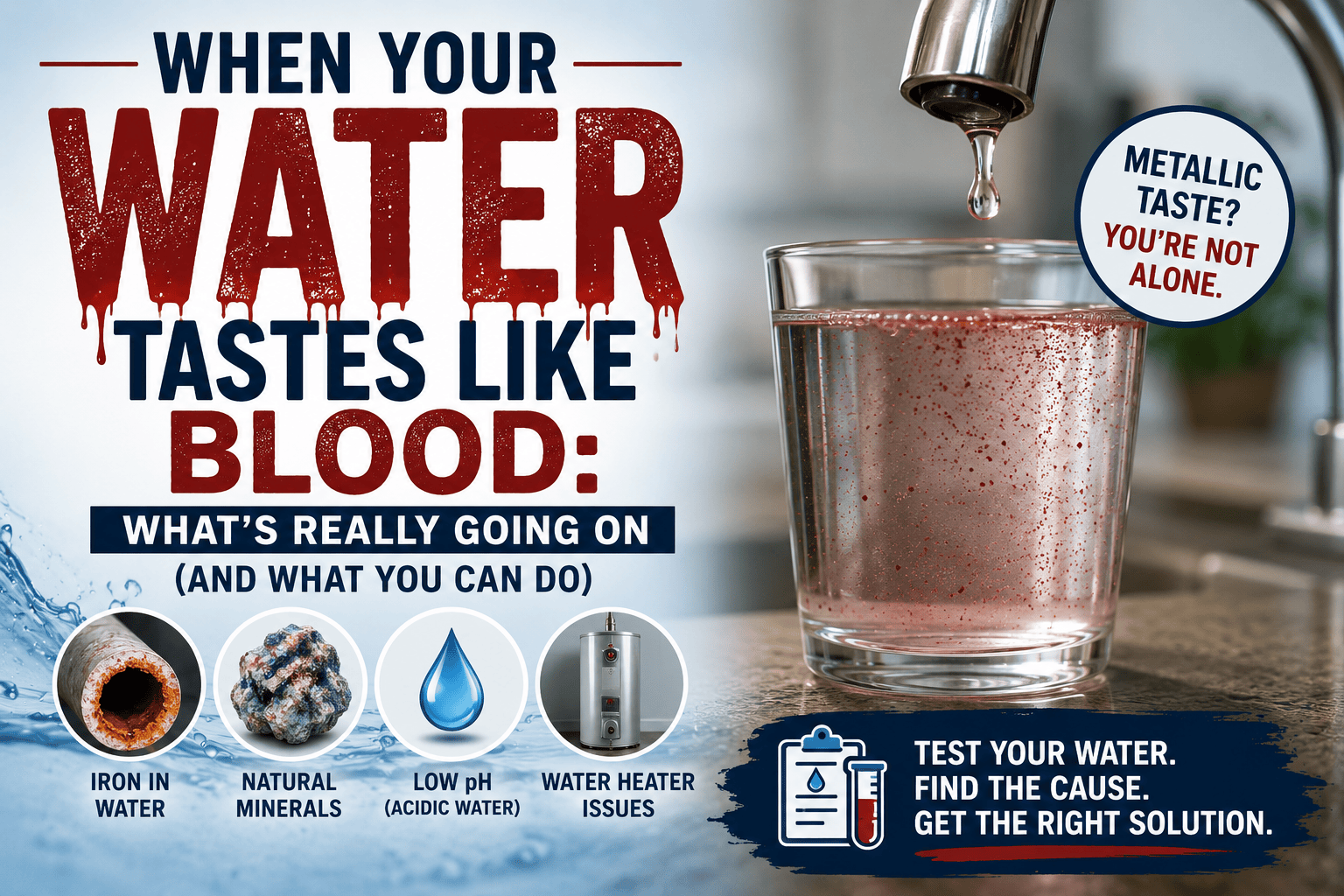
Many Pennsylvania homeowners experience this issue, especially those who rely on private wells. A metallic, rusty, or “bloody” taste in water can be unpleasant, but it is also a warning sign that something in your water chemistry may need attention.
The good news is that this problem is usually caused by naturally occurring minerals — not something mysterious inside your plumbing. However, identifying the exact cause is important because different water problems require different solutions.
At Spring Rain, Inc., we help homeowners throughout Pennsylvania diagnose unusual water taste, odor, staining, and quality problems through professional water testing and customized treatment solutions.
In this guide, you’ll learn:
- Why your water may taste like blood or metal
- The most common causes of metallic-tasting well water
- Whether the problem is harmful
- How to test your water correctly
- The best ways to improve your water quality
What Causes Water to Taste Like Blood?
When homeowners describe water as tasting like blood, they are usually noticing a strong metallic flavor.
This taste is commonly caused by minerals dissolving into groundwater before it reaches your well.
The most common causes include:
- Iron
- Manganese
- Corroding pipes
- Low pH (acidic water)
- Bacteria interacting with minerals
- Water heater issues
Each problem creates a similar taste, but the correct treatment depends on what is actually causing it.
1. High Iron Levels in Well Water
Iron is one of the most common reasons Pennsylvania well water develops a metallic taste.
Groundwater naturally moves through rock and soil, picking up dissolved minerals along the way. When iron enters your water supply, it may not always be visible immediately.
Iron can exist in different forms:
Dissolved Iron
This type of iron may make your water look clear when first poured but can create a metallic taste.
After exposure to oxygen, it may turn orange or brown and cause staining.
Oxidized Iron
This form creates visible particles that can stain:
- Toilets
- Sinks
- Bathtubs
- Laundry
- Appliances
Common signs of iron problems:
✔ Metallic or blood-like taste
✔ Orange or reddish stains
✔ Brown sediment
✔ Water discoloration after sitting
2. Manganese Can Create a Metallic or Bitter Taste
Manganese is another naturally occurring mineral found in Pennsylvania groundwater.
While manganese is needed by the body in small amounts, elevated levels in drinking water can affect taste and create household problems.
Common signs of manganese include:
- Black or dark brown stains
- Metallic taste
- Dark particles in water
- Discoloration around fixtures
Many homeowners mistake manganese staining for dirt or old plumbing when the real source is their well water chemistry.
3. Acidic Water and Corroding Plumbing
Sometimes the problem is not what is coming from the well — it is what happens after water enters your home's plumbing system.
Low-pH water can be acidic and may slowly dissolve metals from pipes, fixtures, and plumbing components.
This can introduce:
- Metallic flavors
- Blue-green staining from copper
- Rust-colored particles
- Increased corrosion
Pennsylvania has many areas where naturally acidic groundwater can affect private wells.
Signs your water may be acidic:
- Metallic taste
- Pinholes or leaks in plumbing
- Blue-green stains around fixtures
- Corrosion on faucets or pipes
A water test measuring pH can determine whether acidity is contributing to the problem.
4. Water Heater Problems
Your water heater can sometimes create metallic-tasting water, especially if the issue only happens with hot water.
Inside many water heaters is an anode rod designed to protect the tank from corrosion. Over time, this component can deteriorate and affect water taste.
Possible signs:
- Cold water tastes normal but hot water tastes metallic
- Strange odor from hot water
- Sediment buildup in the tank
Before installing a whole-house treatment system, it is important to determine whether the issue affects all water or only heated water.
5. Sulfur and Bacterial Activity
Although sulfur is usually associated with rotten egg odors, certain bacteria can interact with minerals in well systems and contribute to unusual tastes.
These issues may occur when bacteria create chemical reactions inside:
- Wells
- Plumbing lines
- Water heaters
Professional testing can identify whether bacteria or mineral conditions are affecting your water.
Is Metallic-Tasting Water Dangerous?
A metallic taste does not automatically mean your water is unsafe.
In many cases, the cause is related to aesthetic water quality issues such as:
- Taste
- Odor
- Staining
- Mineral buildup
However, some water problems should not be ignored.
Testing is especially important if:
- Your water taste suddenly changes
- Your well has not been tested recently
- You notice discoloration
- Your plumbing is older
- You have recurring staining
A certified water test provides accurate information about what is actually present in your water.
How to Find Out Why Your Water Tastes Like Blood
Guessing the cause can lead to wasted money.
For example:
- A water softener may not solve high iron problems
- An iron filter may not fix acidic water
- Replacing plumbing may not help if minerals are coming from the well
A complete water analysis should evaluate:
- Iron levels
- Manganese levels
- pH
- Hardness
- Sulfur
- Bacteria
- Other common well water contaminants
At Spring Rain, Inc., we use water testing results to recommend solutions based on your specific water chemistry.
The Best Ways to Fix Metallic-Tasting Well Water
The correct treatment depends on the cause.
Common solutions include:
1. Iron Filtration Systems
Iron removal systems are designed to capture dissolved and oxidized iron before it reaches your faucets.
Treatment options may include:
- Oxidation filtration
- Air injection systems
- Specialty iron filters
- Combination treatment systems
2. Manganese Removal Systems
If manganese is responsible for the taste or staining, specialized filtration may be required.
Treatment options can include:
- Catalytic filtration media
- Oxidation systems
- Advanced whole-house filtration
The right system depends on manganese levels and water chemistry.
3. Acid Neutralizing Systems
If low pH is causing corrosion, an acid neutralizer can help balance the water.
Benefits include:
- Reduced pipe corrosion
- Better taste
- Protection of plumbing fixtures
- Improved water quality
4. Reverse Osmosis Drinking Water Systems
For homeowners who want cleaner, better-tasting drinking water, reverse osmosis systems provide an additional layer of filtration at the kitchen faucet.
They are commonly used for:
- Drinking water
- Cooking water
- Coffee and beverages
Why Pennsylvania Well Owners Often Experience Metallic Water Taste
Pennsylvania groundwater conditions vary widely because of differences in geology throughout the state.
Private wells may encounter:
- Iron-bearing rock formations
- Manganese deposits
- Acidic groundwater
- Hard water minerals
- Sediment
Two homes located only a short distance apart can have completely different water chemistry.
That is why professional testing is more effective than choosing a filter based only on symptoms.
Common Mistakes Homeowners Make
Avoid these common mistakes when dealing with metallic-tasting water:
❌ Assuming the problem is always rust
❌ Installing a random filter without testing
❌ Treating iron without checking manganese
❌ Ignoring low pH issues
❌ Replacing plumbing before identifying the water source problem
The right solution starts with knowing what is actually in your water.
Get Better-Tasting Water With Professional Testing
If your water tastes like blood, metal, or rust, the problem is usually a sign that your water chemistry needs attention.
At Spring Rain, Inc., we help Pennsylvania homeowners improve their water quality with:
- Private well water testing
- Iron and manganese removal systems
- Whole-house filtration
- Acid neutralization
- Reverse osmosis drinking water systems
Instead of guessing, get answers based on your actual water.
Contact Spring Rain, Inc. today to schedule a professional water evaluation and discover what is causing your metallic-tasting water.
Frequently Asked Questions About Metallic-Tasting Well Water
Why does my water taste like blood?
A blood-like taste is usually caused by dissolved metals such as iron, manganese, or minerals released from plumbing corrosion.
Is metallic-tasting water safe to drink?
The taste alone does not determine safety. Testing is the best way to identify whether any contaminants are present.
Can a water softener remove metallic taste?
A softener may help with some hardness-related issues but usually will not solve all iron, manganese, or acidic water problems.
Why does only my hot water taste metallic?
If only hot water has the issue, the water heater or its components may be contributing to the taste.
How often should private well water be tested?
Annual testing is recommended for many private wells, especially if you notice changes in taste, odor, or appearance.
Spring Rain, Inc. proudly serves Pennsylvania homeowners with professional well water testing, filtration, and customized water treatment solutions.