Have you noticed that your shower no longer delivers a strong stream of water? Does your washing machine take longer to fill, or does the kitchen faucet lose pressure whenever someone takes a shower? If your home relies on a private well, these changes may indicate that your water system needs attention.
Low well water pressure can make everyday tasks frustrating. However, the cause is not always a failing well pump. Clogged filters, mineral buildup, an undersized pressure tank, plumbing restrictions, and increased household water demand can all affect how efficiently water moves through your home.
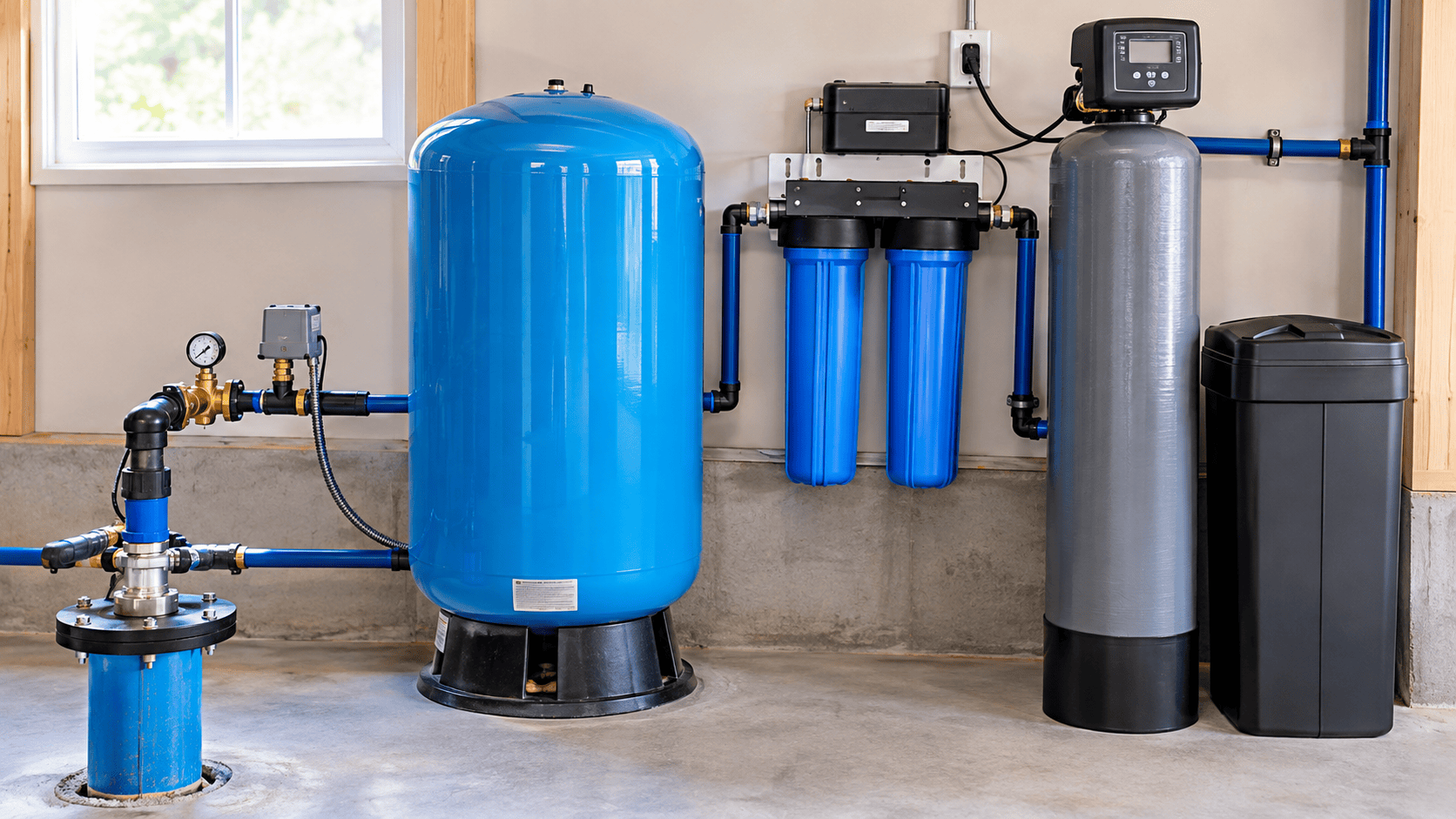
Unlike municipal water supplies, private well systems depend on equipment inside and around your property to deliver water at the required pressure. Understanding how these components work together is essential when deciding how to increase water pressure without creating additional problems.
At Spring Rain, Inc., we understand that reliable water delivery and good water quality are both important for a comfortable home. This guide explains seven practical ways to improve well water pressure, identify potential problems, and determine when professional assistance may be necessary.
Start by Identifying the Cause of Low Well Water Pressure
Before changing any equipment or adjusting system settings, take a moment to understand when and where the pressure problem occurs.
For example, weak water flow from a single showerhead may indicate a clogged fixture. If every faucet in the house has low pressure, the problem could involve the well pump, pressure tank, filtration system, or main plumbing line.
Check Whether the Problem Affects One Fixture or the Entire Home
Run water from several faucets individually and observe the results. Then consider whether pressure changes when multiple fixtures operate simultaneously.
These observations can help narrow down the possibilities:
- One fixture has weak flow: The aerator, showerhead, local shutoff valve, or connecting pipe may be restricted.
- Several fixtures have low pressure: A main plumbing restriction, clogged treatment filter, or pressure system problem may be responsible.
- Pressure drops during heavy water use: The pump, tank, or well may be struggling to meet demand.
- Pressure changes suddenly: A malfunctioning switch, pump issue, leaking pipe, or recently adjusted valve may require inspection.
Consider Whether Your Water Quality Has Changed
Water quality problems can sometimes contribute to reduced water flow. Hard water may leave mineral deposits inside fixtures and pipes, while sediment or iron deposits can accumulate in filtration equipment and plumbing.
If you have also noticed white scale, reddish staining, cloudy water, or unusual sediment, water testing may help identify an underlying issue.
Identifying the cause first can prevent unnecessary equipment purchases and help you choose the most effective solution.
1. Check Your Well Pump and Pressure Tank
Your well pump and pressure tank work together to deliver water throughout your home. If either component is not functioning correctly, you may experience low pressure, inconsistent flow, or frequent pump cycling.
The well pump moves water from the source into your system, while the pressure tank helps maintain pressure and reduces how often the pump starts.
Signs of a Well Pump Problem
A worn or improperly sized pump may produce several warning signs:
- Water pressure decreases during showers or laundry.
- The pump runs longer than usual.
- Water flow becomes intermittent.
- The pump makes unusual noises.
- Faucets sputter or water delivery stops unexpectedly.
A pressure tank problem may cause similar symptoms, particularly when the tank has lost its proper air charge or its internal bladder has failed.
How to Address Pump and Tank Problems
A qualified well technician can evaluate the pump's output, pressure tank condition, pressure switch operation, and system cycling.
Depending on the findings, the solution may involve repairing a component, correcting the tank's air charge, or replacing equipment that can no longer meet the home's needs.
Pump replacement should not be the first assumption. A clogged filter or faulty pressure switch can produce similar symptoms, so a proper inspection is important before committing to a major repair.
2. Adjust the Well System's Pressure Settings When Appropriate
Many residential well systems use a pressure switch to control when the pump starts and stops. Common settings include 20/40 PSI, 30/50 PSI, and 40/60 PSI, although the appropriate range depends on the equipment and installation.
PSI stands for pounds per square inch, a measurement used to describe pressure.
A system operating at a lower pressure range may not provide the level of water pressure some households prefer. In certain situations, a qualified technician may be able to adjust the pressure settings to improve performance.
What Should You Know Before Increasing Pressure?
Increasing the pressure setting does not automatically solve every low-pressure problem. The pump must be capable of delivering water at the new operating pressure, and the pressure tank, plumbing, treatment equipment, and fixtures must be compatible with the adjustment.
A higher setting may also reduce the amount of water available from the pressure tank between pump cycles.
Why Professional Adjustment Matters
Before changing the pressure switch, a technician should verify the pump's operating limits, inspect the pressure tank, and confirm that the system can reach its intended shutoff pressure.
If the pump cannot reach the required pressure, changing the switch setting may cause it to run continuously or create additional equipment problems.
Important: Never adjust a pressure switch simply to make the gauge show a higher number. Electrical components and pressurized systems can be hazardous, and adjustments should be made by a qualified professional.
3. Clean or Replace Clogged Water Filters
If your home uses a private well, filtration may be necessary to address sediment, iron, or other water quality concerns. However, filtration equipment can restrict water flow when the filter becomes clogged or the system is not properly sized.
A filter that was working well several months ago may gradually accumulate enough material to reduce the amount of water passing through it.
How to Recognize a Clogged Filter
Look for these common signs:
- Water pressure gradually declines throughout the house.
- Flow improves temporarily after filter replacement.
- Pressure is noticeably lower after the treatment equipment.
- The filter has exceeded its recommended service interval.
- Several fixtures experience reduced flow at the same time.
How to Restore Water Flow
Check the manufacturer's maintenance instructions and replace disposable filter cartridges as recommended. Backwashing systems and other treatment equipment may require a different maintenance procedure.
If the problem continues, have the equipment evaluated for excessive pressure loss, incorrect sizing, or unsuitable filter media.
Spring Rain, Inc. provides customized water treatment solutions designed around household water quality needs. Choosing the appropriate filtration equipment can help address contaminants while supporting the flow rate your home requires.
Avoid bypassing necessary treatment equipment just to increase pressure. The better solution is to identify and correct the restriction.
4. Treat Hard Water and Mineral Buildup
Hard water contains elevated concentrations of dissolved calcium and magnesium. Over time, these minerals can contribute to scale on faucets, showerheads, water heaters, and the interior surfaces of plumbing components.
In some well water systems, iron and manganese can also contribute to deposits or staining. When mineral accumulation becomes severe, water flow through affected fixtures or pipes may be reduced.
Common Signs of Hard Water
You may notice:
- White, chalky deposits around faucets.
- Scale buildup on showerheads.
- Spots on dishes and glassware.
- Soap that does not lather easily.
- Mineral deposits that return soon after cleaning.
These signs can suggest hard water, although water testing is the best way to confirm the actual hardness level.
Can a Water Softener Increase Water Pressure?
A water softener can help reduce hardness minerals in incoming water, which may help prevent additional scale formation under appropriate operating conditions.
However, installing a softener will not necessarily restore pressure if pipes are already severely restricted. Existing scale or plumbing damage may require separate attention.
For homes with hard well water, testing can help determine whether a water softener is appropriate. Where iron or sediment is also present, additional treatment may be needed.
Spring Rain, Inc. offers water treatment solutions that can help homeowners address hard water and other water quality concerns based on their specific needs.
5. Consider a Constant Pressure System
Traditional well systems generally operate between two pressure settings. When household water use lowers the pressure to the switch's starting point, the pump turns on and brings the pressure back up.
This process can create noticeable pressure fluctuations, particularly when water demand changes frequently.
A constant pressure system uses controls that adjust pump operation to maintain a more consistent pressure as water demand changes.
When Is Constant Pressure Worth Considering?
A constant pressure system may be worth evaluating if:
- Pressure fluctuates noticeably during showers.
- Multiple fixtures frequently operate simultaneously.
- Your household has substantial water demand.
- Your existing equipment needs replacement.
- You want more consistent pressure across normal usage conditions.
What Are the Benefits?
Depending on the system design, a constant pressure setup can help reduce noticeable pressure swings and provide a more consistent experience when using water throughout the home.
However, it is not the right solution for every property. The well's production rate, pump compatibility, electrical requirements, and water demand must all be considered.
A professional evaluation can help determine whether upgrading your existing system is more practical than repairing individual components.
6. Install a Booster Pump When Additional Pressure Is Needed
Sometimes, the existing well system delivers water adequately near the pressure tank but struggles to provide sufficient pressure at distant fixtures or upper floors.
Elevation, long pipe runs, plumbing restrictions, and simultaneous water use can contribute to pressure loss between the system and the fixture.
In suitable situations, a booster pump can provide additional pressure to help water reach the areas where it is needed.
When Might a Booster Pump Help?
A booster pump may be considered when:
- Upper-floor bathrooms consistently have weak water flow.
- Pressure drops across long plumbing runs.
- The existing system cannot maintain the desired delivery pressure.
- The well and primary pump have been evaluated and are operating correctly.
Why System Compatibility Is Essential
A booster pump should not be installed without checking the source pump, available water supply, pressure controls, and plumbing configuration.
If the underlying issue is a low-yield well, adding more pumping capacity may not solve the problem and could make water shortages worse.
The goal is to determine whether the limitation comes from insufficient pressure, inadequate flow, or restricted water availability. Each situation requires a different approach.
7. Upgrade the Pressure Tank or Reassess Your Household Water Demand
A pressure tank helps provide a reserve of pressurized water and reduces frequent pump starts. If your household's water needs have increased, your existing system may no longer provide the performance you expect.
For example, adding another bathroom, installing a larger irrigation system, or increasing the number of people living in the home can place greater demands on the well.
When Should You Consider a Larger Pressure Tank?
A larger pressure tank may be appropriate if the existing tank is undersized for the pump or household demand, or if frequent cycling indicates a system sizing issue.
However, a larger tank does not automatically increase the system's maximum pressure. It primarily affects the available water reserve and how frequently the pump starts.
The correct tank size depends on the pump's output, pressure settings, and the tank's usable drawdown capacity.
What If Your Well Cannot Supply Enough Water?
If pressure drops during extended water use and the system takes a long time to recover, the well's production rate may be part of the problem.
A well yield and recovery assessment can help determine whether the source produces enough water to meet your household's needs.
Depending on the results, options may include correcting equipment problems, managing peak water use, or evaluating a properly designed storage system.
The best solution is one that accounts for both your household's demand and the amount of water your well can reliably provide.
Additional Ways to Maintain Reliable Well Water Pressure
Once the main problem has been addressed, routine maintenance can help reduce the likelihood of recurring issues.
Inspect Accessible Valves and Plumbing
Check visible, clearly labeled shutoff valves for obvious signs that they have been left partially closed after plumbing work. Do not force stuck valves or operate unfamiliar treatment controls.
Keep Up With Filter Maintenance
Follow the maintenance schedule recommended for your specific filtration system. A filter's service life depends on incoming water quality and household water usage.
Monitor Changes in Pressure
Pay attention to sudden changes, frequent pump cycling, unusual noises, and recurring interruptions. Keeping a record of when the problem occurs can help a technician identify its cause.
Test Your Well Water
Water quality testing can identify concerns such as bacteria, nitrate, hardness, iron, and other contaminants relevant to your location. Testing is especially important when water appearance, taste, or odor changes.
Maintaining good water quality and maintaining adequate water pressure are related aspects of caring for a well system, but they require different checks and solutions.
Improve Your Home's Water System With Spring Rain, Inc.
Low well water pressure can result from several different problems, ranging from a clogged filter to an aging pump or a system that no longer meets your household's needs.
The most effective way to improve water pressure is to identify the actual cause before replacing equipment or changing system settings. A careful evaluation can help determine whether you need a repair, better system sizing, a filtration adjustment, or a more comprehensive upgrade.
Spring Rain, Inc. provides customized water treatment solutions for homes and businesses, including water softening, reverse osmosis, and whole-house water filtration options. Our goal is to help customers make informed decisions about improving their water quality and selecting systems suited to their needs.
If hard water, sediment, or filtration restrictions may be contributing to your water concerns, explore our water softener systems and reverse osmosis systems.
Visit Spring Rain, Inc. to learn more about available water treatment solutions and take the next step toward better water for your home.
Frequently Asked Questions
How can I increase water pressure in my well-water home?
Start by identifying whether the problem affects one fixture or the entire house. Common solutions include cleaning clogged fixtures, replacing restricted filters, repairing pressure tank or pump problems, and evaluating the pressure settings. The correct solution depends on the underlying cause.
What is the ideal water pressure for a private well?
Many residential well systems use pressure switch settings such as 30/50 PSI or 40/60 PSI. The appropriate setting depends on the equipment, plumbing, elevation, and household requirements. Higher pressure is not always better, and the system must be designed to operate safely at its selected settings.
Will a bigger pressure tank increase my water pressure?
Not necessarily. A larger tank can provide more usable stored water and reduce pump cycling when properly sized. It does not automatically increase the system's maximum pressure, which depends on the pump, controls, and overall design.
Can a water softener improve low water pressure?
A water softener may help prevent additional scale buildup caused by hardness minerals. However, it will not automatically fix an existing pump problem, clogged filter, or severely restricted pipe. Water testing and system inspection can help determine the appropriate treatment.
Why does my well water pressure drop when several faucets are running?
When several fixtures operate together, total water demand increases. If the pump, pressure tank, plumbing, or well yield cannot meet that demand, pressure or flow may decrease. A system evaluation can help identify the limiting factor.
Is a booster pump a good solution for low well water pressure?
A booster pump may help when additional pressure is needed and the source system can supply enough water. However, it is not a substitute for repairing a failing pump, clearing a restriction, or addressing an inadequate well yield.
Can low well water pressure be a sign that my well is running dry?
It can be one possible warning sign, particularly when water flow declines during prolonged use and recovers after the system rests. However, pump failure, clogged filters, and other mechanical problems can cause similar symptoms. A well yield assessment can help confirm the cause.
Better Water Starts With the Right Solution
Every well system is different. Understanding your water quality, equipment condition, and household demand can help you choose the right way to improve water pressure and maintain reliable water delivery for years to come.