When you turn on the shower and get only a weak stream of water, or your kitchen faucet slows to a trickle while the washing machine is running, it can quickly become frustrating. For homeowners who depend on private wells, low water pressure can interfere with everyday activities and may indicate an underlying problem with the water system.
Unlike municipal water supplies, private well systems rely on several connected components to deliver water throughout a home. The well pump, pressure tank, pressure switch, plumbing lines, and water filtration equipment must work together to maintain consistent water pressure. A problem with even one component can affect the entire system.
At Spring Rain, Inc., we understand the importance of dependable water quality and reliable water delivery for homes and businesses. Identifying the cause of low well water pressure is the first step toward finding a practical solution without spending money on unnecessary repairs.
In this guide, we'll explore seven common reasons for low water pressure on well water, the warning signs to look for, and the steps that may help restore proper flow.
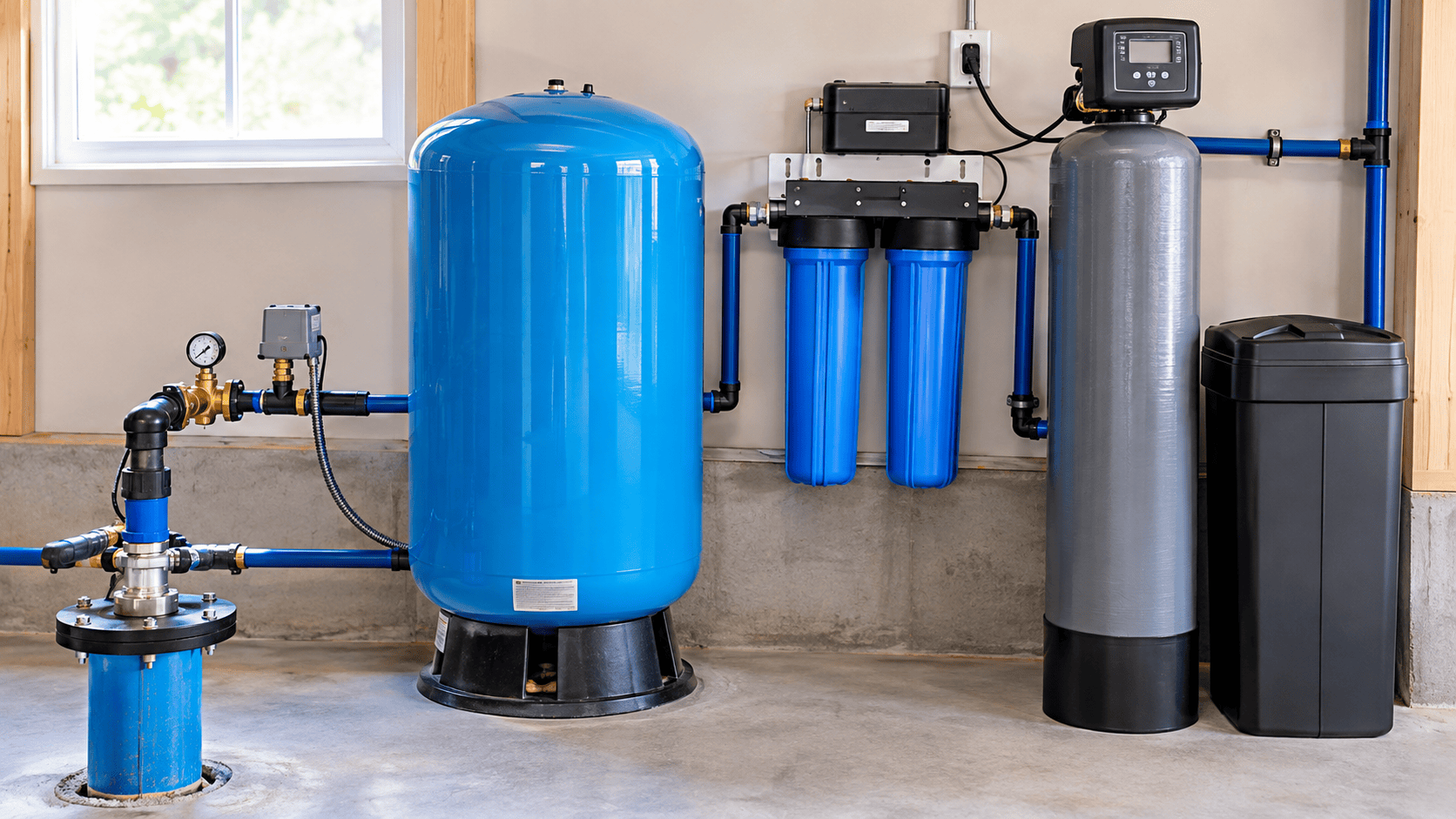
1. A Well Pump That Is Wearing Out or Not Properly Sized
Your well pump moves groundwater from the well into your home's plumbing system. If the pump becomes worn, develops a mechanical problem, or cannot keep up with household demand, you may notice a gradual or sudden decline in water pressure.
Pump performance depends on several factors, including the depth of the well, the distance water must travel, the pump's capacity, and the amount of water your household uses. A pump that worked well for a smaller household may struggle after additional bathrooms, appliances, or irrigation systems are installed.
Signs Your Well Pump May Be the Problem
Watch for these common symptoms:
- Water pressure decreases when multiple faucets or showers are running.
- The pump takes longer than usual to refill the pressure tank.
- Water flow becomes inconsistent during periods of heavy use.
- The pump makes unusual noises or runs continuously.
- Water pressure declines even after filters have been replaced.
How to Restore Proper Water Pressure
A professional well pump inspection can help determine whether the pump is operating within its intended performance range. A technician may evaluate the pump's output, operating pressure, electrical components, and ability to meet your household's water demand.
Depending on the findings, the solution could involve repairing a faulty component, correcting a system issue, or replacing a pump that has reached the end of its useful life.
Important: A weak faucet stream does not automatically mean you need a new well pump. Other parts of the system should be checked before making that investment.
2. Pressure Tank Problems That Affect Water Flow
The pressure tank plays an important role in maintaining steady water pressure. It stores a reserve of pressurized water and helps reduce how frequently the well pump switches on and off.
Many residential well systems use a tank with an internal bladder or diaphragm that separates water from compressed air. If the bladder fails, the air charge becomes incorrect, or the tank is not appropriately sized, the system may struggle to maintain consistent pressure.
What Does a Faulty Pressure Tank Look Like?
Common warning signs include:
- Water pressure rises and falls while using a faucet.
- The well pump turns on and off more frequently than normal.
- Pressure drops quickly after the pump stops.
- The pump starts whenever a small amount of water is used.
- Water delivery feels uneven during ordinary household activities.
What Can Fix a Pressure Tank Issue?
A qualified technician can check the tank's air charge, inspect its condition, and evaluate the pump's cycling behavior. The air pressure must be checked using the correct procedure, typically with the pump powered off and water pressure relieved.
If the tank bladder has failed or the tank is damaged, replacement may be necessary. If the problem involves an incorrect air charge or system settings, an adjustment may be sufficient.
A properly functioning pressure tank helps protect the well pump from excessive cycling and supports more dependable water delivery.
3. Clogged Sediment Filters and Water Treatment Equipment
A well can supply water at an adequate pressure while the plumbing inside your home still experiences weak flow. One possible reason is a restriction caused by clogged sediment filters or poorly maintained water treatment equipment.
Private wells can contain suspended particles such as sand, silt, and other sediment. Depending on local groundwater conditions, water may also contain iron or other minerals that require treatment. Filtration systems help address these concerns, but accumulated contaminants can eventually restrict water movement through the equipment.
How Can You Tell if a Filter Is Restricting Water Pressure?
Look for these signs:
- Water flow has decreased gradually over several weeks or months.
- Multiple faucets experience weaker flow at the same time.
- Water pressure improves after a filter cartridge is replaced.
- A pressure difference develops between the inlet and outlet of the treatment equipment.
- The problem becomes noticeable after installing a new filtration system.
How to Fix a Clogged Well Water Filter
Start by checking the manufacturer's recommended filter replacement and maintenance schedule. Some filter cartridges need regular replacement, while other systems require backwashing, cleaning, or servicing.
A professional water treatment evaluation can determine whether the filter is clogged, the media is exhausted, or the equipment is undersized for the home's peak water demand.
At Spring Rain, Inc., selecting an appropriate water filtration system means considering both water quality and the amount of water your household needs. Proper system sizing helps reduce unnecessary flow restrictions while addressing the contaminants identified through testing.
Do not remove essential filtration equipment simply to increase water flow. If the filter is protecting your plumbing or addressing a water quality concern, the underlying issue should be corrected instead.
4. Mineral Deposits and Restricted Plumbing Pipes
Minerals naturally present in groundwater can gradually accumulate inside plumbing fixtures, valves, and pipes. Hard water contains elevated concentrations of calcium and magnesium, which can contribute to scale formation under suitable conditions.
Iron and manganese may also contribute to deposits or buildup in some water systems. As these materials accumulate, they can narrow the available space for water to flow, particularly in older plumbing or areas with recurring mineral deposits.
Common Signs of Mineral Buildup
You may notice:
- Reduced flow from faucets and showerheads.
- White or chalky deposits around fixtures.
- Reddish-brown or dark staining in sinks and tubs.
- Different flow rates between older and newer fixtures.
- Pressure problems that gradually become worse.
What Is the Best Way to Address Pipe Restrictions?
Begin by determining whether the problem affects one fixture or the entire house. A clogged faucet aerator or showerhead may cause a localized flow problem, while widespread restrictions may indicate an issue with the main plumbing lines or treatment equipment.
Water testing can help identify hardness, iron, manganese, and other relevant water quality concerns. Depending on the results, a suitable treatment system may help control further mineral accumulation.
For example, a water softener can reduce calcium and magnesium hardness, while an appropriate iron filtration system can address certain forms of iron in water.
However, treating the incoming water will not automatically remove heavy deposits already inside restricted pipes. Existing plumbing restrictions may require separate cleaning, repair, or replacement by a qualified plumbing professional.
5. A Faulty Pressure Switch or Incorrect Pressure Settings
The pressure switch monitors the water pressure in many residential well systems and signals the pump to start or stop at designated pressure levels.
If the switch becomes worn, its electrical contacts deteriorate, or its sensing connection becomes obstructed, the pump may not operate as intended. Incorrect pressure settings can also affect how the system performs.
For example, a household may experience noticeable pressure drops before the pump starts, or the pump may fail to shut off as expected.
Warning Signs of a Pressure Switch Problem
Common symptoms include:
- Water pressure fluctuates more than usual.
- The pump starts too late or does not start.
- The pump continues running without reaching its normal shutoff point.
- Pressure changes unexpectedly during water use.
- The system develops frequent cycling or intermittent water delivery.
How Is a Pressure Switch Repaired?
A qualified well technician can inspect the switch, verify its operation, examine the pressure-sensing connection, and check the system's pressure settings.
The technician may clean or replace a faulty component and confirm that the switch works correctly with the pump and pressure tank.
Pressure adjustments should not be made casually. The pump, pressure tank, plumbing, and other system components must be compatible with the selected settings.
Because a pressure switch involves electrical components and pressurized equipment, homeowners should avoid opening or adjusting it without the necessary training.
6. Low Well Yield or Changes in Groundwater Availability
Sometimes, low water pressure is a symptom of a water supply problem rather than a mechanical failure.
A private well depends on the groundwater available in the surrounding geological formation. During extended dry weather, groundwater levels may decline, or the well may be unable to replenish water as quickly as the household consumes it.
The problem can become more noticeable when several water-intensive activities occur close together, such as running showers, laundry, dishwashers, and outdoor irrigation.
Signs Your Well May Be Struggling to Meet Demand
Pay attention to these warning signs:
- Water pressure decreases during prolonged use.
- Faucets sputter or deliver air mixed with water.
- Water flow stops temporarily and returns after the system rests.
- The problem becomes more frequent during dry weather.
- Sediment appears in the water when the system is heavily used.
These symptoms do not prove that the well is running dry. A failing pump, blocked intake, damaged pipe, or other mechanical problem can produce similar results.
How to Diagnose a Low-Yield Well
A professional well evaluation can assess the well's production and recovery rate, pump performance, and household water demand.
Depending on the findings, possible solutions may include repairing the pump, reducing simultaneous water use, correcting equipment issues, or considering an appropriately designed storage arrangement.
If the well cannot consistently meet the home's demand, the solution must account for its actual water production rather than simply increasing the pressure switch setting.
7. Partially Closed Valves or Hidden Plumbing Restrictions
Not every low-pressure problem requires major equipment replacement. Sometimes, the cause is a valve that is not fully open or a restriction introduced during plumbing or water treatment work.
Well systems may contain shutoff valves, filter bypass valves, isolation valves, and other fittings that control water movement. If one is partially closed, incorrectly positioned, or obstructed, it can reduce the amount of water reaching the fixtures.
A damaged pipe, clogged fitting, or malfunctioning treatment valve can create a similar problem.
How to Recognize a Valve or Plumbing Restriction
Look for the following clues:
- Water pressure changes after plumbing repairs or equipment installation.
- Certain rooms have weaker water flow than others.
- The problem appears immediately after a filter or softener is serviced.
- Water pressure is normal before treatment equipment but lower afterward.
- One faucet has poor flow while the rest of the house operates normally.
What Should You Check?
You can visually check accessible, clearly labeled shutoff valves to see whether they appear fully open. Avoid forcing a stuck valve or adjusting unfamiliar treatment equipment.
If the restriction is not obvious, a technician can inspect the plumbing layout, verify valve positions, and measure pressure before and after the affected components.
This process helps distinguish a simple flow restriction from a more complicated problem involving the pump, tank, or water treatment system.
Why Low Water Pressure in a Well System Requires Proper Diagnosis
When water pressure drops, replacing the well pump may seem like the quickest answer. However, a new pump will not necessarily solve a clogged filter, failing pressure tank, obstructed pipe, or inadequate well yield.
The most effective approach is to identify where the problem begins and determine which component is responsible.
A professional well water pressure assessment may include:
- Measuring system pressure during different operating conditions.
- Checking pump startup, shutdown, and cycling behavior.
- Evaluating the pressure tank and pressure switch.
- Inspecting filters, softeners, and other water treatment equipment.
- Comparing water flow before and after suspected restrictions.
- Assessing well production when a supply problem is suspected.
- Testing water quality when mineral or sediment buildup may be involved.
These checks provide a clearer picture of the system's condition and help guide the next step.
Correct diagnosis can prevent unnecessary equipment replacement, reduce the risk of recurring pressure problems, and help protect the long-term performance of your well water system.
How to Help Prevent Future Well Water Pressure Problems
Although some component failures are unavoidable, regular maintenance can help identify developing issues before they significantly affect your household.
Consider these practical maintenance steps:
Replace Filters According to Their Maintenance Schedule
Check filter condition and follow the manufacturer's replacement recommendations. Sediment levels can vary considerably between wells, so some homes may require more frequent service than others.
Monitor Changes in Water Pressure
Pay attention to gradual changes in shower flow, faucet performance, and the time it takes for the pump to restore pressure. Keeping track of recurring symptoms can help a technician diagnose the problem more efficiently.
Schedule Routine Well System Inspections
A periodic inspection can help identify pump wear, pressure tank problems, electrical issues, and restrictions in the treatment equipment before they cause larger disruptions.
Test Your Well Water Regularly
Water quality testing helps identify concerns such as bacteria, nitrate, hardness, iron, and other contaminants relevant to your location and well conditions. Testing is especially important when water appearance, taste, or odor changes.
Remember that clear water does not necessarily mean the water is free from harmful contaminants. Pressure maintenance and water quality testing serve different purposes, and both deserve attention.
Get Reliable Well Water Solutions With Spring Rain, Inc.
Low water pressure can make everyday tasks difficult, but the right solution begins with understanding what is happening inside your well system.
Whether the issue involves a worn pump, an improperly functioning pressure tank, clogged filtration equipment, mineral buildup, or limited well production, identifying the actual cause helps you make informed decisions about repairs and water treatment.
Spring Rain, Inc. provides customized water treatment solutions for homes and businesses, helping customers address water quality concerns with systems designed around their needs. From water softening to reverse osmosis and whole-house filtration, the right treatment approach can help improve water quality and support long-term system performance.
If your home relies on a private well and you are experiencing recurring pressure problems, start by evaluating both the mechanical system and the condition of your water.
Visit Spring Rain, Inc. to explore water treatment solutions and find out how a properly evaluated system can help you enjoy more dependable water at home.
Frequently Asked Questions About Low Well Water Pressure
Why is my well water pressure suddenly low?
A sudden drop in well water pressure may result from a clogged filter, pressure switch malfunction, pump problem, closed valve, or plumbing restriction. If the entire home is affected, the well system should be evaluated to identify the source.
Can a whole-house water filter reduce well water pressure?
Yes. A clogged cartridge, accumulated sediment, exhausted filter media, or undersized filtration system can restrict water flow. Checking pressure before and after the equipment can help identify the restriction.
Does low water pressure always mean my well pump is failing?
No. Pressure tanks, switches, filters, valves, and plumbing restrictions can all affect water delivery. A pump should be replaced only when testing indicates that it is faulty or no longer suitable for the system.
Why does my well water pressure drop when I take a shower?
Pressure may drop when water demand exceeds the system's ability to maintain the required flow. Possible causes include an undersized or worn pump, restricted filtration equipment, a pressure tank problem, or limited well production.
Can hard water cause low water pressure?
Hard water can contribute to mineral scale inside pipes and fixtures over time. This buildup can restrict flow, although a sudden pressure drop may have another cause. Water testing can help determine whether hardness treatment is appropriate.
How can I tell if my well is running low on water?
Repeated pressure loss during extended use, sputtering faucets, or temporary interruptions in water delivery may indicate a supply problem. However, similar symptoms can result from equipment failures, so a professional evaluation is needed to confirm the cause.
How often should a private well system be inspected?
The appropriate schedule depends on the well's age, equipment condition, water quality, and usage. Periodic professional inspections and prompt attention to noticeable pressure changes can help identify developing problems. Private well water should also be tested regularly for relevant contaminants.
Protect Your Home's Water Supply
Consistent water pressure and good water quality both matter. If your well water system is not performing as expected, identifying the cause early can help you avoid unnecessary repairs and choose a solution that fits your home's needs. Spring Rain, Inc. is committed to helping homeowners explore practical water treatment options for cleaner, better-quality water.