Hard water is a common problem in many homes across the United States. From white scale buildup on faucets to dry skin, cloudy dishes, and plumbing damage, hard water can affect everyday comfort and long-term home maintenance.
Because of these issues, many homeowners start looking into water softening solutions. One of the biggest questions people ask is: Should you rent or purchase a water softener system?
Understanding the pros, costs, and long-term differences between renting and buying can help homeowners make the right decision for their household needs and budget.
Why Homeowners Install Water Softeners
Hard water contains high levels of minerals such as calcium and magnesium. Over time, these minerals can create buildup inside pipes, appliances, and fixtures.
Common Signs of Hard Water
- White spots on dishes and glassware
- Soap scum buildup
- Dry skin and hair
- Reduced water pressure
- Scale buildup on faucets
- Appliance efficiency problems
Water softeners help reduce these hard water effects and improve overall household water quality.
What Is a Water Softener Rental?
A water softener rental allows homeowners to use a water softening system for a monthly fee instead of purchasing the equipment outright.
The rental company typically handles:
- Installation
- Maintenance
- Repairs
- Equipment servicing
This option is popular among homeowners who prefer lower upfront costs.
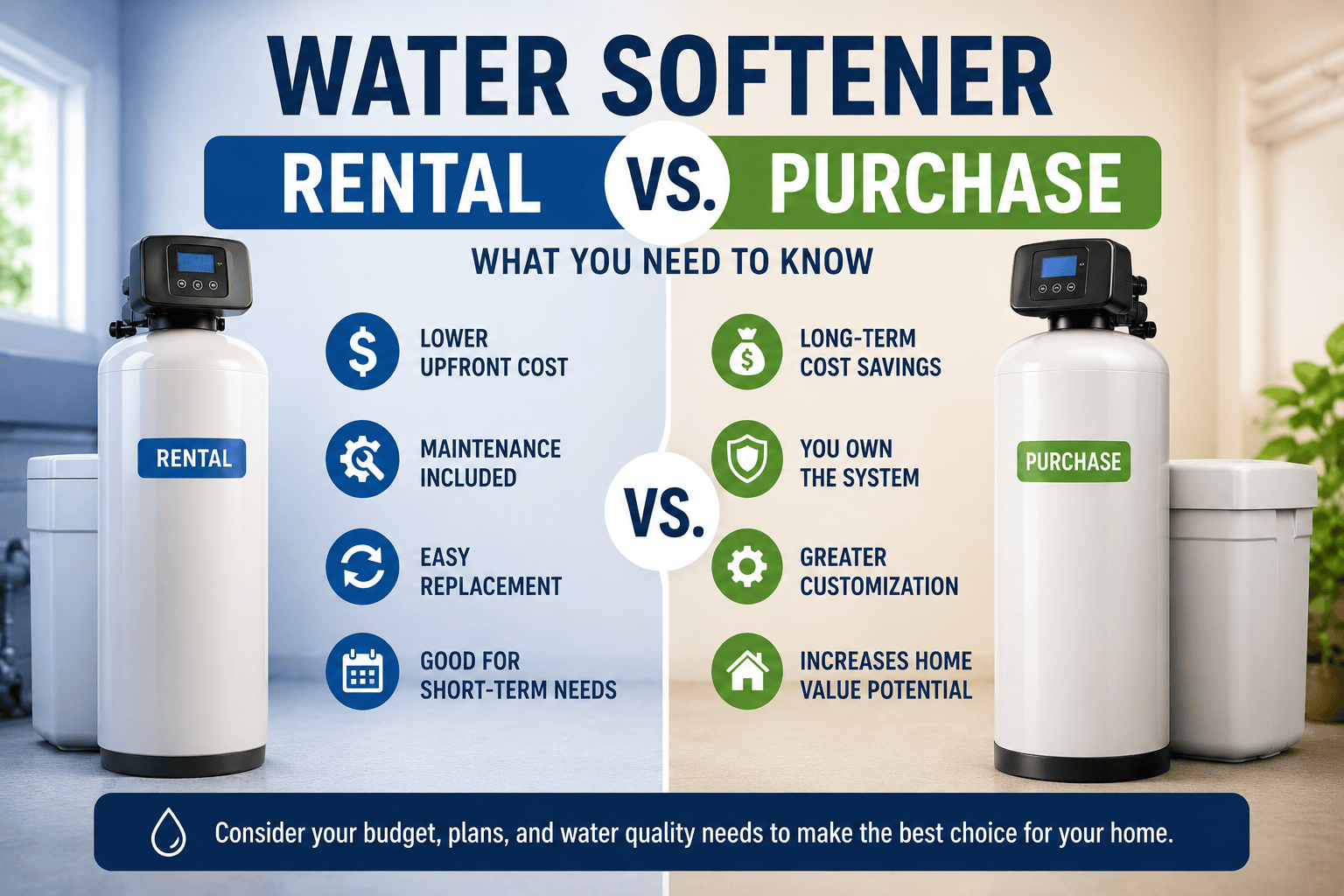
Advantages of Renting a Water Softener
Renting can offer flexibility and convenience for some households.
Benefits of Renting
- Lower upfront investment
- Maintenance often included
- Easier equipment replacement
- Good for short-term homeowners
- Reduced repair responsibilities
For homeowners who may move soon or want to avoid large initial costs, renting can be an attractive option.
Disadvantages of Renting a Water Softener
Although renting may seem affordable initially, long-term costs can add up over time.
Drawbacks of Renting
- Higher lifetime cost
- Monthly payment obligations
- Limited equipment ownership
- Possible contract restrictions
- Fewer customization options
Over several years, rental payments may exceed the cost of purchasing a system outright.
What Does It Mean to Purchase a Water Softener?
Purchasing a water softener means buying the equipment and owning it permanently.
Homeowners can either pay upfront or finance the system over time depending on the provider.
Advantages of Buying a Water Softener
Many homeowners prefer ownership because it offers long-term value and control.
Benefits of Purchasing
- Long-term cost savings
- Full ownership of equipment
- No monthly rental fees
- Greater system customization
- Increased home value potential
Buying is often more cost-effective for homeowners planning to stay in their homes for many years.
Disadvantages of Purchasing a Water Softener
Although ownership has benefits, there are some considerations before buying.
Drawbacks of Purchasing
- Higher upfront cost
- Maintenance responsibility
- Repair costs after warranty
- Installation expenses
Homeowners should compare total long-term expenses before making a final decision.
Water Softener Rental vs. Purchase: Cost Comparison
Cost is often the biggest factor when deciding between renting and purchasing.
Rental Costs
Water softener rentals usually involve:
- Monthly fees
- Service agreements
- Possible installation charges
Monthly rental prices vary depending on system size and service coverage.
Purchase Costs
Buying a system generally includes:
- Equipment cost
- Installation fees
- Ongoing maintenance expenses
Although the initial investment is higher, ownership may provide better value over time.
Which Option Is Better for Long-Term Homeowners?
For homeowners planning to stay in their property long-term, purchasing often becomes more economical after several years.
However, renting may still make sense for:
- Temporary housing situations
- Limited upfront budgets
- Homeowners wanting maintenance included
The best choice depends on your financial goals, homeownership plans, and water treatment needs.
Important Factors To Consider Before Deciding
Before choosing between renting or buying, homeowners should evaluate several key factors.
Water Quality
Test your water to determine hard water severity and treatment needs.
Budget
Compare upfront costs with long-term monthly expenses.
Homeownership Plans
Short-term homeowners may prefer rental flexibility.
Maintenance Preferences
Some homeowners prefer professional maintenance services included with rentals.
Equipment Quality
Not all systems offer the same filtration and softening performance.
Why Water Testing Matters
Professional water testing helps homeowners understand what problems actually exist in their water supply.
Testing can identify:
- Hard water levels
- Iron contamination
- Sediment
- Chlorine levels
- Water quality concerns
This information helps determine the right type of water softening solution.
Other Water Treatment Systems To Consider
Many homeowners combine water softeners with additional water treatment systems for improved household water quality.
Popular Water Treatment Options
- Reverse osmosis systems
- Whole house filtration systems
- Carbon filtration systems
- Sediment filters
- UV purification systems
Combining systems may help address multiple water quality concerns throughout the home.
Final Thoughts on Water Softener Rental vs. Purchase
When comparing water softener rental vs. purchase, there is no one-size-fits-all answer. Renting offers flexibility and lower upfront costs, while purchasing often provides better long-term value and full ownership benefits.
The right choice depends on your budget, long-term housing plans, maintenance preferences, and overall water quality needs.
Understanding your household water conditions and comparing total long-term costs can help you make a smarter and more confident decision for your home.