If you own a water softener or are considering installing one, you've probably wondered: How often does a water softener regenerate?
The answer isn't the same for every home. Some water softeners regenerate every few days, while others may go a week or longer between cycles. The frequency depends on several factors, including your water hardness level, household water usage, system capacity, and the technology built into your softener.
Understanding regeneration is important because it directly affects water quality, salt consumption, operating costs, and the overall performance of your water treatment system.
In this guide, the experts at Spring Rain, Inc. explain how regeneration works, what influences regeneration frequency, and how homeowners can maximize water softener efficiency.
What Is Water Softener Regeneration?
Water softeners remove hardness minerals such as calcium and magnesium through a process known as ion exchange.
Inside the softener tank are thousands of resin beads that attract and capture hardness minerals before they enter your home's plumbing system.
Over time, these resin beads become saturated with minerals and lose their ability to soften water effectively.
Regeneration is the cleaning process that restores the resin beads so they can continue removing hardness minerals from your water supply.
Without regular regeneration, your softener would eventually stop producing soft water.
How Often Should a Water Softener Regenerate?
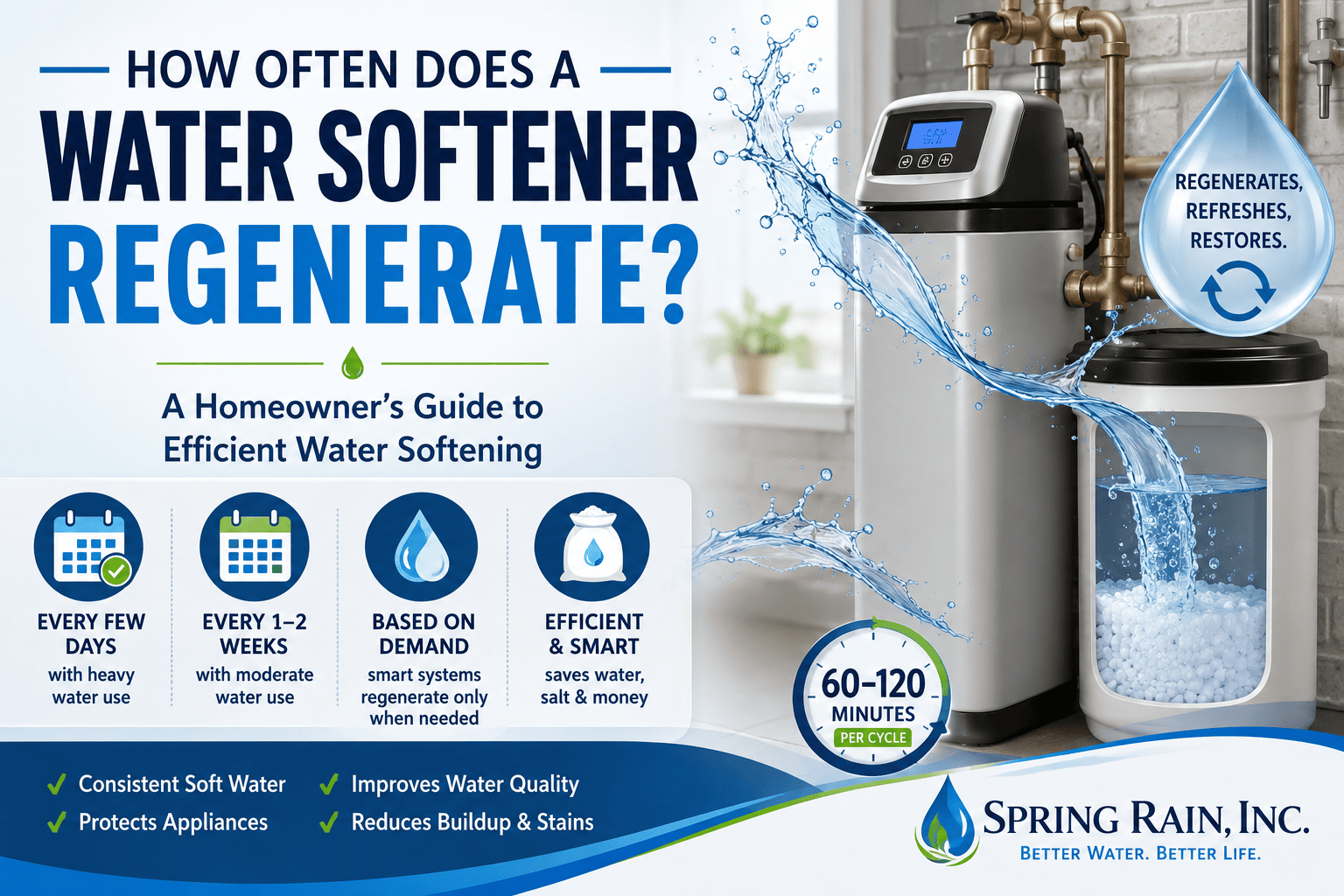
Most residential water softeners regenerate:
- Every 3 to 7 days in homes with very hard water
- Every 7 to 14 days in homes with moderate hardness levels
- Based on actual water demand in high-efficiency systems
A properly sized and configured water softener should regenerate only when necessary.
Regenerating too frequently can waste salt and water, while regenerating too infrequently can allow hard water to enter your plumbing system.
The goal is to maintain a balance between performance and efficiency.
5 Factors That Affect Water Softener Regeneration Frequency
1. Water Hardness Level
The harder your water, the faster your softener uses its capacity.
Water with high concentrations of calcium and magnesium causes resin beads to fill more quickly, requiring more frequent regeneration cycles.
Signs of extremely hard water include:
- White mineral deposits
- Soap scum buildup
- Dry skin and hair
- Cloudy dishes
- Reduced appliance efficiency
Homes with severe water hardness typically require more frequent regeneration than homes with moderately hard water.
2. Household Water Usage
Every gallon of water flowing through your softener uses a portion of its available capacity.
Larger households generally regenerate more often because they consume more water through:
- Showers
- Laundry
- Dishwashing
- Cooking
- Outdoor water use
A family of six may require significantly more regeneration cycles than a household with only one or two occupants.
3. Water Softener Capacity
Not all water softeners are designed to handle the same volume of water.
Larger systems contain more resin and can treat greater amounts of hard water before regeneration becomes necessary.
A properly sized system can improve efficiency and reduce unnecessary regeneration cycles.
4. System Technology
Modern water softeners are significantly more efficient than older models.
Today's advanced systems often include:
- Smart monitoring
- Digital controls
- Usage tracking
- Automatic demand-based regeneration
Rather than following a fixed schedule, these systems regenerate only when the resin capacity has actually been depleted.
This helps reduce water waste and salt consumption.
5. Seasonal Changes in Water Use
Many homeowners use more water during certain times of the year.
Examples include:
- Summer lawn irrigation
- Filling swimming pools
- Hosting guests
- Holiday gatherings
Increased water demand can cause regeneration frequency to rise temporarily.
How Does the Regeneration Process Work?
Although regeneration happens automatically in most systems, understanding the process can help homeowners better maintain their equipment.
Step 1: Backwash
The system flushes accumulated debris from the resin tank.
Step 2: Brine Draw
Saltwater from the brine tank flows through the resin bed.
This concentrated brine removes trapped calcium and magnesium from the resin beads.
Step 3: Slow Rinse
The system continues rinsing to ensure minerals are completely removed.
Step 4: Fast Rinse
Fresh water flushes away remaining brine and contaminants.
Step 5: Brine Tank Refill
The system refills the brine tank with water in preparation for the next regeneration cycle.
Most regeneration cycles take between 60 and 120 minutes, depending on system size and configuration.
Signs Your Water Softener May Not Be Regenerating Properly
A malfunctioning regeneration cycle can quickly lead to hard water problems returning.
Watch for these warning signs:
Hard Water Stains Reappearing
Mineral spots on dishes, faucets, and shower doors often indicate softening performance has declined.
Soap Doesn't Lather Well
Poor soap performance is one of the earliest indicators of hard water.
Dry Skin and Dull Hair
If your skin feels rough or your hair becomes difficult to manage, your softener may need attention.
Increased Scale Buildup
White deposits around plumbing fixtures can signal insufficient regeneration.
Higher Salt Levels Than Expected
If salt usage suddenly changes, your system may not be operating efficiently.
How Often Should You Add Salt to a Water Softener?
Salt is essential for successful regeneration.
Most homeowners should inspect their brine tank at least once per month.
You may need to refill salt more frequently if:
- Your household uses large amounts of water
- Your water hardness is extremely high
- Your system regenerates frequently
Keeping the brine tank adequately supplied helps ensure uninterrupted soft water performance.
Can Frequent Regeneration Increase Utility Costs?
Yes.
Every regeneration cycle consumes:
- Water
- Salt
- Electricity (in some systems)
That's why properly sizing and programming a water softener is so important.
An efficient system should regenerate only when necessary, reducing operating costs while maintaining optimal water quality.
How to Improve Water Softener Efficiency
Homeowners can maximize efficiency by:
Schedule Regular Maintenance
Routine inspections help identify issues before they affect performance.
Use High-Quality Softener Salt
Premium salt products can reduce buildup and improve regeneration effectiveness.
Monitor Water Usage
Unexpected spikes in water consumption may indicate leaks or inefficiencies.
Test Your Water Periodically
Water hardness levels can change over time.
Regular testing ensures your system remains properly adjusted.
Work With Water Treatment Professionals
A professional assessment helps ensure your softener is correctly sized and operating at peak efficiency.
Why Homeowners Trust Spring Rain, Inc.
At Spring Rain, Inc., we help homeowners understand their water quality and choose water treatment solutions that deliver long-term results.
Whether you're experiencing hard water issues, evaluating a new water softener, or trying to improve the efficiency of an existing system, our team can help identify the right solution for your home's specific needs.
Professional water testing and expert guidance ensure you get the most from your water treatment investment.
Final Thoughts: How Often Does a Water Softener Regenerate?
There is no universal regeneration schedule because every home has unique water conditions and usage patterns.
However, most water softeners regenerate anywhere from every few days to every couple of weeks depending on:
- Water hardness
- Household size
- Water consumption
- Softener capacity
- System technology
The key is ensuring your softener regenerates often enough to maintain consistent soft water while avoiding unnecessary water and salt usage.
If you're unsure whether your system is operating efficiently, Spring Rain, Inc. can help evaluate your water quality and recommend the best solution for your home.