Choosing the best water softener salt may seem simple until you walk into a store and see pellets, crystals, solar salt, evaporated salt, and potassium chloride sitting side by side. They may look similar, but they are not exactly the same when it comes to purity, performance, maintenance, and cost.
The right salt can help your water softener regenerate properly, reduce residue inside the brine tank, and keep the system working efficiently. On the other hand, using a poor-quality or incompatible product can contribute to salt bridges, buildup, and unnecessary maintenance.
So, which type should you choose?
For many residential systems, a high-purity water softener salt in pellet form is a practical choice. However, the best option ultimately depends on your softener, water quality, household water use, and the recommendations provided by the equipment manufacturer.
What Is Water Softener Salt?
Water softener salt is used by traditional salt-based water softeners during the regeneration process. The salt dissolves in water inside the brine tank, creating a concentrated brine solution.
During regeneration, that brine helps restore the softener's resin so it can continue removing hardness minerals such as calcium and magnesium from incoming water.
Without enough salt or another approved regeneration material, a salt-based softener eventually loses its ability to properly soften water.
That is why choosing the right product is more important than simply buying the cheapest bag available.
What Makes the Best Water Softener Salt?
Not all softener salt products are created the same way. When comparing options, pay attention to several factors.
Purity
Purity is one of the most important considerations. Higher-purity salt generally contains fewer insoluble materials that can accumulate in the brine tank.
Cleaner salt can mean less residue and easier long-term maintenance.
Salt Form
Water softener salt is commonly sold as pellets or crystals. Some systems may also use other forms, but pellets and crystals are the most common choices for residential applications.
Compatibility
Before changing salt types, check your softener's owner's manual. Some systems have specific recommendations regarding the type or form of salt that should be used.
Water Quality
Your home's water quality can also influence the best choice. A household with iron in its water may have different needs from a home receiving relatively clean municipal water.
Maintenance Requirements
If you want to minimize cleaning and salt-related problems, a cleaner, higher-purity product can be worth considering even if it costs slightly more.
Types of Water Softener Salt
Understanding the major types makes it much easier to decide what belongs in your brine tank.
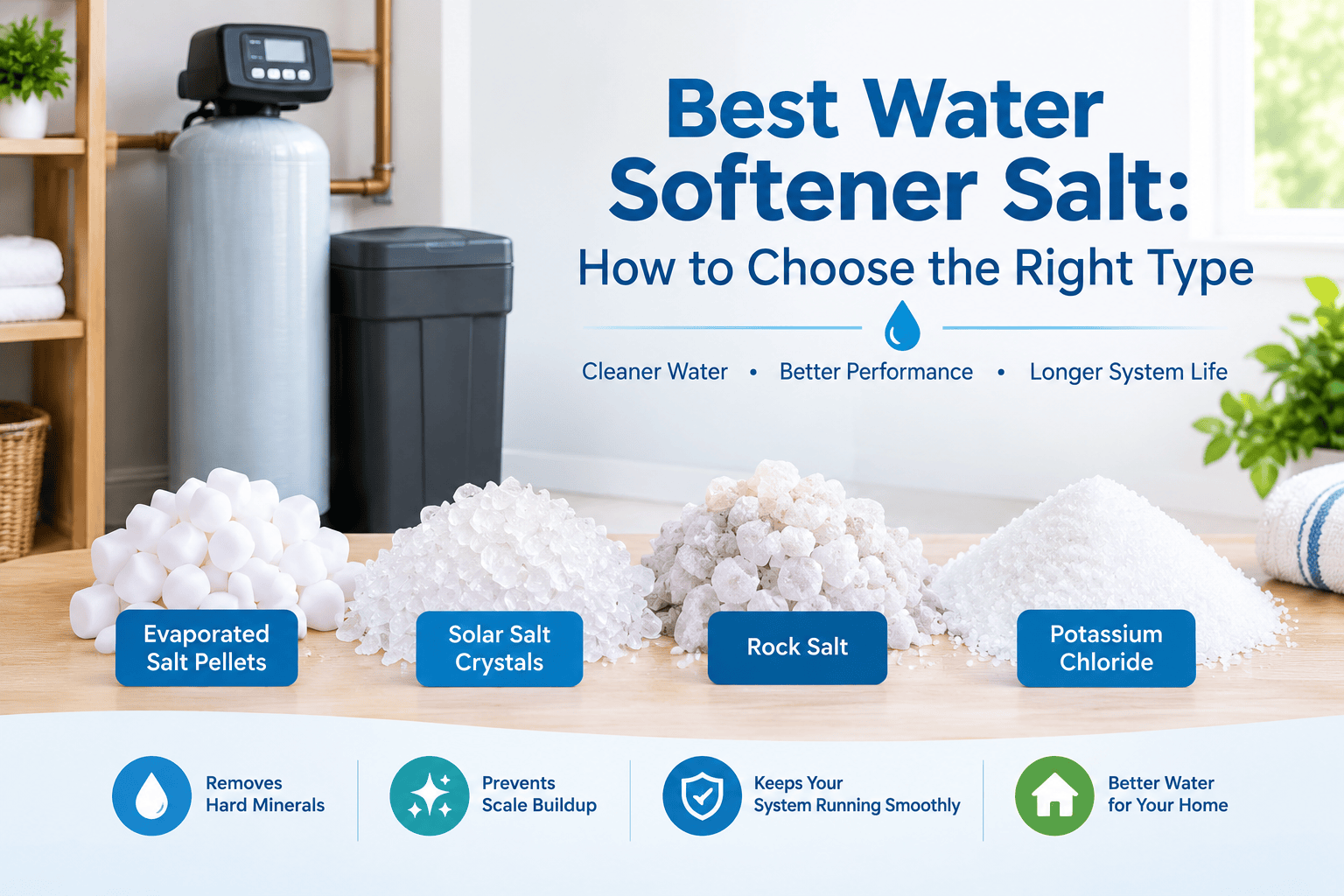
Evaporated Salt Pellets
Evaporated salt pellets are a popular choice for residential water softeners because they are highly refined and generally contain very little insoluble material.
They dissolve efficiently during regeneration and can leave less residue behind than lower-purity alternatives.
For homeowners who want a dependable, low-maintenance option, high-purity evaporated pellets are often a strong starting point.
They can be especially useful when the softener works frequently or when the homeowner wants to reduce the amount of material accumulating at the bottom of the brine tank.
Solar Salt
Solar salt is produced by evaporating saltwater or natural brine. It is commonly available in crystal or pellet form and can provide a good balance between performance and cost.
For many homes, solar salt works perfectly well when it is approved for use with the particular water softener.
However, depending on the product and water conditions, it may leave more residue than highly refined evaporated salt.
Rock Salt
Rock salt is mined from underground deposits and generally contains more impurities than highly processed softener salt.
It can be less expensive, which makes it attractive to some homeowners. The problem is that the additional insoluble material can accumulate inside the brine tank and increase maintenance needs.
For that reason, rock salt is usually not the first choice for modern residential softeners unless the equipment manufacturer specifically allows it.
Potassium Chloride
Potassium chloride is an alternative to traditional sodium chloride.
It can be appealing to households that want to reduce the amount of sodium associated with their water-softening process. However, potassium chloride is generally more expensive than standard softener salt.
It may also require changes to the softener's settings depending on the equipment.
If you are considering switching from sodium chloride to potassium chloride, check the manufacturer's instructions before making the change.
Pellets vs. Crystals: Which Is Better?
One of the most common questions homeowners ask is whether they should buy pellets or crystals.
There is no universal answer for every softener, but pellets are often a convenient choice because they are designed to dissolve consistently and are widely available for residential systems.
Crystals can also work well in many systems and may be an economical option.
The most important point is not to assume that one form is automatically better for every softener. Your equipment's requirements should come first.
If your current salt is dissolving properly and the system is operating normally, there may be little reason to change simply because another type looks more appealing.
What Is the Best Water Softener Salt for Hard Water?
Homes with very hard water can put more demand on a water softener because the system may need to regenerate more frequently.
In this situation, a high-quality, high-purity salt can be a practical choice.
Evaporated pellets are often worth considering because they dissolve cleanly and can help limit residue buildup inside the brine tank.
However, salt quality is only one part of the solution.
If your water remains hard even though the brine tank is full, the problem could involve incorrect hardness settings, insufficient system capacity, resin issues, or another component of the water treatment system.
Simply adding more salt will not fix an incorrectly sized or malfunctioning softener.
What Is the Best Salt for a Water Softener With Iron?
Iron can create additional challenges for a water softener.
Some specialty softener salts are designed with additives intended to help reduce iron-related staining and buildup. These products may be useful in certain situations, particularly when the water contains iron.
However, a water softener should not automatically be treated as the complete solution for significant iron problems.
If your well water has noticeable iron, orange staining, metallic taste, or recurring discoloration, it is worth having the water tested. Depending on the concentration and type of iron, a dedicated iron filtration system may be more appropriate.
How Much Salt Should You Put in a Water Softener?
There is no single amount that works for every household.
Salt consumption depends on factors such as:
- Water hardness
- Household size
- Daily water consumption
- Softener capacity
- Regeneration settings
- Iron levels
- Efficiency of the system
Instead of filling the tank completely to the top, follow the manufacturer's recommended fill level.
You should also check the salt regularly. Allowing the tank to run completely empty can interrupt normal regeneration and allow hard water to return.
How Often Should You Add Water Softener Salt?
The answer depends on how much water your household uses and how often the softener regenerates.
A small household with moderate water hardness may use considerably less salt than a larger family with very hard water.
Rather than following a fixed calendar schedule, get into the habit of checking the salt level regularly.
A quick inspection every week or two can help you notice when the level is getting low before the system runs out.
What Is a Salt Bridge?
A salt bridge is a hard crust or layer of compacted salt that forms inside the brine tank.
It can create the appearance that the tank has plenty of salt when, in reality, the salt underneath is not dissolving properly.
When this happens, the softener may not receive enough brine during regeneration.
Salt bridges can develop because of humidity, temperature changes, poor-quality salt, or simply conditions inside the brine tank.
If you suspect a salt bridge, follow your softener manufacturer's instructions for safely breaking it up.
How Can You Tell If Your Water Softener Salt Is Not Working Properly?
Sometimes the problem is not the softener itself but the way salt is being used or stored.
Watch for signs such as:
Hard Water Spots
White mineral deposits may begin appearing on faucets, shower doors, glassware, and fixtures.
Soap Does Not Lather Normally
If water suddenly feels different and soap does not rinse the way it normally does, hardness may be returning.
Salt Level Does Not Change
If you notice that the salt level remains unusually high despite regular regeneration, the system may not be using the brine correctly.
Salt Tank Contains Heavy Buildup
Excessive sludge or unusual deposits may indicate that the salt quality or system operation needs attention.
Water Softness Changes
If your water is soft one day and noticeably harder later, there could be an issue with regeneration, settings, salt bridging, or another part of the system.
Common Mistakes When Buying Water Softener Salt
Buying the wrong salt can create unnecessary problems. Here are some mistakes worth avoiding.
Choosing Salt Only Because It Is Cheap
The lowest-priced bag is not necessarily the best value. Lower-purity salt can result in more residue and additional maintenance.
Using Regular Table Salt
Table salt is not the same thing as salt specifically designed for water softeners. Stick with products clearly labeled for water softener use.
Using De-Icing Salt
Do not assume that salt sold for melting ice is suitable for your water softener. De-icing products may contain materials that are inappropriate for water treatment equipment.
Ignoring the Manufacturer's Instructions
Your owner's manual should always be the first place to check before changing salt types.
Letting the Tank Run Empty
A softener needs its regeneration material to complete the regeneration process. Keep an eye on the salt level so you can refill it before the supply runs out.
How to Store Water Softener Salt
Where you keep your salt matters, especially if you purchase several bags at once.
Store unopened bags in a dry location away from rain, standing water, and excessive humidity.
Keep bags off damp floors whenever possible. Moisture can cause salt to harden inside the bag, making it more difficult to use.
It is also better to buy a reasonable supply rather than stacking up more salt than you can use in a long period.
How to Choose the Best Water Softener Salt for Your Home
If you are standing in the store trying to decide which bag to buy, keep the process simple.
First, check your water softener's manual.
Next, identify whether your system recommends pellets, crystals, sodium chloride, potassium chloride, or another specific option.
Then consider your water conditions.
If you have relatively typical household water and a standard salt-based softener, a high-purity evaporated pellet is often a sensible choice.
If cost is a major concern, a suitable solar salt may offer a good balance between price and performance.
If sodium is a concern, ask whether potassium chloride is compatible with your system.
And if you have iron, unusual staining, or persistent water-quality problems, consider testing the water before choosing a specialty salt.
Frequently Asked Questions About Water Softener Salt
What is the best water softener salt for most homes?
For many residential salt-based softeners, high-purity evaporated salt pellets are a practical choice because they dissolve well and generally leave less residue. Always follow the equipment manufacturer's recommendations.
Is pellet salt better than crystal salt?
Pellets are often preferred for convenience and consistent dissolving, but crystals can also work well in compatible systems. The best choice depends on your softener and water conditions.
Can I use potassium chloride instead of salt?
Some water softeners can use potassium chloride, but you should confirm compatibility and check whether the system settings need to be adjusted.
Can I mix different types of softener salt?
It is generally better to avoid routinely mixing different salt types. If you want to change products, check your manufacturer's recommendations and allow the existing supply to run down when appropriate.
Why is my water still hard when the salt tank is full?
A full salt tank does not necessarily mean the softener is working correctly. Possible causes include a salt bridge, incorrect settings, blocked brine components, resin problems, or an undersized system.
How often should I check my water softener salt?
Checking the salt level every week or two is a simple maintenance habit. Your actual refill schedule will depend on household water use and system settings.
Final Thoughts
The best water softener salt is not necessarily the cheapest bag or the most heavily advertised product. It is the salt that works properly with your softener, matches your home's water conditions, and helps the system regenerate without creating unnecessary maintenance problems.
For many homeowners, high-purity evaporated pellets are a dependable option. Solar salt can be a practical alternative, while potassium chloride may make sense for households looking for a sodium-free regeneration option. Whatever you choose, always start with your softener manufacturer's recommendations.
If you are unsure whether your current salt, softener settings, or entire water treatment setup is right for your home, Spring Rain, Inc. can help you evaluate your water quality and determine an appropriate treatment approach.