Salt-free water softeners are becoming increasingly popular among homeowners looking for eco-friendly and low-maintenance solutions. But before making a decision, it’s important to understand both the benefits and the limitations.
So, what are the disadvantages of salt-free water softeners? Let’s take a closer, honest look so you can make the right choice for your home.
What Is a Salt-Free Water Softener?
A salt-free system doesn’t actually “soften” water in the traditional sense. Instead of removing calcium and magnesium, it conditions the water to prevent minerals from sticking to surfaces.
This makes it a great alternative for people who want to avoid salt-based systems—but it also comes with some trade-offs.
Key Disadvantages of Salt-Free Water Softeners
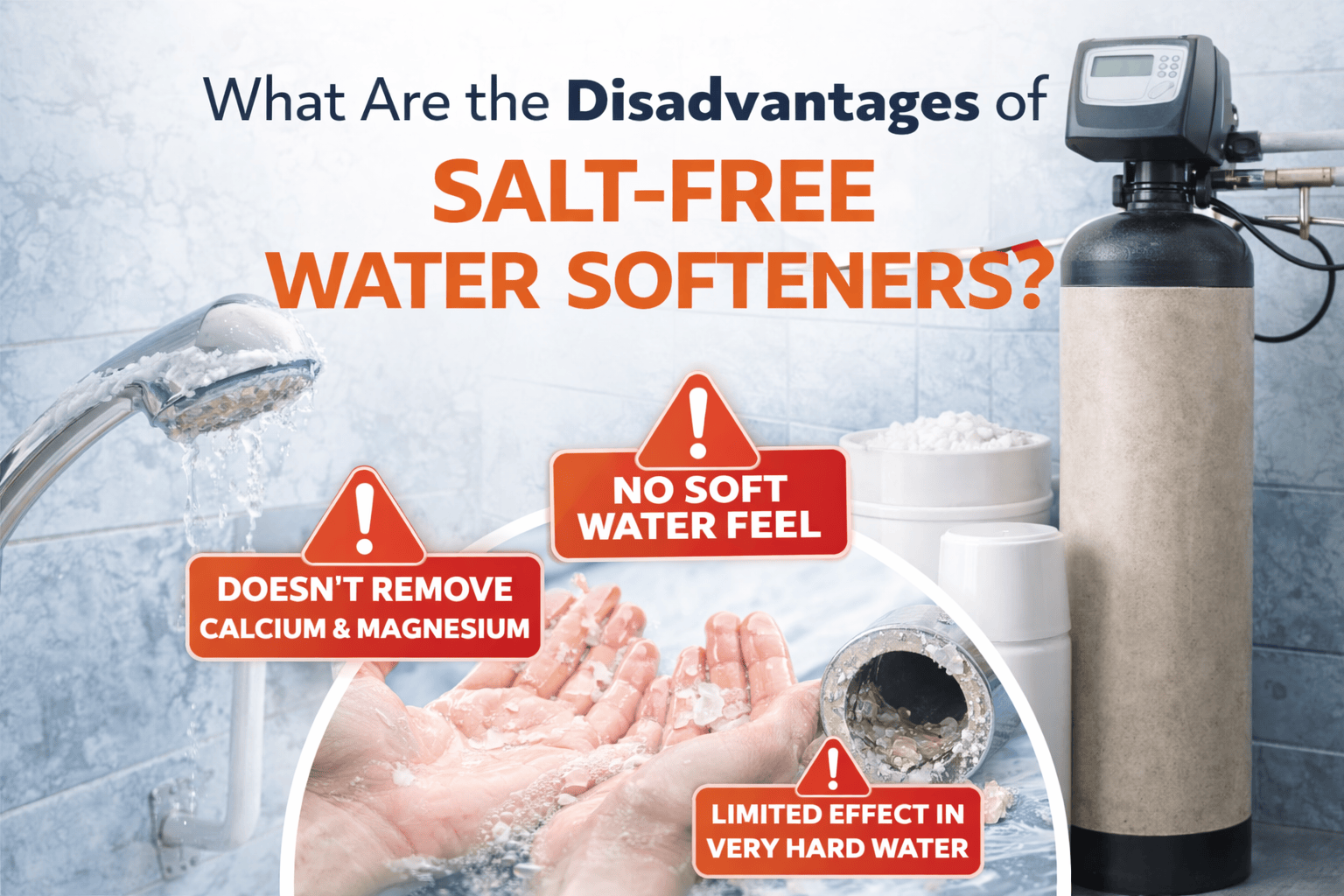
1. Does Not Remove Hard Minerals
The biggest drawback is that salt-free systems don’t remove calcium and magnesium from water.
This means:
- Water is still technically “hard”
- You may still notice some residue
- Soap may not lather as effectively as with traditional softeners
2. Less Effective in Very Hard Water Areas
If you live in a region with extremely hard water, salt-free systems may not deliver the same results as traditional softeners.
They work best in areas with moderate hardness, but performance can drop in high mineral conditions.
3. No Immediate “Soft Water Feel”
Many homeowners expect that silky, smooth feeling after installing a system.
With salt-free conditioners:
- You won’t get that slippery soft-water feel
- The difference is more subtle and gradual
4. Higher Initial Cost
Salt-free systems can sometimes have a higher upfront cost compared to basic salt-based softeners.
However, they often make up for it with lower maintenance costs over time.
5. Limited Impact on Existing Scale
While these systems help prevent new scale buildup, they may not effectively remove existing deposits in pipes and appliances.
Are Salt-Free Systems Still Worth It?
Yes - depending on your needs.
Despite the disadvantages, salt-free systems offer several benefits:
- No salt or chemicals required
- Low maintenance
- Environmentally friendly
- No wastewater discharge
- Longer system lifespan
For many homeowners, these advantages outweigh the limitations.
Choosing the Best Salt Free Water Softener System
If you’re considering this option, selecting the best salt free water softener system is crucial.
A high-quality system can:
- Effectively reduce scale buildup
- Improve appliance efficiency
- Provide long-term performance
- Work well with your home’s water conditions
Not all systems are created equal, so choosing a trusted provider makes a big difference.
Why Choose Spring Rain, Inc?
At Spring Rain, Inc, we specialize in advanced water treatment solutions designed for real-world conditions.
Our best salt free water softener system is carefully selected to deliver reliable performance, especially for homeowners looking for a low-maintenance and eco-friendly option.
When you choose Spring Rain, Inc, you get:
- Expert guidance based on your water quality
- High-performance systems built for durability
- Professional installation
- Ongoing support and service
We focus on helping you find the right solution—not just selling a product.
Final Thoughts
So, what are the disadvantages of salt-free water softeners? The main limitations include not removing hard minerals, reduced effectiveness in very hard water, and a lack of that traditional soft-water feel.
However, for many homes, these systems still provide excellent value—especially when you choose the best salt free water softener system from a trusted provider like Spring Rain, Inc.
If you’re looking for a modern, low-maintenance solution to improve your water quality, this could be the perfect fit for your home.