RO purification is designed to remove harmful contaminants from drinking water, making it safer for everyday consumption. Let’s understand the facts, myths, and expert opinions about whether RO water affects kidney health.
What is RO Water?
Reverse Osmosis (RO) is an advanced filtration process that removes impurities such as heavy metals, chemicals, bacteria, viruses, and excess salts from water. It uses a semi-permeable membrane to filter out harmful substances and provide clean drinking water.
RO purification is especially helpful in areas where water contains high levels of contamination, including:
- Hard water minerals
- Fluoride
- Arsenic
- Lead
- Nitrates
- Industrial pollutants
By reducing these harmful elements, RO systems improve water quality and safety.
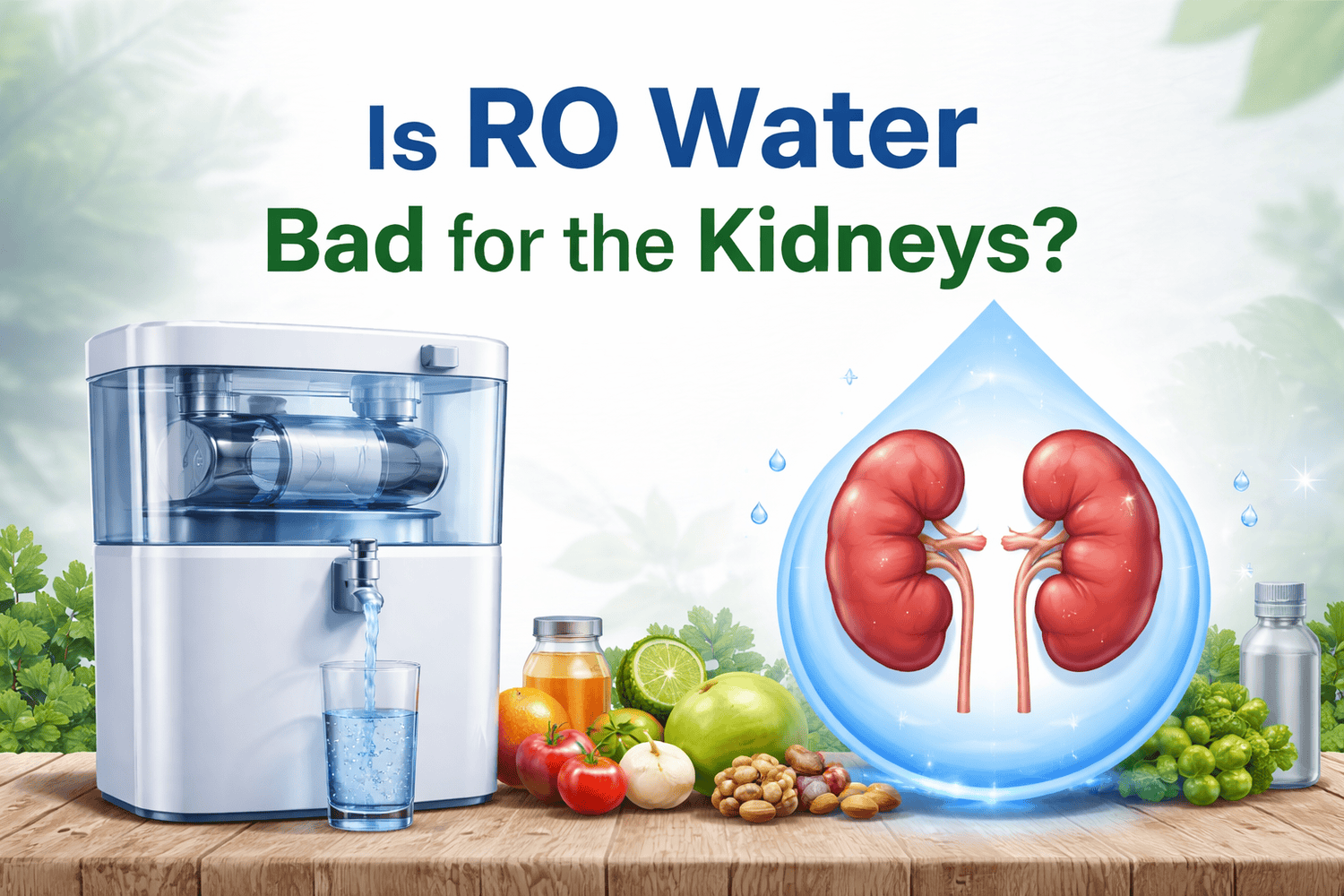
Why Do People Think RO Water is Bad for the Kidneys?
The concern behind the question “Is RO Water Bad for the Kidneys” comes from the fact that RO filtration removes some natural minerals like calcium and magnesium along with contaminants. Since minerals are important for body functions, some people believe drinking low TDS water may affect kidney health.
However, experts confirm that kidneys are responsible for balancing minerals in the body, and most essential minerals come from food rather than drinking water.
Healthy sources of minerals include:
- Fruits
- Vegetables
- Milk and dairy products
- Nuts and seeds
- Whole grains
Water contributes only a small portion of daily mineral intake.
Can RO Water Affect Kidney Health?
There is no scientific proof that RO water damages kidneys in healthy individuals. In fact, drinking purified water helps reduce exposure to harmful contaminants that may negatively affect kidney function over time.
RO water can be beneficial because it removes:
- Heavy metals like lead and arsenic
- Excess salt that may increase blood pressure
- Harmful chemicals and pesticides
- Bacteria and viruses
Clean water supports overall body function, including kidney health.
Importance of Balanced TDS Levels
One important factor when using RO water is maintaining a balanced TDS level. Very low TDS water may lack taste and essential minerals, but modern RO purifiers come with TDS controllers or mineral cartridges to maintain proper balance.
The recommended TDS level for drinking water is typically between 50–150 ppm, which ensures purity along with necessary mineral content.
Maintaining proper TDS levels ensures that RO water remains healthy for long-term use.
Common Myths About RO Water and Kidneys
Myth 1: RO Water Bad for the Kidneys because it removes minerals
RO water removes excess minerals, but most minerals needed by the body come from food sources.
Myth 2: Drinking RO water causes kidney problems
There is no scientific evidence proving that RO water causes kidney disease.
Myth 3: Natural water is always safer than RO water
Untreated water may contain contaminants that can harm kidney health if consumed regularly.
Tips to Make RO Water Healthier
You can ensure safe and healthy drinking water by following these tips:
- Maintain TDS between 50–150 ppm
- Service the RO purifier regularly
- Replace filters on time
- Maintain a balanced diet rich in minerals
- Avoid extremely low TDS water for long-term use
Final Conclusion: Is RO Water Bad for the Kidneys?
The concern “Is RO Water Bad for the Kidneys” is mostly a myth when the purifier is properly maintained and TDS levels are balanced. RO purification helps remove harmful contaminants, making water safer to drink.
A healthy diet already provides essential minerals required by the body, so drinking RO water does not harm kidney function in normal conditions.
Overall, properly filtered RO water supports safe hydration and contributes to better health.