Low water pressure can turn simple daily routines into frustrating tasks. A weak shower stream, slow-filling washing machine, or faucets that barely flow can be signs that something is wrong with your private well system.
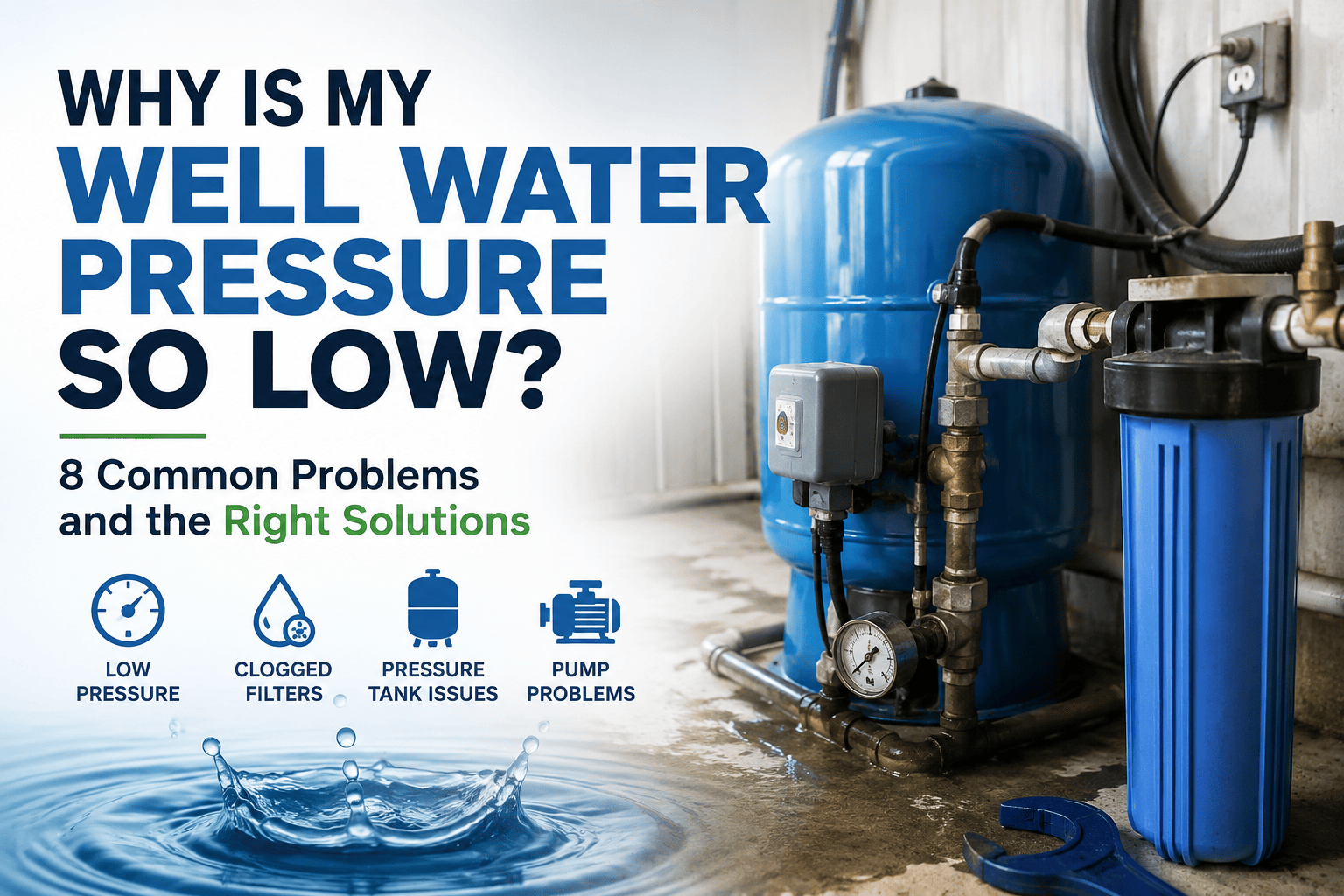
Unlike municipal water systems that rely on a citywide supply network, homes with private wells depend on several connected components working together — including the well pump, pressure tank, filtration equipment, plumbing, and water supply itself.
When pressure problems appear, replacing the pump is not always the answer. Many homeowners spend money on unnecessary repairs because the actual cause is often something smaller and easier to correct.
At Spring Rain, Inc., we help homeowners throughout Pennsylvania diagnose and solve well water problems by evaluating the entire system — not just one component. A proper inspection can identify the real cause of low pressure and help restore reliable water flow.
Below are the most common reasons for low well water pressure and what actually fixes them.
1. A Weak, Aging, or Incorrectly Sized Well Pump
The well pump is the heart of your water system. It moves water from underground into your home and must provide enough flow to meet your household demand.
Over time, pumps can lose efficiency due to normal wear, electrical problems, mineral buildup, or mechanical failure. In other situations, the pump may have been undersized from the beginning and cannot keep up with modern water usage.
Common symptoms of pump problems:
- Water pressure drops when multiple faucets or showers run
- The pump runs continuously or struggles to keep up
- Water pressure takes a long time to recover
- Pressure problems become worse over time
The correct solution:
A professional well system evaluation can determine whether the pump is producing the required flow rate. Depending on the results, the solution may involve pump repair, replacement, or upgrading the system to match your home's needs.
2. A Faulty Pressure Switch
Your pressure switch controls when your well pump turns on and off. When water pressure falls below a set point, the switch signals the pump to restore pressure.
If the switch becomes worn, dirty, incorrectly adjusted, or damaged, your system may not maintain consistent pressure.
Signs of a pressure switch issue:
- Pressure constantly rises and falls
- The pump turns on and off too frequently
- Water flow is delayed when opening faucets
- Pressure does not return quickly after use
The correct solution:
A technician can test the pressure switch, verify settings, clean components, or replace the switch if needed. This small repair can often restore stable water pressure.
3. Pressure Tank Failure or Incorrect Sizing
The pressure tank plays an important role in maintaining steady water pressure between pump cycles.
Inside many tanks is a bladder that separates water from air. When that bladder fails or the tank loses the correct air charge, the system can lose its ability to regulate pressure properly.
Common warning signs:
- Frequent pump cycling
- Sudden pressure changes
- Water pressure feels inconsistent
- The pump turns on every time water is used briefly
The correct solution:
A professional inspection can determine whether the tank needs adjustment, repair, or replacement. In some cases, upgrading to a properly sized tank can significantly improve system performance.
4. Clogged Water Filters or Treatment Equipment
For many Pennsylvania homeowners, filtration systems are essential because well water can contain sediment, iron, sulfur, manganese, and other naturally occurring minerals.
However, filters can become restricted over time. When water cannot pass through the filter media efficiently, pressure drops throughout the home.
This is one of the most commonly overlooked causes of low well water pressure.
Signs your filter may be restricting flow:
- Pressure slowly decreases over weeks or months
- Some fixtures have weaker flow than others
- Pressure improves after replacing filters
- Sediment is visible in filter housings
The correct solution:
Regular filter replacement and proper system sizing are essential. Spring Rain, Inc. can inspect your filtration equipment and determine whether maintenance, adjustment, or replacement is needed.
5. Mineral and Scale Buildup Inside Plumbing
Well water often contains minerals that can accumulate inside pipes over time.
Hard water minerals, iron deposits, and other contaminants can create buildup that reduces the inside diameter of plumbing lines. Even if your pump and pressure tank are working properly, restricted pipes can limit water flow.
Common signs of mineral buildup:
- Gradual decline in water pressure
- White scale around fixtures
- Orange or brown staining
- Certain faucets have noticeably weaker flow
The correct solution:
Water testing is the first step. Once the cause is identified, treatment options such as water softening, iron removal systems, or filtration upgrades can help protect plumbing and improve water quality.
6. Low Well Production or Reduced Water Availability
Sometimes the equipment is working correctly, but the well itself cannot supply enough water.
Groundwater levels can change throughout the year, especially during dry periods or times of increased household demand. A well with a lower recovery rate may struggle when several water-using appliances operate at once.
Signs of a low-yield well:
- Pressure drops after long showers or heavy water use
- Problems are worse during dry seasons
- Pressure returns after the system rests
- The pump runs longer than normal
The correct solution:
A well performance evaluation can measure recovery rate and determine whether the issue is related to the water source, storage capacity, or system design.
7. Partially Closed Valves or Plumbing Restrictions
A surprisingly simple cause of low pressure is a valve that is not fully open.
After plumbing work, equipment installation, or maintenance, shutoff valves may accidentally remain partially closed and restrict water flow.
Check for:
- Main water shutoff valves
- Bypass valves on treatment systems
- Valves near the pressure tank
- Isolation valves around filters
The correct solution:
Inspecting and confirming proper valve operation can quickly solve pressure problems without major repairs.
8. Plumbing Leaks or Hidden Water Loss
A leak anywhere in your plumbing system can reduce available water pressure. Underground leaks, leaking fixtures, or damaged pipes can cause your well system to work harder while delivering less pressure to your home.
Possible signs of a leak:
- Pump runs when no water is being used
- Unexpected increases in water usage
- Wet areas near plumbing lines
- Pressure problems throughout the home
The correct solution:
A plumbing inspection can identify hidden leaks and prevent wasted water, pump damage, and unnecessary system strain.
Why Low Well Pressure Is Often Misdiagnosed
Many homeowners assume low pressure automatically means they need a new well pump. While pump failure can happen, it is only one possible cause.
A complete diagnosis should include:
- Pump performance testing
- Pressure tank inspection
- Pressure switch evaluation
- Water filtration assessment
- Well production testing
- Plumbing inspection
Finding the actual cause helps homeowners avoid replacing expensive equipment that may still be working properly.
Get Reliable Well Water Pressure Back in Your Home
If your home depends on a private well, consistent water pressure is essential for comfort and daily convenience.
At Spring Rain, Inc., we specialize in helping Pennsylvania homeowners improve their well water systems through professional inspection, water testing, filtration solutions, and system repairs.
Whether your pressure problem is caused by a failing component, clogged filtration, mineral buildup, or a water supply issue, our team can help identify the problem and recommend the right solution.
Contact Spring Rain, Inc. today to schedule a professional well water system evaluation and restore dependable water pressure to your home.
Frequently Asked Questions About Low Well Water Pressure
Why does my well water pressure suddenly drop?
Sudden pressure loss can be caused by a failed pressure switch, clogged filter, closed valve, plumbing leak, or pump problem. A professional diagnosis can identify the exact cause.
Can a water filter reduce well water pressure?
Yes. A clogged sediment filter, iron filter, or improperly sized treatment system can restrict water flow and reduce pressure throughout the home.
Does low water pressure always mean my well pump is failing?
No. Many low-pressure problems are caused by pressure tanks, switches, filters, valves, or plumbing restrictions.
How often should a private well system be inspected?
Annual maintenance is recommended for many private well systems, especially if your home has filtration equipment or noticeable changes in water pressure or quality.
How can I improve my well water pressure?
The right solution depends on the cause. Testing the pump, pressure tank, filtration system, and well output is the best way to determine the correct fix.
Serving homeowners throughout Pennsylvania with professional well water testing, treatment, and system solutions from Spring Rain, Inc.