Turning on your faucet and noticing a strong rotten egg smell can be an unpleasant surprise. The odor may appear when you take a shower, wash dishes, do laundry, or fill a glass of drinking water. If your home depends on a private well, this smell can leave you wondering whether your water is safe to use.
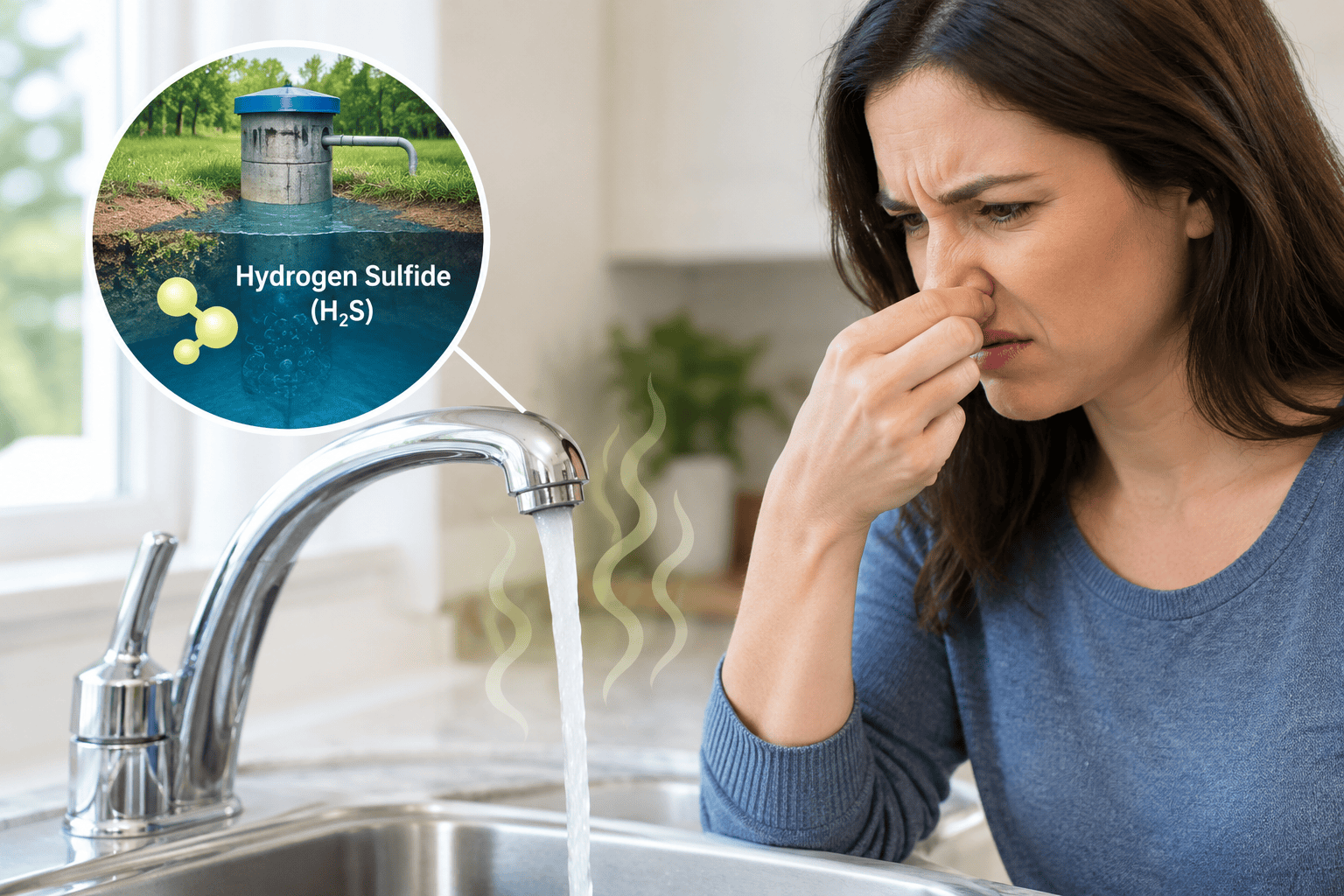
The most common reason why well water smells like rotten eggs is the presence of hydrogen sulfide gas. This naturally occurring compound produces a sulfur-like odor that can affect the taste of your water, create an unpleasant indoor environment, and sometimes contribute to plumbing problems.
However, hydrogen sulfide is not the only possible cause. Sulfur-reducing bacteria, groundwater chemistry, and certain water heater components can also contribute to the problem.
The good news is that several water treatment methods can help eliminate sulfur odors. The right solution depends on where the smell originates, how much hydrogen sulfide is present, and whether other water quality issues need attention.
In this guide, Spring Rain, Inc. explains the common causes of rotten egg-smelling well water, how to identify the source, and which treatment options may help restore better-smelling water throughout your home.
What Causes Well Water to Smell Like Rotten Eggs?
When well water develops a rotten egg odor, the first step is understanding what is happening inside your well, plumbing system, or water heater.
1. Hydrogen Sulfide in Groundwater
Hydrogen sulfide (H₂S) is a colorless gas that can dissolve in groundwater. Even relatively small amounts can create a noticeable sulfur smell.
Groundwater moves through different soil layers and rock formations before reaching a private well. Depending on local geology and underground chemical conditions, naturally occurring sulfur compounds may be present in the water.
When hydrogen sulfide enters your home's water supply, you might notice:
- A rotten egg smell coming from faucets.
- An unpleasant taste in drinking water.
- Discoloration of certain metals or plumbing fixtures over time.
- Corrosion of plumbing components under some conditions.
The odor may be present in both hot and cold water if the source is the well itself. Water testing can help determine whether hydrogen sulfide is responsible and whether other contaminants are present.
2. Sulfur-Reducing Bacteria
Sulfur-reducing bacteria can develop in oxygen-poor environments, including groundwater, well components, and certain parts of a plumbing system.
These microorganisms use sulfur compounds in their metabolic processes and can produce hydrogen sulfide as a byproduct. Their activity may contribute to persistent odors, slime formation, or deposits in some water systems.
Although the presence of these bacteria does not automatically mean your water contains disease-causing organisms, an unexplained odor should not be ignored.
A qualified water treatment professional can help determine whether bacterial activity is contributing to the problem and whether well disinfection or a longer-term treatment system is appropriate.
3. Your Water Heater May Be Producing the Smell
Sometimes, the water from your cold-water faucets smells normal, but the hot water has a strong sulfur odor.
This pattern often points toward the water heater rather than the well itself.
Many conventional water heaters contain a sacrificial anode rod designed to protect the tank from corrosion. Under certain water chemistry conditions, reactions involving the anode rod and sulfate-reducing bacteria can contribute to hydrogen sulfide production.
If the odor appears only in hot water, possible solutions include:
- Inspecting the water heater and its anode rod.
- Flushing the tank when appropriate.
- Having a qualified technician evaluate the water chemistry.
- Replacing the anode rod with a compatible alternative if recommended by the manufacturer or technician.
Do not remove or replace the anode rod without considering the effect on the water heater's warranty and corrosion protection.
4. Sulfates and Other Naturally Occurring Minerals
Sulfates occur naturally in soil, rocks, and groundwater. Under certain low-oxygen conditions, bacteria can convert sulfate into hydrogen sulfide.
This means a sulfur odor may be associated with the natural chemistry of your groundwater rather than a recent plumbing failure.
Other water quality issues can also occur alongside sulfur odors. Iron and manganese, for example, may cause staining, metallic tastes, or deposits that complicate water treatment.
Testing your well water helps identify which substances are present and whether a combination of treatment methods is necessary.
How to Identify the Source of the Rotten Egg Smell
Before choosing a treatment system, determine whether the odor comes from the well, the water heater, or a particular section of your plumbing.
A few simple observations can help narrow down the possibilities.
Check Both Hot and Cold Water
Run cold water from several faucets, then compare it with hot water from the same fixtures.
- Both hot and cold water smell: The problem may originate in the well, groundwater, or plumbing system.
- Only hot water smells: The water heater or its internal conditions may be responsible.
- Only one faucet smells: The issue could be localized to that fixture, drain, or nearby plumbing.
- The odor comes and goes: Changes in water use, stagnation, or groundwater conditions may be contributing factors.
Remember that these observations provide clues rather than a definitive diagnosis.
Check Whether the Odor Comes From the Drain
Sometimes, the smell appears to come from the water but actually originates in the sink drain.
Organic material and bacteria can accumulate inside drains and produce unpleasant odors. To investigate, compare the smell of freshly collected water in a clean glass with the odor around the sink.
If the collected water smells normal but the drain area smells unpleasant, the plumbing drain may be the source.
Avoid mixing household cleaning chemicals while investigating a drain odor.
Look for Other Water Quality Changes
Pay attention to any additional changes, including:
- Yellow, orange, or brown staining around fixtures.
- Black deposits on plumbing components.
- Cloudiness or unusual sediment.
- Metallic or bitter tastes.
- Reduced water flow or unusual plumbing noises.
These symptoms do not necessarily have the same cause as the sulfur smell, but they can help a professional determine which tests and treatment methods are needed.
Is Well Water That Smells Like Rotten Eggs Safe to Drink?
A rotten egg odor does not automatically mean your water is unsafe. Hydrogen sulfide at concentrations commonly associated with noticeable water odors is often primarily an aesthetic concern involving smell and taste.
However, the odor alone cannot establish whether your water is safe to drink.
Private wells are not routinely monitored by a public water utility, so homeowners are responsible for arranging appropriate water testing and maintenance.
A sulfur smell may also occur alongside other water quality concerns that cannot be identified by smell, taste, or appearance.
If your water develops a sudden or persistent odor, consider the following precautions:
- Arrange water testing through a qualified laboratory.
- Ask whether hydrogen sulfide, sulfate, bacteria, and other locally relevant contaminants should be evaluated.
- Avoid assuming that clear water is necessarily safe.
- Use an alternative source of drinking water if you have reason to suspect contamination until the water has been evaluated.
- Seek professional guidance if the odor is strong, persistent, or accompanied by other unusual changes.
Do not rely on boiling as a solution for chemical contamination. Boiling does not remove all contaminants and may concentrate certain dissolved substances.
How to Get Rid of the Rotten Egg Smell in Well Water
The best way to remove sulfur odors depends on the cause and concentration of hydrogen sulfide, along with the overall chemistry of your water.
A treatment method that works well for a mild odor may be inadequate for a more severe problem. For this reason, water testing should guide the selection of equipment.
1. Disinfect the Well When Bacterial Contamination Is Suspected
If sulfur-reducing bacteria are contributing to the odor, professionally performed well disinfection may help reduce the bacterial population.
Shock chlorination is one method used to disinfect certain private well systems. The procedure involves introducing an appropriate disinfectant into the well and affected plumbing, followed by the required contact time and flushing.
However, shock chlorination is not a permanent solution in every case. Bacteria may return if the underlying conditions remain favorable for their growth.
The process must also be performed correctly to protect plumbing equipment, septic systems, and household water supplies. Follow professional guidance and applicable local requirements rather than adding disinfectants without knowing the proper procedure.
2. Install an Oxidizing Filter
Oxidizing filtration systems are commonly used to treat water containing hydrogen sulfide.
These systems convert dissolved hydrogen sulfide into forms that can be captured by a suitable filter medium. Depending on the equipment, oxidation may involve air or an appropriate chemical treatment process.
The resulting particles are then removed through filtration.
An oxidizing filter may be a suitable option when sulfur odors are present throughout the home. The system must be selected according to the hydrogen sulfide concentration, water flow requirements, pH, and the presence of other minerals.
Routine maintenance is important to maintain treatment performance.
3. Consider Aeration
Aeration introduces air into water to help transfer volatile hydrogen sulfide gas out of the water.
Depending on the design, the system may use a contact tank or another aeration arrangement before the water enters the home's plumbing.
Aeration can be effective in appropriate applications, but it is not automatically the best solution for every well. System design must account for the amount of hydrogen sulfide, ventilation, gas handling, and any additional treatment requirements.
Professional evaluation helps determine whether aeration alone is sufficient or whether a filtration stage is also needed.
4. Use Activated Carbon Filtration for Suitable Applications
Activated carbon filters can help reduce certain odors and taste-related compounds. They may be useful for low levels of hydrogen sulfide in applications where the water chemistry and treatment requirements are appropriate.
However, carbon filtration has limitations. Filter media can become exhausted, and performance may decline when the incoming concentration is too high.
For this reason, activated carbon should not be selected solely because the water smells unpleasant. Testing and proper system sizing help determine whether carbon filtration is appropriate.
5. Evaluate the Water Heater
If only the hot water has a rotten egg smell, a whole-house sulfur treatment system may not be necessary.
A plumbing professional can inspect the water heater, evaluate the anode rod, and determine whether flushing, maintenance, or a compatible replacement component is appropriate.
Addressing the actual source may resolve the odor without installing additional treatment equipment.
6. Consider a Whole-House Water Filtration System
When sulfur odors originate in the groundwater and affect multiple faucets, a properly designed whole-house treatment system may provide a longer-term solution.
Depending on your water test results, the system may include oxidation, filtration, aeration, disinfection, or a combination of treatment stages.
A professionally selected system can treat incoming water before it reaches your showers, kitchen faucets, laundry equipment, and other fixtures.
Spring Rain, Inc. provides customized water treatment solutions for Pennsylvania homeowners. Explore our whole-house filtration systems to learn more about options for improving water quality throughout your home.
Can a Water Softener Remove the Rotten Egg Smell?
A standard water softener is primarily designed to reduce hardness minerals, especially calcium and magnesium. It is not generally intended to serve as the primary treatment for hydrogen sulfide.
Although some specialized equipment may combine multiple treatment functions, a conventional softener should not be assumed to eliminate sulfur odors.
If your well water contains both hardness minerals and hydrogen sulfide, you may need separate treatment stages.
For example, a treatment arrangement could include a dedicated sulfur removal system followed by water softening, depending on the test results and equipment requirements.
Learn more about residential water softener systems and how they can help address hard water problems in your home.
What About Reverse Osmosis for Sulfur-Smelling Drinking Water?
Reverse osmosis systems are designed to reduce many dissolved substances and other contaminants, depending on the membrane, system configuration, and operating conditions.
A reverse osmosis system may be useful as part of a drinking water treatment setup, but it should not automatically be considered a complete solution for hydrogen sulfide throughout the home.
If the sulfur odor affects showers, bathroom faucets, and laundry water, a point-of-use system under the kitchen sink will not treat those other fixtures.
For whole-house sulfur problems, the primary treatment system should be selected based on the water analysis. Additional drinking water filtration can then be considered if needed.
Explore reverse osmosis systems to learn about options for improving drinking water quality.
How to Prevent Rotten Egg Odors From Returning
Once the immediate problem has been addressed, ongoing maintenance can help reduce the likelihood of recurring odors.
Schedule Regular Well Water Testing
Test your water periodically and whenever you notice a significant change in odor, taste, appearance, or performance.
Your testing schedule should reflect your well's condition, local recommendations, previous test results, and any known contamination risks.
Maintain Your Well and Plumbing
Keep the wellhead, casing, cap, and surrounding area in good condition. Address damaged components, potential contamination pathways, and plumbing problems promptly.
A properly maintained well is an important part of protecting your household water supply.
Service Your Treatment Equipment
Filters, chemical feed systems, aeration units, and other treatment equipment require maintenance according to their design.
Depending on the system, this may include replacing filter media, cleaning components, checking chemical feed rates, and inspecting valves or other mechanical parts.
Neglected equipment may lose effectiveness or develop performance problems.
Monitor Your Water Heater
If your household uses a storage water heater, follow the manufacturer's maintenance recommendations.
If the rotten egg smell returns specifically in hot water, have the heater inspected rather than assuming the well treatment system has failed.
Address Other Water Quality Problems
Iron, manganese, hardness, pH, and other water chemistry characteristics may affect treatment performance.
A system designed around an incomplete water analysis may not address the full problem. Reviewing the water chemistry can help ensure that the selected equipment is suitable for your home's needs.
Why Choose Spring Rain, Inc. for Well Water Treatment in Pennsylvania?
Every private well has its own water chemistry, and the same treatment method does not work equally well for every household.
Spring Rain, Inc. helps Pennsylvania homeowners explore customized water treatment solutions based on their water quality concerns, household requirements, and treatment goals.
If your well water smells like rotten eggs, identifying the source is the first step toward choosing an effective solution.
Our water treatment solutions include options for:
- Whole-house water filtration: Improve water quality at multiple fixtures throughout your home.
- Water softening: Address hard water minerals that contribute to scale buildup and other household problems.
- Reverse osmosis: Explore additional treatment for drinking and cooking water.
- Customized treatment recommendations: Match suitable equipment to the water quality concerns identified through testing.
Rather than relying on guesswork, start by understanding what is in your water and which treatment options are appropriate for your specific situation.
Visit Spring Rain, Inc. to learn more about water treatment solutions for your home.
Get Rid of the Rotten Egg Smell in Your Well Water
A persistent sulfur odor can make everyday activities uncomfortable, from taking a shower to preparing meals or drinking a glass of water.
Fortunately, the problem is often manageable once the source has been identified. Hydrogen sulfide in groundwater, sulfur-reducing bacteria, and water heater reactions can all contribute to rotten egg odors, but each may require a different approach.
The most effective solution begins with proper diagnosis and water testing. Depending on the results, treatment may involve well disinfection, water heater maintenance, oxidation, aeration, filtration, or a combination of methods.
Spring Rain, Inc. provides water treatment solutions designed to help Pennsylvania homeowners address water quality concerns and improve their household water supply.
Do not let sulfur odors become a permanent part of your daily routine. Visit Spring Rain, Inc. to explore your water treatment options and take the next step toward cleaner, fresher-smelling water.