Have you turned on your faucet and noticed your water smells like mildew, wet soil, or a damp basement?
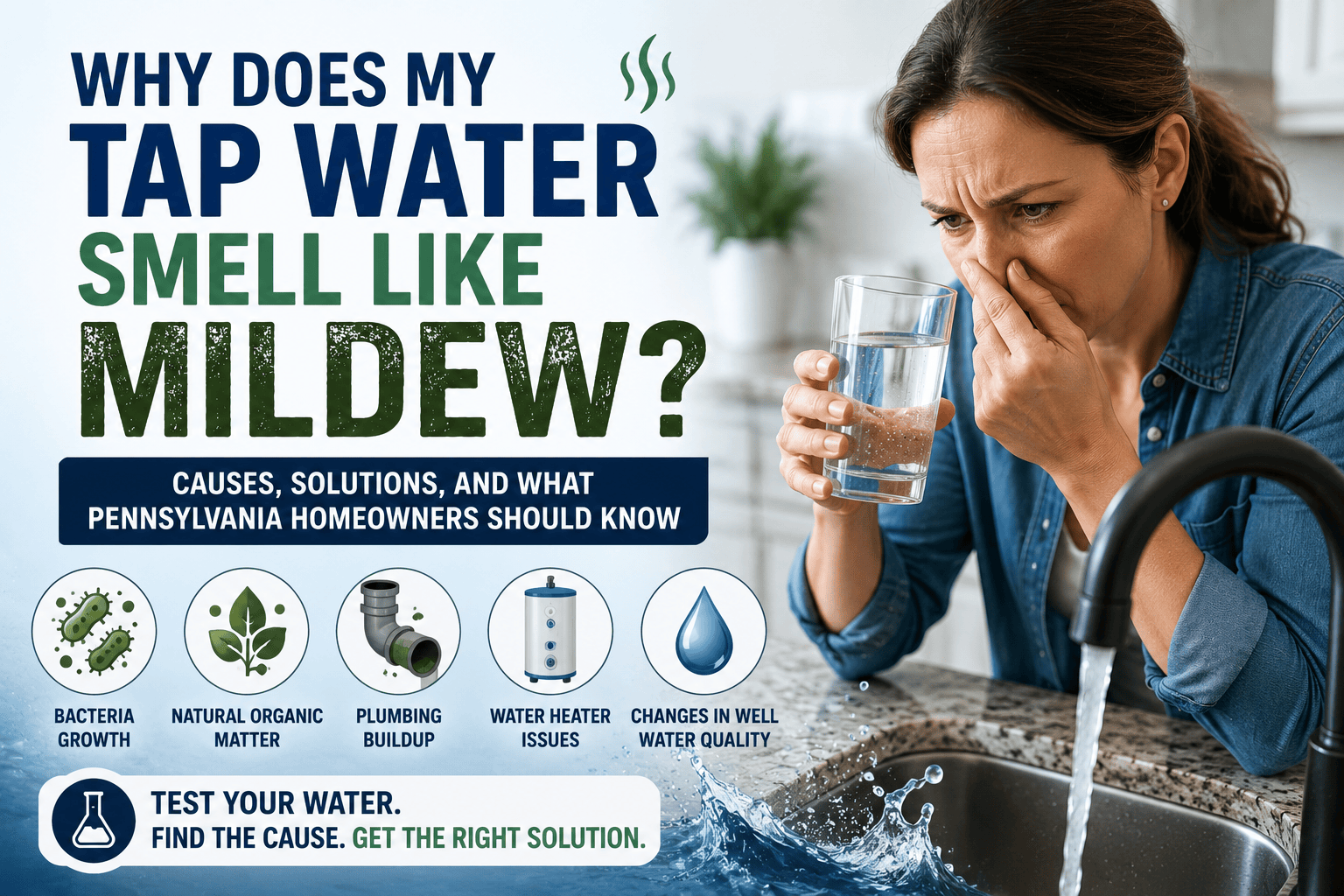
A musty smell coming from your tap water is one of the most common complaints among homeowners who rely on private wells throughout Pennsylvania. While the odor can be unpleasant, it is often a sign that something has changed in your water chemistry, plumbing system, or well environment.
Many homeowners assume the smell means their water is contaminated, while others try replacing filters without knowing the actual cause. The truth is that several different issues can create similar odors, and the correct solution depends on identifying the source.
At Spring Rain, Inc., we help homeowners across Pennsylvania diagnose water quality problems through professional testing and customized treatment solutions. From groundwater conditions to plumbing issues, we evaluate the entire system to find the reason behind unusual water odors.
In this guide, you will learn:
- Why your tap water smells like mildew
- The most common causes of musty well water
- Whether the odor indicates a health concern
- How Pennsylvania homeowners can test their water
- The best treatment options to remove unpleasant smells
What Causes a Mildew Smell in Tap Water?
A mildew or musty odor usually comes from organic materials, bacteria, minerals, or reactions occurring inside your water system.
For Pennsylvania homeowners with private wells, water quality can change based on:
- Local geology
- Groundwater movement
- Seasonal weather
- Well construction
- Plumbing conditions
Unlike municipal water systems, private wells are not continuously monitored by a public utility. Homeowners are responsible for testing and maintaining their own water supply.
Common causes of musty-smelling water include:
- Bacteria growth
- Organic material in groundwater
- Biofilm buildup in plumbing
- Water heater problems
- Sediment accumulation
- Well system changes
1. Natural Organic Matter in Pennsylvania Groundwater
Pennsylvania has diverse geological conditions, and groundwater can naturally contain organic materials from surrounding soil and vegetation.
When organic compounds enter a private well, they may create earthy or mildew-like odors.
Homeowners often describe the smell as:
- Wet leaves
- Damp basement
- Muddy water
- Musty or earthy taste
This type of odor is usually caused by naturally occurring substances rather than something added to the water.
However, testing is still important because organic odors can sometimes overlap with other water problems.
2. Bacteria Growing Inside Your Water System
Bacteria are one of the most common causes of unpleasant water smells.
Certain naturally occurring bacteria can grow in areas where water remains stagnant, including:
- Well systems
- Water storage tanks
- Faucet aerators
- Showerheads
- Water heaters
- Plumbing lines
These bacteria can produce odors similar to:
- Mildew
- Dirty socks
- Wet towels
- Earthy soil
Signs bacteria may be causing the odor:
- The smell improves after running water
- The odor returns after water sits overnight
- Only certain faucets have the problem
- The smell appears after periods of low water use
Professional testing can help determine whether bacterial activity is involved.
3. Biofilm Buildup Inside Plumbing Pipes
Over time, a thin layer of organic material called biofilm can develop inside plumbing systems.
This buildup creates an environment where bacteria can collect and produce odors.
Biofilm may contribute to:
- Musty smells
- Poor water taste
- Slime around fixtures
- Recurring odor problems
Homes with older plumbing systems or areas with low water movement may be more likely to experience this issue.
4. Water Heater Problems Can Cause Odors
If your water smells like mildew only when using hot water, your water heater may be the source.
Warm environments inside a water heater can allow bacteria to interact with:
- Sediment buildup
- The tank interior
- The anode rod
Quick test:
Compare the smell of:
- Cold water from your kitchen faucet
- Hot water from the same faucet
If only hot water has an odor, the problem may not be your well.
Possible solutions include:
- Flushing the water heater
- Checking temperature settings
- Inspecting internal components
- Addressing bacterial growth
5. Changes in Your Well After Heavy Rain
Seasonal weather can affect private wells throughout Pennsylvania.
Heavy rainfall may introduce changes to groundwater, including:
- Increased organic material
- Sediment movement
- Temporary odor changes
- Shifts in water chemistry
If your water develops a musty smell after storms, it may be a sign that your well system needs evaluation.
6. Sediment and Mineral Problems
Although many homeowners associate sediment with visible particles, mineral issues can also affect water taste and odor.
Common contributors include:
- Iron
- Manganese
- Sulfur compounds
- Hard water minerals
These naturally occurring substances are common in Pennsylvania groundwater.
Testing can determine whether minerals are contributing to your water quality issues.
Is Mildew-Smelling Water Safe?
A musty smell does not automatically mean your water is unsafe.
Many odor problems are related to aesthetic water quality issues involving taste and smell.
However, testing is recommended if:
- Your water odor suddenly changes
- Your well has not been tested recently
- You notice cloudy water
- You see sediment or staining
- Your household includes young children or sensitive individuals
A laboratory water test provides reliable information about your water supply.
How to Identify the Source of the Odor
Before choosing a treatment system, it is important to determine where the problem starts.
The odor could come from:
Your Well
Possible causes:
- Groundwater conditions
- Organic material
- Bacteria
- Minerals
Your Plumbing
Possible causes:
- Biofilm
- Corrosion
- Pipe buildup
Your Water Heater
Possible causes:
- Sediment
- Bacterial activity
- Internal components
A complete water evaluation helps avoid unnecessary repairs and ineffective filters.
Best Ways to Remove Mildew Smell From Tap Water
The correct solution depends on the cause.
1. Professional Well Sanitization
If bacteria are contributing to the odor, professional well cleaning and sanitization may help restore water quality.
Proper procedures are important to ensure the system is treated correctly.
2. Activated Carbon Filtration
Carbon filtration is commonly used for improving:
- Taste
- Odor
- Organic compounds
It can be an effective solution when properly matched to the water problem.
3. Whole-House Water Filtration
Depending on test results, whole-house water filtration systems may target:
- Sediment
- Iron
- Manganese
- Odor-causing compounds
The right system depends on your specific water chemistry.
4. UV Water Treatment
For homeowners concerned about microorganisms, ultraviolet systems can provide additional protection by treating bacteria as water passes through the system.
5. Water Heater Maintenance
If the odor comes only from hot water, servicing the water heater may solve the problem.
Why Pennsylvania Private Wells Often Experience Water Odor Issues
Private wells across Pennsylvania face different water challenges because of changing geology and groundwater conditions.
Common concerns include:
- Iron
- Manganese
- Hardness
- Low pH
- Sulfur odors
- Organic material
A water treatment system that works for one Pennsylvania home may not work for another.
That is why testing is the first step.
Common Mistakes Homeowners Make
Many homeowners waste money by treating symptoms instead of the actual cause.
Avoid these mistakes:
❌ Buying a filter without testing the water
❌ Assuming every odor is sulfur
❌ Replacing plumbing before checking water quality
❌ Ignoring changes in well water smell
❌ Treating bacteria without proper diagnosis
Get Rid of Musty-Smelling Water Throughout Pennsylvania
If your tap water smells like mildew, wet soil, or a damp basement, Spring Rain, Inc. can help identify the cause.
We provide Pennsylvania homeowners with:
- Private well water testing
- Water filtration solutions
- Odor removal systems
- Whole-house treatment options
- Customized water improvement plans
Your water problem has a cause — and finding that cause is the first step toward the right solution.
Contact Spring Rain, Inc. today for professional water testing and treatment recommendations.
Frequently Asked Questions About Mildew-Smelling Water
Why does my tap water smell like mildew?
A mildew smell is usually caused by bacteria, organic materials, plumbing buildup, or water heater issues.
Why does my well water smell worse after rain?
Rain can change groundwater conditions by introducing organic material, sediment, and other substances into the well.
Can a water filter remove mildew smells?
Some filters can reduce odors, but the correct solution depends on what is causing the smell.
Why does only my hot water smell bad?
If only hot water smells, the water heater is often the source.
How often should Pennsylvania homeowners test well water?
Many private well owners should test annually and whenever they notice changes in taste, odor, or appearance.
Spring Rain, Inc. proudly serves homeowners throughout Pennsylvania with professional well water testing, filtration, and customized water treatment solutions.