If you have ever tested your home water supply, you may have noticed the term TDS (Total Dissolved Solids) on a water quality report or filtration system. Many homeowners across the United States ask the same question: What are TDS (Total Dissolved Solids), and do they affect drinking water quality?
Understanding TDS is important because it directly impacts the taste, safety, and overall quality of your water. High TDS levels can indicate excess minerals, contaminants, or impurities that may affect both your health and your home plumbing system.
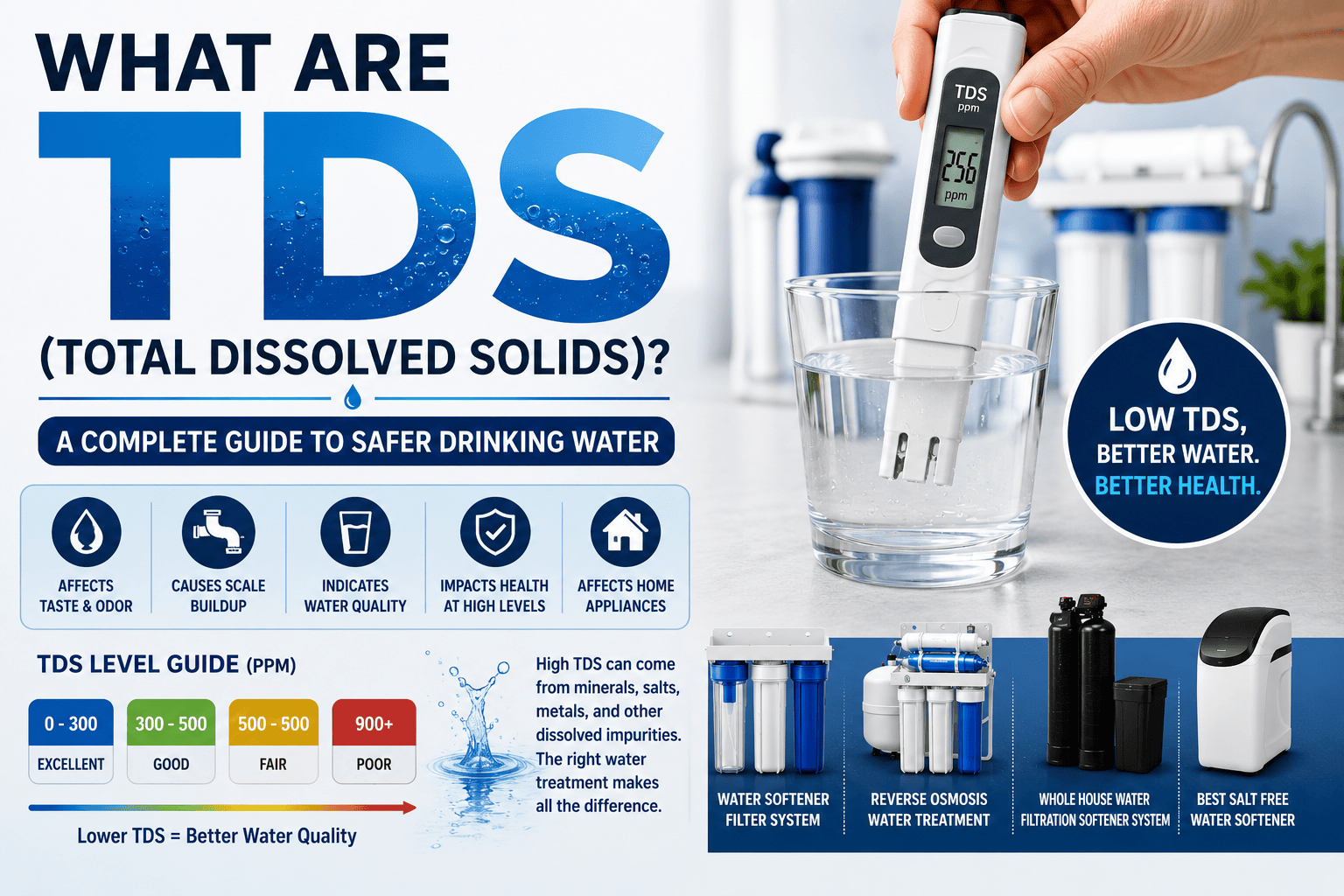
What Are TDS (Total Dissolved Solids)?
TDS (Total Dissolved Solids) refers to the combined amount of dissolved substances found in water. These substances can include:
- Calcium
- Magnesium
- Sodium
- Potassium
- Chlorides
- Sulfates
- Metals
- Organic matter
TDS is measured in parts per million (ppm) and helps determine overall water quality.
What Causes High TDS in Water?
Several factors can increase TDS (Total Dissolved Solids) levels in household water.
Common Causes Include
- Hard water minerals
- Agricultural runoff
- Old plumbing systems
- Industrial contamination
- Sediment and dirt
- Naturally occurring underground minerals
Homes using untreated well water often experience higher TDS levels compared to municipal water supplies.
Signs Your Water May Have High TDS Levels
High TDS (Total Dissolved Solids) can affect the taste and feel of water throughout the home.
Common Warning Signs
- Salty or metallic water taste
- White scale buildup on faucets
- Cloudy drinking water
- Dry skin and hair
- Soap not lathering properly
- Stains on sinks and appliances
If you notice these problems, your home may benefit from a whole-house water filtration softener system.
Is High TDS Water Dangerous?
Not all TDS is harmful. Some dissolved minerals, such as calcium and magnesium, occur naturally and are generally safe.
However, extremely high TDS (Total Dissolved Solids) levels may indicate contaminants or poor water quality.
Problems Associated With High TDS
- Poor-tasting water
- Plumbing scale buildup
- Reduced appliance lifespan
- Potential contamination concerns
- Digestive discomfort for sensitive individuals
This is why many homeowners choose professional water testing and filtration solutions.
Reverse Osmosis Water Treatment for Reducing TDS
One of the most effective ways to reduce TDS (Total Dissolved Solids) is with a reverse osmosis water treatment system.
Reverse osmosis systems help remove:
- Excess minerals
- Heavy metals
- Chlorine
- Sediment
- Harmful contaminants
These systems produce cleaner, better-tasting drinking water and are commonly used in homes across the United States.
Water Softener Filter System for Hard Water Problems
Hard water is one of the biggest contributors to elevated TDS levels. A high-quality water softener filter system can help reduce mineral buildup and improve water quality throughout the home.
Benefits of Water Softeners
- Reduces scale buildup
- Improves soap efficiency
- Helps protect plumbing
- Improves water taste and feel
- Extends appliance lifespan
Water softeners are especially beneficial for homes with mineral-rich well water.
Why Homeowners Choose the Best Salt Free Water Softener
Many families now prefer the best salt-free water softener systems because they offer water conditioning without adding sodium.
Advantages of Salt-Free Systems
- Low maintenance
- Eco-friendly operation
- No salt refills required
- Helps reduce scaling
- Better tasting water
Salt-free systems are becoming increasingly popular for modern homes seeking cleaner water solutions.
Whole House Water Filtration Softener System Benefits
A whole house water filtration softener system improves water quality for every faucet, shower, and appliance in the home.
Whole House Filtration Can Help
- Reduce contaminants
- Improve drinking water quality
- Minimize hard water damage
- Protect plumbing systems
- Improve bathing and cooking water
These systems provide long-term water quality improvement throughout the entire household.
What Is a Good TDS Level for Drinking Water?
In general:
- Below 300 ppm → Excellent
- 300–500 ppm → Good
- 500–900 ppm → Fair
- Above 900 ppm → Poor
Very high TDS (Total Dissolved Solids) levels may indicate the need for professional water treatment solutions.
Tips to Improve Water Quality at Home
Test Your Water Regularly
Water testing helps identify high TDS levels and contaminants.
Upgrade Your Filtration System
A reverse osmosis water treatment system can significantly improve drinking water quality.
Reduce Hard Water Minerals
Install a reliable water softener filter system.
Improve Whole Home Water Quality
A whole house water filtration softener system can help provide cleaner water throughout your home.
Final Thoughts on TDS (Total Dissolved Solids)
Understanding TDS (Total Dissolved Solids) is essential for maintaining safe and healthy drinking water. While some dissolved minerals are harmless, excessively high TDS levels may affect water taste, plumbing systems, and overall water quality.
Installing a water softener filter system, reverse osmosis water treatment, or the best salt free water softener can help improve household water quality and provide cleaner, healthier water for your family.
Better water starts with understanding what is inside it.