If your home depends on a private well, a reliable water supply is something you probably take for granted. But what happens when the water pressure suddenly drops, faucets begin sputtering, or your well stops producing enough water for everyday needs?
These could be well drying up symptoms. When groundwater levels fall or a well cannot replenish water as quickly as your household uses it, the available supply may become limited. In some cases, the water level can drop below the well pump intake, leaving the pump unable to draw water.
Recognizing the warning signs early can help you avoid an unexpected water outage and potential damage to your well equipment.
In this guide, we'll explain nine common symptoms of a well drying up, why they happen, how to distinguish a low-water problem from equipment failure, and what steps homeowners should take.
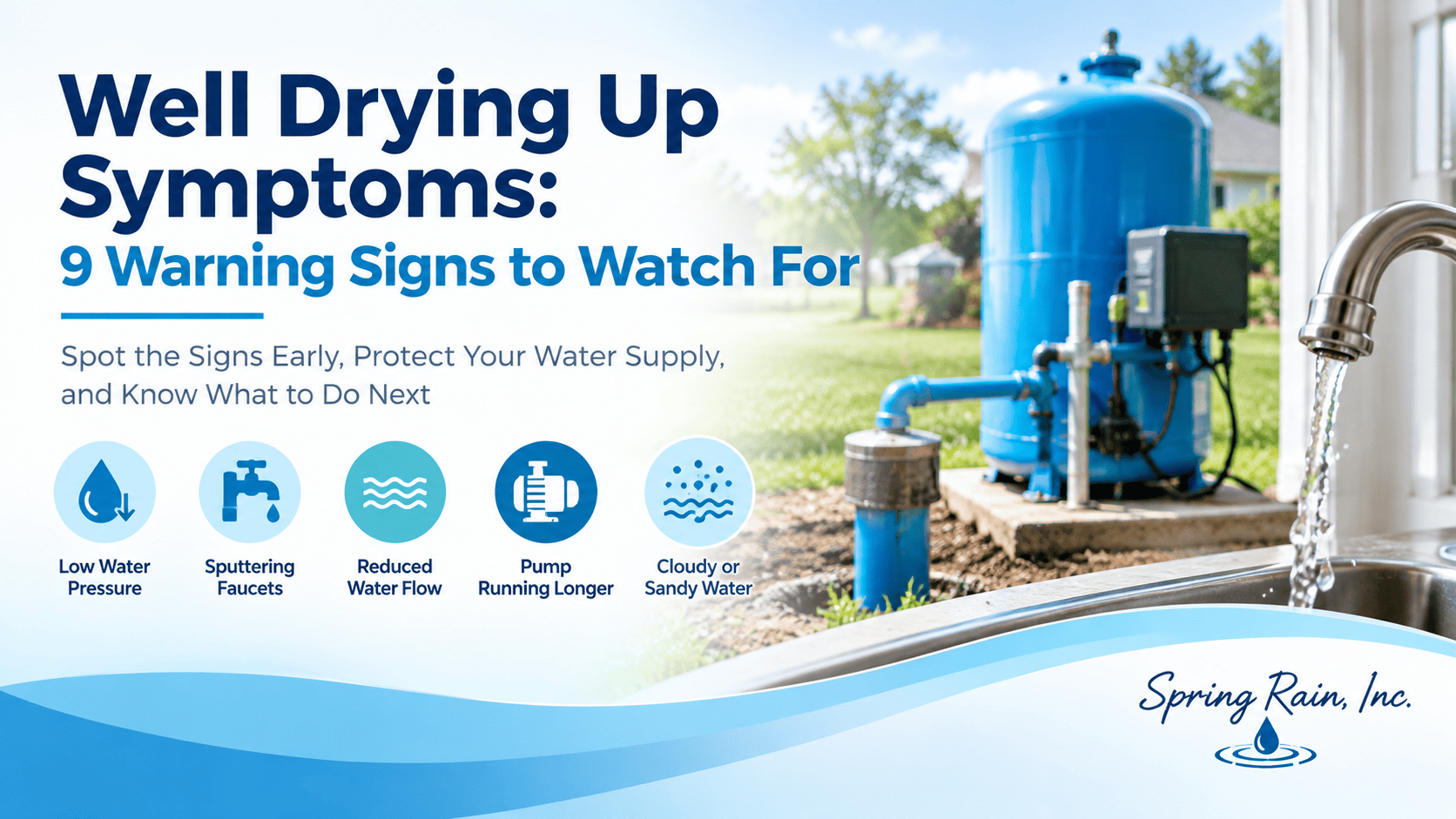
9 Common Symptoms of a Well Drying Up
A well does not always stop producing water without warning. You may notice changes in water pressure, flow, clarity, or pump operation before the supply disappears completely.
Here are nine signs worth watching.
1. Your Water Pressure Suddenly Drops
One of the first signs of a possible well-water problem is a noticeable drop in water pressure.
You might experience:
- Weak water flow from showerheads and faucets
- Toilets that refill more slowly than usual
- Washing machines taking longer to fill
- Reduced pressure when multiple fixtures are running
- Water pressure that becomes weaker during extended use
When the groundwater level falls, the well may struggle to supply enough water to meet household demand.
However, low water pressure does not automatically mean your well is drying up. A failing pressure tank, worn pump, clogged filter, or plumbing leak can produce similar symptoms.
2. Faucets Start Sputtering or Spitting Air
Do your faucets occasionally release bursts of air along with water?
Sputtering faucets can be another warning sign of a low water level. If the water level falls close to the pump intake, the pump may begin drawing air instead of a steady supply of water.
You might notice:
- Air bubbles coming from faucets
- Water flow that starts and stops
- Spitting or coughing sounds when opening a tap
- Inconsistent water delivery throughout the house
If this happens repeatedly, stop unnecessary water use and have a qualified well professional inspect the system.
3. Your Well Runs Out of Water After Heavy Use
A well that cannot keep up with household demand may provide water normally at first but run low after several activities happen close together.
For example, you might have enough water for a shower, but the supply drops when someone starts the washing machine or dishwasher.
This may happen because the well's recovery rate is lower than the rate at which water is being pumped.
Pay attention if:
- Water stops after long showers
- The supply disappears after doing laundry
- Several household activities cause temporary outages
- Water returns after the well has been left unused for a while
This pattern can indicate that the well is being pumped faster than groundwater can flow back into it.
4. Your Water Looks Cloudy, Muddy, or Discolored
A sudden change in water appearance can be another warning sign.
When groundwater levels decline, water may enter a well differently and carry more sediment into the system. You might notice:
- Cloudy or muddy-looking water
- Fine sand or grit in water fixtures
- Sediment collecting in toilet tanks
- Discoloration that was not present before
However, cloudy water can also result from a damaged well component, disturbed sediment, plumbing issues, or contamination.
Do not assume that sediment automatically means your well is running dry. If the water changes suddenly, stop drinking it until the cause is investigated and its safety is confirmed through appropriate testing.
5. Your Well Pump Runs Longer Than Usual
Your well pump should operate in a reasonably consistent pattern.
If it suddenly runs longer than normal to supply water or build pressure, something may have changed.
Possible causes include:
- Reduced groundwater availability
- A well that cannot recover quickly enough
- A worn or failing pump
- A leak in the water system
- Pressure tank problems
Pay attention to changes in pump operation, especially when they happen alongside reduced water pressure or intermittent water supply.
A licensed pump installer or well contractor can determine whether the problem is related to groundwater availability or mechanical equipment.
6. Your Water Supply Stops During Peak Usage
Some wells have a limited production rate. They may provide enough water for normal daily use but struggle when demand increases.
For example, your well may have trouble keeping up when:
- Multiple showers are running
- The dishwasher and washing machine operate together
- Outdoor irrigation is running
- Several household members use water at the same time
If water supply problems occur mainly during high-demand periods, the well may have a low recovery rate or insufficient capacity for current household use.
This is sometimes a temporary problem caused by pumping too much water in a short period.
7. You Notice Changes in the Sound of Your Well Pump
Changes in pump sounds can indicate that your well system is under stress.
Warning signs may include:
- Unusual humming or vibrating
- A pump that runs longer than normal
- Frequent starting and stopping
- Sounds associated with air entering the pumping system
A submersible pump that operates without enough water can be at risk of damage.
Do not keep running the pump to see whether water returns. If you suspect it is drawing air or operating without sufficient water, reduce water use and contact a qualified professional.
8. Your Well Takes Longer to Recover After Water Use
A healthy well needs time to replenish the water removed during pumping.
If your water supply used to recover quickly but now takes much longer, the well's recovery rate may have changed.
For example:
- Water stops after a period of heavy use.
- You wait before using water again.
- The supply eventually returns.
- The same problem happens again after another period of heavy use.
This can indicate that the well is producing water more slowly than your household consumes it.
A well professional can measure water levels and evaluate the well's production and recovery rates.
9. You Experience Repeated Water Outages
Repeated water outages are among the most concerning symptoms.
If your well regularly stops supplying water, especially during dry weather or periods of increased household use, it may be struggling to maintain an adequate supply.
A well that repeatedly runs out of water should be inspected rather than treated as a minor inconvenience.
The cause could be a falling groundwater level, insufficient well yield, excessive pumping, or a mechanical problem.
What Causes a Well to Start Drying Up?
Several factors can affect the amount of water available in a private well.
Understanding the cause is important because different problems require different solutions.
1. Drought and Low Rainfall
Groundwater is replenished partly through precipitation that enters the soil and moves into underground aquifers.
When rainfall remains below normal for an extended period, groundwater levels can decline.
This can affect shallow wells more noticeably than some deeper wells, depending on the aquifer and local geology.
2. Seasonal Groundwater Changes
Groundwater levels naturally fluctuate throughout the year.
During dry seasons, periods of high temperatures, or times of increased water demand, a well may have less available water than it did during wetter months.
Some homeowners notice recurring water shortages during the same season each year.
3. Excessive Water Use
A well can struggle when water is pumped out faster than it can be replenished.
High household demand, outdoor watering, filling swimming pools, and other activities can place additional pressure on a limited water supply.
Spreading water-intensive activities throughout the day may help reduce short-term pumping demand.
4. Low-Yield Well or Aquifer Limitations
Some wells naturally produce less water than others.
The amount of water available depends on factors such as:
- Well depth and construction
- Underground rock and soil conditions
- Aquifer type
- Groundwater recharge
- The rate at which water enters the well
A low-yield well may have difficulty meeting the needs of a larger household, especially during dry periods.
5. Increased Groundwater Pumping Nearby
Other wells drawing from the same groundwater system can sometimes affect local water levels.
This is more likely to become a concern when groundwater resources are limited or pumping demand increases significantly.
Is Your Well Drying Up or Is the Well Pump Failing?
A low water supply and a failing well pump can produce similar symptoms. This is why it is important to identify the actual problem before deciding on a repair.
| Symptom | Possible low-water issue | Possible equipment issue |
|---|---|---|
| Low water pressure | Well cannot keep up with demand | Pressure tank or pump problem |
| Sputtering faucets | Pump may be drawing air | Air leak or plumbing issue |
| Water stops after heavy use | Slow well recovery | Pump performance problem |
| Pump runs longer | Reduced water availability | Worn pump or system leak |
| Cloudy or sandy water | Lower water level may increase sediment | Damaged well components |
| No water at all | Water level may be below pump intake | Electrical failure or pump malfunction |
These are possibilities, not a diagnosis. A professional inspection is the best way to determine what is happening.
What Should You Do If Your Well Is Showing Signs of Drying Up?
If you notice several of these symptoms, take action before the problem becomes a complete water outage.
1. Reduce Unnecessary Water Use
Avoid activities that place heavy demand on your well.
Consider:
- Taking shorter showers
- Running full loads in the washing machine
- Avoiding unnecessary outdoor watering
- Spreading laundry and dishwasher use throughout the day
- Delaying activities that require large amounts of water
Reducing demand may help a well recover if the problem is temporary overpumping.
2. Avoid Running the Pump Without Enough Water
If you suspect the pump is drawing air or operating without sufficient water, do not continue running it.
Operating a pump under unsuitable conditions can damage equipment. Contact a licensed well professional for guidance.
3. Check for Electrical or Mechanical Problems
Not every water outage means the well has run dry.
A professional should check:
- Electrical connections and power supply
- Well pump operation
- Pressure switch
- Pressure tank
- Plumbing leaks
- Water level and well recovery
This helps rule out equipment problems before considering more extensive well work.
4. Have the Well Water Level and Production Tested
A qualified well contractor can measure the static water level, pumping water level, and recovery rate.
These measurements help determine whether the well is producing enough water and whether the water level is dropping too far during pumping.
5. Test Your Water Quality
If the water becomes cloudy, discolored, or unusual in taste or odor, do not assume the problem is only related to water quantity.
Changes in groundwater conditions can sometimes affect water quality as well.
Have the water tested by a certified laboratory and follow the appropriate recommendations before using it for drinking.
Can a Well Recover After It Goes Dry?
Yes, some wells can recover after a temporary water shortage.
If the water level drops below the pump intake because of heavy pumping or reduced groundwater recharge, the well may begin producing water again after demand decreases and groundwater levels recover.
However, recovery depends on several factors:
- The amount of groundwater available
- Local rainfall and recharge
- Aquifer characteristics
- Well depth and construction
- The amount of water being pumped
A well that temporarily stops producing water is not necessarily permanently depleted.
If the problem continues, a licensed well professional can determine whether the well needs repair, modification, a different pumping arrangement, or another solution.
How Can You Help Prevent Well Water Problems?
Although homeowners cannot control groundwater conditions, a few practical steps can help reduce unnecessary stress on a private well.
- Monitor changes in water pressure and flow.
- Avoid running multiple high-demand appliances at once.
- Limit outdoor watering during dry conditions.
- Maintain your well pump and pressure system.
- Keep records of recurring water shortages.
- Arrange professional inspections when unusual symptoms appear.
- Test your well water regularly and whenever its quality changes.
A little attention can help you recognize problems before they become more disruptive.
Does a Water Filter Fix a Well That Is Drying Up?
No. A water filtration system cannot restore groundwater or increase the amount of water available in a well.
Filtration systems are designed to address water-quality concerns, such as sediment, certain contaminants, unwanted tastes, and odors. They do not solve low groundwater levels, insufficient well production, or pump failures.
If your well has a low water supply, contact a qualified well contractor or pump installer first.
Once the water supply issue has been addressed, you can evaluate whether your water needs additional treatment.
Depending on your water test results, Spring Rain, Inc. can help you explore solutions such as:
Choosing the right treatment starts with understanding what is actually in your water.
Frequently Asked Questions About Well Drying Up Symptoms
What are the first signs that a well is drying up?
Common early warning signs include reduced water pressure, sputtering faucets, water outages after heavy use, and longer recovery times. Cloudy water or unusual pump sounds can also indicate a problem.
Can a well run dry suddenly?
Yes. A well may stop producing water when groundwater levels fall below the pump intake or when demand exceeds the well's available supply. A mechanical or electrical failure can also cause a sudden water outage.
Will water come back after a well runs dry?
Sometimes. A well may recover when groundwater levels rise or pumping demand decreases. However, recovery depends on local groundwater conditions, well construction, and the reason the water supply stopped.
Does a deeper well always have more water?
No. Well depth alone does not guarantee a reliable water supply. The amount of water available depends on the aquifer, underground geology, groundwater recharge, and well construction.
Why does my well run out of water after a shower?
Your well may have a low recovery rate or limited storage. If water is pumped out faster than groundwater can enter the well, the supply may temporarily run low. A pump or pressure-system problem can produce similar symptoms.
Can a water softener or filter help a dry well?
No. Water softeners and filtration systems improve water quality but cannot increase groundwater levels or restore a depleted well. A qualified well professional should investigate water-supply problems.
Should I drink cloudy water from my well?
Avoid drinking water that has suddenly become cloudy, discolored, or unusual in appearance until the cause has been investigated. Have it tested by a certified laboratory and follow appropriate safety recommendations.
Protect Your Home's Water Supply
Recognizing well drying up symptoms early can help you respond before a temporary water shortage becomes a serious household problem.
If your faucets are sputtering, water pressure is dropping, or your well repeatedly runs out of water, do not assume the well is permanently dry. The problem may involve groundwater levels, pump performance, or another part of the system.
Start by reducing unnecessary water use and arranging an inspection with a qualified well professional.
Once your water supply is reliable, make sure the water coming into your home is properly tested and treated. Spring Rain, Inc. helps homeowners explore water treatment solutions based on their water quality and household needs.