If your well water smells like rotten eggs, has an unusual taste, or leaves stains around your sinks and fixtures, sulfur-related water problems could be responsible. Although sulfur occurs naturally in the environment, elevated levels of sulfur compounds in private well water can create unpleasant odors, affect plumbing, and make everyday water use frustrating.
The good news is that sulfur-related water problems can usually be identified through proper water testing and addressed with the right treatment approach. However, the best solution depends on what is actually causing the problem.
Many homeowners use the term “sulfur water” to describe water with a rotten egg smell. In many cases, that odor is associated with hydrogen sulfide gas, rather than sulfate itself. Sulfate is a dissolved mineral that can also occur naturally in groundwater and may cause different water-quality concerns.
Understanding the difference can help you choose an appropriate treatment system instead of relying on a one-size-fits-all solution.
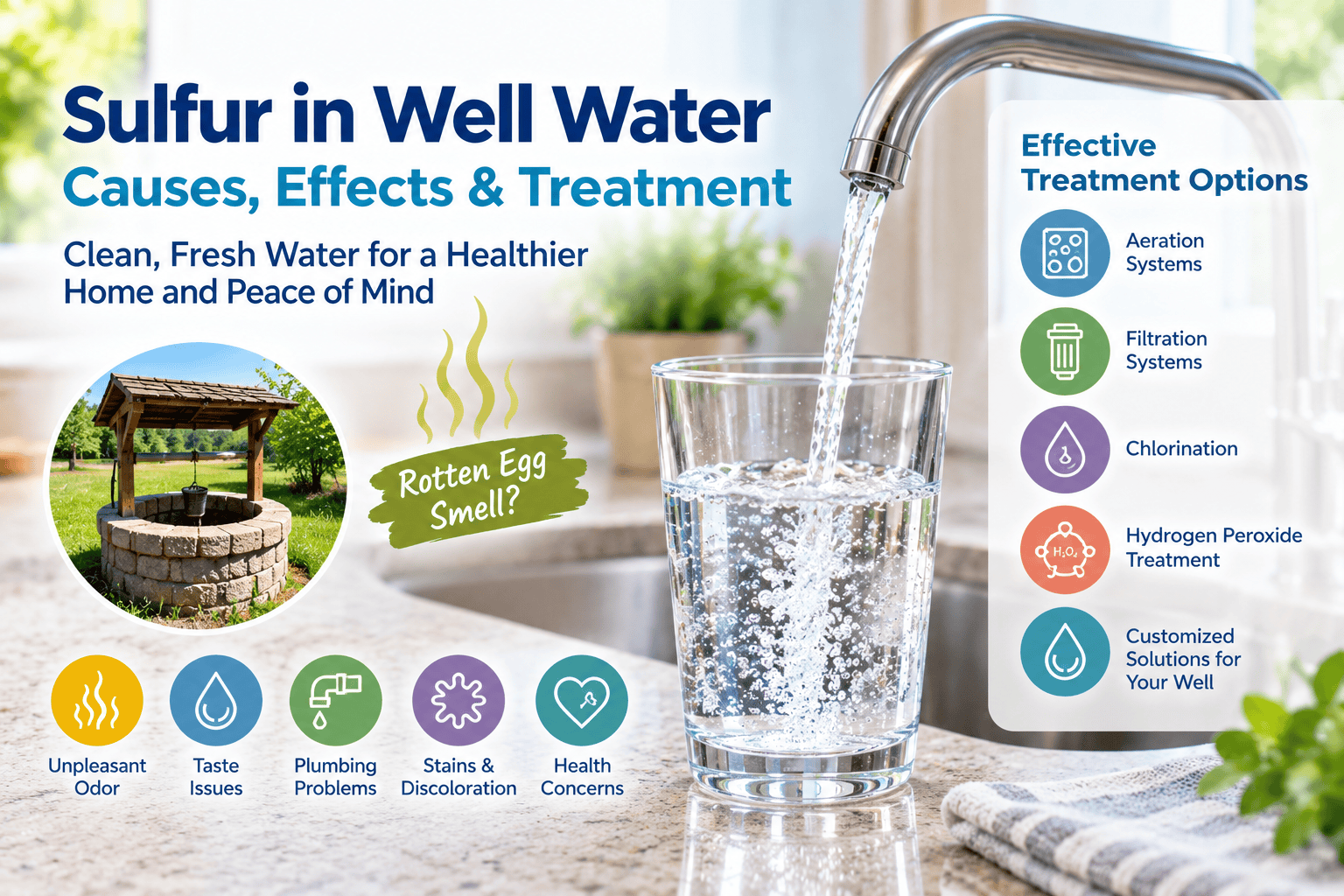
What Is Sulfur Water?
“Sulfur water” is a common term used to describe well water containing sulfur-related compounds, particularly hydrogen sulfide. The most recognizable sign is a strong rotten egg or sulfur-like odor.
Hydrogen sulfide can occur naturally in groundwater when certain bacteria interact with sulfur-containing minerals and organic material in an oxygen-limited environment. The gas may remain dissolved in the water until it reaches an open faucet, shower, toilet, or other outlet.
Some sulfur-related water problems are obvious because of their smell. Others may not be noticeable without laboratory testing.
Why Does Well Water Smell Like Rotten Eggs?
The classic rotten egg smell is usually associated with hydrogen sulfide gas.
When hydrogen sulfide is present in water, opening a faucet can release the gas into the air. The odor may be particularly noticeable in bathrooms, showers, laundry rooms, or other areas where water is frequently used.
The smell may also become more noticeable when you use hot water because heating can cause dissolved gases to escape from the water more readily.
Is the Smell Always Coming From the Well?
Not necessarily.
A sulfur smell can originate from several places within a home's water system. Possible sources include:
- The private well
- Groundwater entering the well
- Plumbing lines
- Water heaters
- Certain bacteria within the plumbing system
- Sulfur-containing compounds naturally present in the groundwater
This is why identifying the source should come before selecting a treatment system.
Why Source Identification Matters
A treatment system designed for hydrogen sulfide may not solve a problem caused by something else.
For example, if the odor occurs only when using hot water, the water heater deserves attention. If both hot and cold water smell strongly, the problem may be associated with the well or plumbing.
A Water Test Can Provide the Answer
Rather than guessing, homeowners should consider testing their water for hydrogen sulfide, sulfate, bacteria, iron, manganese, and other relevant water-quality parameters.
Testing gives you a clearer picture of what is actually present and helps determine which treatment method makes sense for your home.
Why Does Sulfur Get Into Well Water?
Sulfur compounds can enter groundwater through natural geological and biological processes. Private wells draw water from underground formations, and the mineral content of that water can vary considerably from one property to another.
Groundwater moving through sulfur-containing rock can pick up dissolved minerals. In other situations, microorganisms can contribute to the formation of hydrogen sulfide.
Natural Sources of Sulfur Compounds
Some groundwater naturally contains sulfur compounds because of the geology surrounding the well.
The deeper groundwater travels through certain rock formations, the more opportunity it may have to dissolve naturally occurring minerals.
This doesn't necessarily mean the well is contaminated. It may simply reflect the chemistry of the local groundwater.
Sulfur-Producing Bacteria
Certain naturally occurring bacteria can play a role in sulfur odors.
These microorganisms can use sulfur compounds during their biological processes, producing hydrogen sulfide as a byproduct under certain conditions.
The result can be water with a noticeable rotten egg odor even when the water looks completely clear.
Water Heater-Related Sulfur Odors
If the smell appears primarily when you turn on hot water, the water heater may be contributing to the problem.
The interaction between the water, the heater's internal components, and certain bacteria can create hydrogen sulfide odors.
In this situation, installing a whole-house sulfur treatment system may not be the first step. The water heater should be inspected to determine whether it is contributing to the odor.
Is Sulfur in Well Water Dangerous?
The answer depends on which sulfur compound is present and at what concentration.
Hydrogen sulfide and sulfate should not be treated as if they are the same contaminant.
Hydrogen sulfide is primarily known for its characteristic odor and can cause taste, corrosion, and plumbing problems at elevated levels. Sulfate is a dissolved mineral that can affect the taste of water and, at sufficiently high concentrations, may cause gastrointestinal effects.
For this reason, a homeowner should not determine water safety based only on smell.
Can You Drink Water That Smells Like Sulfur?
Water with a sulfur odor should be investigated rather than automatically assumed to be safe or unsafe.
A rotten egg smell can indicate hydrogen sulfide, but odor alone does not tell you everything that may be present in private well water.
A comprehensive water test can help determine whether sulfur-related compounds are present and whether other contaminants require attention.
Why Private Well Owners Should Test Their Water
Unlike municipal water systems, private wells are generally the responsibility of the property owner.
Groundwater conditions can change over time because of:
- Changes in groundwater flow
- Heavy rainfall
- Flooding
- Nearby construction
- Agricultural activity
- Changes in the well
- Plumbing problems
- Bacterial activity
- Changes in groundwater chemistry
Regular testing can help homeowners identify changes before they become larger water-quality problems.
Can Sulfur Water Make You Sick?
High levels of certain sulfur compounds, particularly sulfate, can contribute to gastrointestinal discomfort such as diarrhea, especially for people who are not accustomed to elevated sulfate concentrations.
Infants can be more sensitive to high sulfate levels.
Hydrogen sulfide is different. At the concentrations commonly associated with household sulfur odors, the major concerns are often odor, taste, corrosion, and plumbing effects. However, significantly elevated concentrations can present health concerns, which is another reason testing is important.
If you are concerned about the safety of your drinking water, testing should be used rather than smell alone to determine what is present.
What Problems Can Sulfur Water Cause?
Even when sulfur-related water does not create an immediate health concern, it can make daily life unpleasant.
The effects can extend beyond drinking water.
Rotten Egg Odor
The most recognizable problem is the sulfur smell.
The odor can be noticeable when:
- Taking a shower
- Washing your hands
- Running the kitchen faucet
- Doing laundry
- Filling a bathtub
- Using hot water
- Preparing beverages
A persistent odor can make otherwise clean water seem unpleasant.
Unpleasant Taste
Sulfur compounds can affect the taste of drinking water.
Coffee, tea, soups, and other foods prepared with affected water may also develop an undesirable taste or odor.
Plumbing Problems
Hydrogen sulfide and sulfur-related bacteria can contribute to plumbing issues under certain conditions.
Some sulfur bacteria can produce a slimy material that may accumulate in plumbing components and fixtures. Over time, this can contribute to restricted flow or maintenance problems.
Staining and Discoloration
Sulfur-related water conditions may occur alongside iron and manganese, which can cause visible staining.
Homeowners may notice:
- Dark or yellowish stains
- Discoloration around fixtures
- Staining in toilets
- Marks on sinks
- Laundry discoloration
- Deposits around faucets
Testing is important because the visible stain may be caused by iron or manganese rather than sulfur itself.
Metal Corrosion
Hydrogen sulfide can contribute to corrosion of certain metals under appropriate conditions.
This can affect components within a home's water system and may shorten the useful life of plumbing equipment.
Does Sulfur Water Affect Your Hair and Skin?
Many homeowners notice that their hair or skin feels different when their water quality changes.
However, sulfur water should not automatically be blamed for every hair or skin problem.
Water containing elevated sulfur compounds can have an unpleasant odor and may affect the overall bathing experience. If other minerals or water-quality issues are present at the same time, they may also contribute to changes in how hair and skin feel after washing.
Why Water Quality Matters During Showers
Your shower water comes into direct contact with your skin and hair.
If the water has a strong odor, unusual mineral content, or other water-quality problems, improving the water can make bathing more comfortable.
For homeowners experiencing persistent issues, testing the water is a more reliable approach than assuming sulfur is the only cause.
Should You Treat Sulfur in Well Water?
If your well water has a persistent sulfur odor or testing shows elevated sulfur-related compounds, treatment may be appropriate.
The correct solution depends on:
- Hydrogen sulfide concentration
- Sulfate concentration
- Water pH
- Iron levels
- Manganese levels
- Bacterial activity
- Water usage
- Well characteristics
- Existing plumbing
- Whether the problem affects hot water, cold water, or both
Why One Treatment System Does Not Fit Every Well
Two homes can have the same rotten egg smell but require completely different solutions.
One homeowner may have hydrogen sulfide entering from the well. Another may have a water heater issue. A third may have sulfur bacteria combined with iron and manganese.
That is why professional testing and diagnosis are valuable before purchasing a treatment system.
How to Treat Sulfur-Smelling Well Water
There are several approaches to treating sulfur-related water problems. The appropriate method depends on the concentration and the specific chemistry of the water.
Aeration Systems
Aeration introduces air into the water.
Because hydrogen sulfide is a gas, increasing contact between water and air can help release and remove hydrogen sulfide before the water reaches household fixtures.
Aeration can be useful for certain hydrogen sulfide problems, but its effectiveness depends on water chemistry and contaminant concentration.
When Aeration May Be Considered
Aeration can be considered when testing confirms that hydrogen sulfide is the primary issue and the water chemistry is compatible with the system.
A treatment professional can determine whether aeration is appropriate for the specific well.
Oxidizing Filtration
Oxidizing filters can convert dissolved hydrogen sulfide and certain other contaminants into forms that can be filtered from the water.
Depending on the system, oxidizing media may also address certain iron and manganese problems.
Why Water Testing Is Important
The performance of an oxidizing filter depends on factors such as pH, contaminant concentration, flow rate, and the type of media used.
Testing helps determine whether this approach is suitable.
Chlorination
Chlorination can be used in some well-water treatment applications.
A controlled amount of chlorine can oxidize hydrogen sulfide and help address certain bacterial problems. Filtration may then be used to remove resulting particles.
Because chlorine must be properly controlled, this approach is best designed and installed according to the characteristics of the water system.
Hydrogen Peroxide Treatment
Hydrogen peroxide-based treatment can be another option for certain sulfur and iron conditions.
It works as an oxidizing agent and can help convert dissolved contaminants into forms that can subsequently be removed through filtration.
The correct application depends on the water chemistry and treatment equipment.
Activated Carbon Filtration
Activated carbon can help with certain taste and odor problems.
However, carbon should not automatically be considered a complete solution for every sulfur problem. High hydrogen sulfide concentrations and complex water chemistry may require additional treatment.
Whole-House vs Point-of-Use Treatment
A point-of-use filter treats water at one specific location, such as a kitchen faucet.
A whole-house system treats water before it travels throughout the home.
If sulfur odor is present throughout the house, whole-house treatment may be more appropriate because it can address water entering multiple fixtures.
How to Find the Right Sulfur Water Treatment System
Choosing a treatment system based only on the smell of your water can lead to unnecessary expense or poor results.
Instead, start with testing.
Step 1: Test Your Well Water
A water analysis can identify hydrogen sulfide, sulfate, iron, manganese, bacteria, pH, hardness, and other relevant parameters.
Step 2: Identify Where the Odor Occurs
Determine whether the odor is present in:
- Cold water
- Hot water
- Both hot and cold water
- Specific fixtures
- Every faucet in the home
This information can help narrow down the source.
Step 3: Evaluate Your Existing Plumbing
Old plumbing, water heaters, filters, and other components may contribute to water-quality problems.
A complete evaluation should consider the entire water system rather than only the well.
Step 4: Match Treatment to Water Chemistry
The treatment system should be selected according to the actual contaminants and concentrations found during testing.
This may involve one treatment technology or a combination of technologies.
Step 5: Maintain the System
Even a properly selected treatment system requires maintenance.
Filters may need replacement, tanks may require servicing, and treatment equipment should be checked periodically to ensure it continues operating properly.
Can a Water Softener Remove Sulfur?
A traditional water softener is primarily designed to reduce hardness minerals such as calcium and magnesium.
It should not automatically be considered a dedicated hydrogen sulfide treatment system.
If your well has both hard water and sulfur problems, you may need separate treatment stages or a system designed to address multiple contaminants.
What About Salt-Free Water Conditioners?
Salt-free water conditioners are generally designed to condition hard water rather than remove hydrogen sulfide.
If sulfur odor is the primary concern, look for a treatment approach specifically designed for the contaminant identified through water testing.
How Can You Prevent Sulfur Problems in Well Water?
Not every sulfur problem can be prevented because groundwater chemistry is influenced by natural geological conditions.
However, homeowners can take several steps to monitor and manage their water quality.
Test Your Well Regularly
Regular testing can help identify changes in water chemistry.
Testing becomes especially important after:
- Flooding
- Major storms
- Well repairs
- Changes in water taste or odor
- Changes in water color
- Nearby construction
- Plumbing problems
Maintain Your Well
A properly maintained well can reduce the chance of certain water-quality problems.
Keep the area around the well protected from potential sources of contamination and have the well inspected when necessary.
Maintain Water Treatment Equipment
Treatment equipment needs regular maintenance to work effectively.
Ignoring filter replacement, cleaning, or system servicing can reduce performance and allow water-quality problems to return.
Common Mistakes Homeowners Make With Sulfur Water
Sulfur water can be frustrating, but some common mistakes can make the situation more complicated.
Assuming Every Rotten Egg Smell Is the Same
A sulfur smell can have different sources.
Don't automatically assume that the well itself is the problem.
Buying a Filter Without Testing
A filter designed for one contaminant may not effectively address another.
Testing first can prevent you from spending money on equipment that does not match your water chemistry.
Treating Sulfate and Hydrogen Sulfide as the Same Thing
Although the names sound similar, sulfate and hydrogen sulfide behave differently in water and may require different treatment approaches.
Understanding the difference is essential when selecting equipment.
Ignoring the Water Heater
If the odor occurs only in hot water, the water heater should be investigated before installing a whole-house treatment system.
Focusing Only on the Smell
Smell is an important warning sign, but it does not provide a complete picture of water quality.
Well water can contain other contaminants that cannot be detected by taste, smell, or appearance.
When Should You Call a Water Treatment Professional?
Consider professional assistance if:
- Your well water suddenly develops a rotten egg smell
- The odor is present throughout the home
- The problem keeps returning
- Water has unusual staining
- Your plumbing develops recurring deposits
- Your water has an unpleasant taste
- You have tested positive for hydrogen sulfide
- Sulfate levels are elevated
- Iron or manganese are also present
- You are unsure which treatment system to purchase
A professional can evaluate the water, identify contributing factors, and recommend treatment based on the actual conditions of your well.
Improve Your Well Water With the Right Treatment
Sulfur-related water problems do not have to become a permanent part of your daily routine. A rotten egg smell, unpleasant taste, staining, or recurring plumbing issues can indicate that your well water needs closer attention.
The most important step is to determine exactly what is causing the problem. Hydrogen sulfide, sulfate, iron, manganese, bacteria, and water-heater conditions can all require different solutions.
Spring Rain, Inc. can help homeowners understand their water quality and explore treatment options based on their specific water conditions. Rather than choosing equipment based solely on an unpleasant smell, proper testing and professional evaluation can help you find a practical long-term solution.
Clean, refreshing water starts with understanding what is actually in your water.
Frequently Asked Questions About Sulfur in Well Water
Why does my well water smell like rotten eggs?
A rotten egg smell is commonly associated with hydrogen sulfide gas. It can occur naturally in groundwater or be produced by certain bacteria. The odor can also originate from a water heater or plumbing system.
Is sulfur in well water harmful?
The answer depends on the specific sulfur compound and concentration. Hydrogen sulfide is commonly associated with odor and taste problems, while high sulfate concentrations can cause gastrointestinal effects. Testing is the best way to understand your water quality.
Can I drink well water that smells like sulfur?
You should have the water tested rather than relying on smell alone. A sulfur odor does not tell you whether other contaminants are present.
How do I get rid of sulfur smell in my well water?
Treatment options may include aeration, oxidizing filtration, chlorination, hydrogen peroxide treatment, activated carbon, or combinations of these methods. The right choice depends on your water chemistry.
Can a water softener remove sulfur?
A conventional water softener is primarily designed to reduce hardness minerals. It is not generally a dedicated hydrogen sulfide treatment system.
Why does only my hot water smell like sulfur?
If the odor is limited to hot water, the water heater may be contributing to the problem. Certain conditions inside a water heater can produce hydrogen sulfide odors.
Can sulfur water damage plumbing?
Hydrogen sulfide and sulfur-related bacteria can contribute to corrosion, deposits, and plumbing problems under certain conditions. Other contaminants in the water may also contribute to staining and corrosion.
How often should private well water be tested?
Private well owners should establish a regular testing schedule appropriate for their property and local conditions. Testing should also be considered when water changes in taste, odor, color, or appearance.
Does sulfur water cause yellow stains?
Sulfur itself is not always responsible for yellow staining. Iron and manganese frequently contribute to yellow, orange, brown, or black stains. Water testing can determine which contaminants are responsible.
What is the best sulfur water treatment system?
There is no single treatment system that is ideal for every well. The best approach depends on hydrogen sulfide concentration, sulfate, pH, iron, manganese, bacteria, flow rate, and other water-quality factors.