Many homeowners notice spots on dishes, dry skin after showering, or stubborn buildup around faucets but aren't sure what's causing these issues. In many cases, the culprit is hard water.
Understanding the difference between soft water vs. hard water can help you make informed decisions about your home's water quality, appliance maintenance, and overall comfort. While both types of water may appear clear and safe to drink, they affect your home and daily life in very different ways.
In this guide, we'll explain what hard water and soft water are, how they impact your household, and how water softening can help improve your water experience.
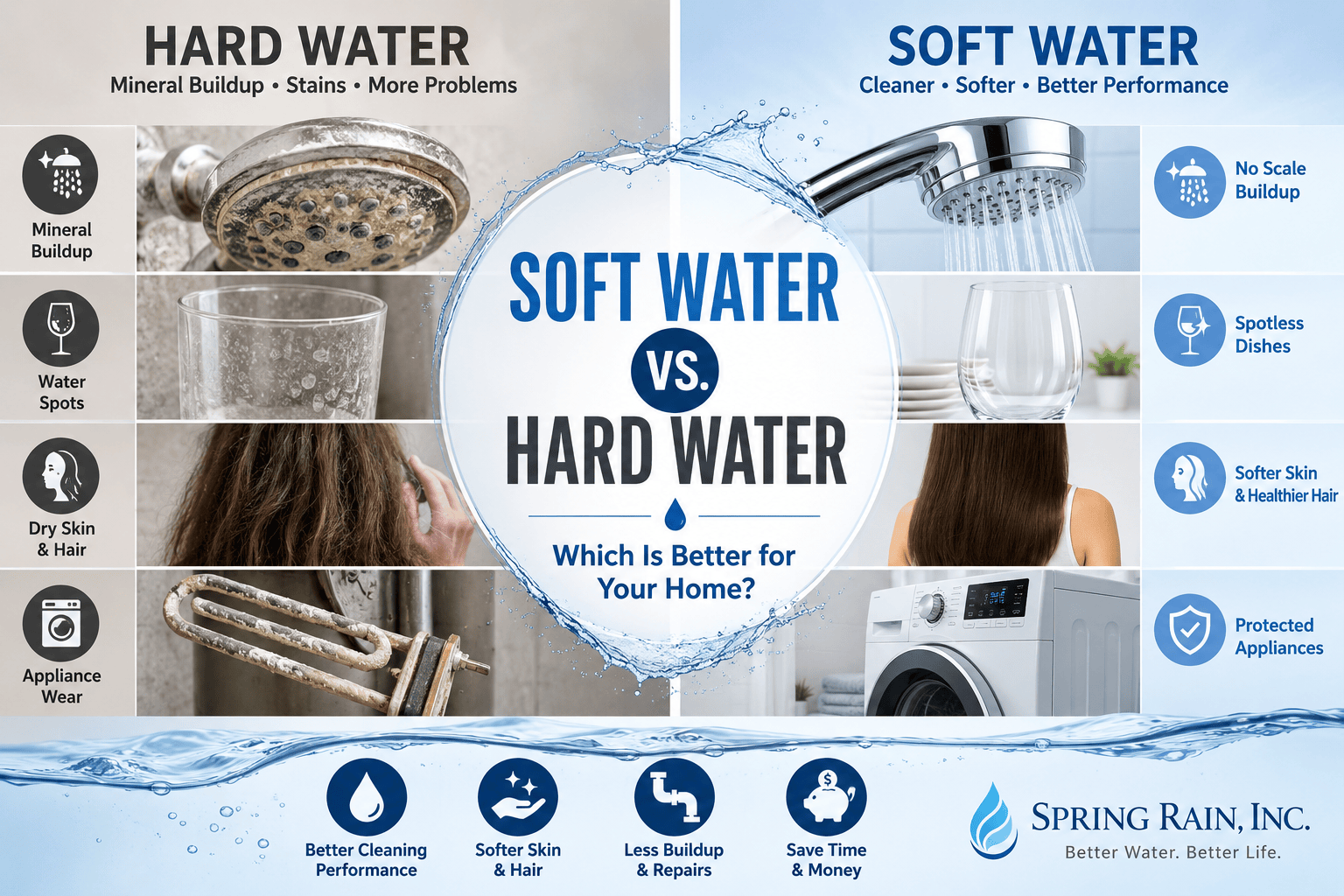
What Is Hard Water?
Hard water contains elevated levels of dissolved minerals, primarily calcium and magnesium. These minerals naturally enter the water supply as groundwater travels through rock, limestone, and soil before reaching your home.
The more minerals present in the water, the harder it becomes.
Although hard water is generally considered safe for drinking, it can create several household challenges over time.
Common Signs of Hard Water
You may have hard water if you notice:
- White, chalky deposits on faucets and showerheads
- Spots or film on glassware and dishes
- Dry, itchy skin after bathing
- Dull or brittle hair
- Soap that doesn't lather well
- Stiff or faded laundry
- Reduced water pressure from mineral buildup
- Increased appliance maintenance
Many homeowners live with hard water for years without realizing the source of these ongoing issues.
What Is Soft Water?
Soft water has significantly lower levels of calcium and magnesium. In most homes, soft water is created through a water softening system that removes hardness minerals before the water enters your plumbing system.
By reducing mineral content, soft water flows more efficiently through pipes and works better with soaps, detergents, and cleaning products.
Characteristics of Soft Water
Soft water typically:
- Feels smoother on skin
- Creates better soap lather
- Leaves fewer spots on dishes
- Helps maintain softer laundry
- Reduces scale buildup in plumbing
- Supports longer appliance life
Many homeowners notice the difference within days of installing a water softener.
Soft Water vs. Hard Water: Side-by-Side Comparison
| Feature | Hard Water | Soft Water |
|---|---|---|
| Mineral Content | High calcium and magnesium | Low calcium and magnesium |
| Soap Performance | Poor lathering | Excellent lathering |
| Skin & Hair | Can feel dry and rough | Often feels softer and cleaner |
| Appliance Efficiency | Mineral buildup may reduce efficiency | Helps appliances operate efficiently |
| Plumbing System | Scale accumulation possible | Reduced scale formation |
| Laundry Results | Stiff fabrics and fading | Softer, brighter fabrics |
| Cleaning Effort | More scrubbing required | Easier cleaning |
| Water Spots | Common | Minimal |
How Hard Water Affects Your Home
1. Scale Buildup in Plumbing
One of the most common consequences of hard water is mineral scale accumulation inside pipes.
Over time, calcium and magnesium deposits narrow pipe openings, restricting water flow and potentially increasing maintenance costs.
2. Reduced Appliance Lifespan
Water heaters, dishwashers, washing machines, and other water-using appliances can experience decreased efficiency due to mineral buildup.
This buildup forces appliances to work harder and may shorten their operational lifespan.
3. Increased Cleaning Challenges
Hard water minerals can leave behind stubborn residue on:
- Shower doors
- Bathroom fixtures
- Sinks
- Glassware
- Kitchen surfaces
Many homeowners spend extra time and money cleaning hard water stains.
4. Effects on Skin and Hair
Hard water can leave a mineral film on the body after bathing.
This residue may contribute to:
- Dry skin
- Itching
- Hair that feels heavy or dull
- Difficulty rinsing shampoo completely
Benefits of Soft Water
Switching to soft water can provide noticeable improvements throughout your home.
Better Cleaning Performance
Soft water allows soaps and detergents to dissolve more effectively, resulting in:
- Cleaner dishes
- Spot-free glassware
- Easier household cleaning
- Reduced soap usage
Improved Laundry Quality
Clothing washed in soft water often feels:
- Softer
- Cleaner
- Brighter
- Longer-lasting
Healthier-Looking Hair and Skin
Without excess minerals interfering with cleansing products, many people find that soft water helps their hair and skin feel smoother and more refreshed.
Protection for Plumbing and Appliances
By minimizing mineral deposits, soft water helps:
- Preserve water heaters
- Protect dishwashers
- Improve plumbing efficiency
- Reduce maintenance expenses
Is Hard Water Dangerous?
In most situations, hard water is not considered harmful to drink.
The calcium and magnesium found in hard water are naturally occurring minerals. However, while hard water is generally safe for consumption, its long-term effects on plumbing systems, appliances, and household surfaces can be costly.
The primary concern is not safety but performance, maintenance, and convenience.
Is Softened Water Safe to Drink?
For most households, softened water is safe to consume.
Water softeners typically remove hardness minerals through an ion exchange process that replaces calcium and magnesium with small amounts of sodium or potassium.
Homeowners who follow strict low-sodium diets may wish to discuss their water treatment options with a qualified water professional and consider a dedicated drinking water system if necessary.
How Water Softening Works
A water softener removes hardness minerals before they circulate through your home.
The process generally includes:
- Water enters the softener tank.
- Resin beads attract calcium and magnesium.
- Hardness minerals remain trapped in the system.
- Softened water flows throughout the home.
- The system periodically regenerates to remove accumulated minerals.
This process helps deliver consistently soft water to your faucets, showers, and appliances.
How to Know If Your Home Has Hard Water
The most reliable way to determine water hardness is through professional water testing.
A comprehensive water analysis can identify:
- Hardness levels
- Iron content
- pH balance
- Sediment concerns
- Additional water quality issues
Testing provides the information needed to select the most effective treatment solution for your home.
Why Homeowners Trust Spring Rain, Inc.
At Spring Rain, Inc., we understand that every home's water quality challenges are unique.
Our team helps homeowners identify water hardness issues and explore customized water treatment solutions designed to improve comfort, protect plumbing systems, and enhance everyday water use.
Whether you're dealing with mineral buildup, cleaning frustrations, or appliance performance concerns, professional water testing is the first step toward better water.
Final Thoughts on Soft Water vs. Hard Water
When comparing soft water vs. hard water, the biggest difference comes down to mineral content and how it impacts your home.
Hard water may be common, but it can contribute to scale buildup, appliance wear, cleaning difficulties, and skin and hair concerns. Soft water helps reduce these challenges by removing hardness minerals before they enter your plumbing system.
If you're experiencing signs of hard water, a professional water test can help you understand your water quality and determine the best solution for your household.
Ready to Improve Your Water Quality?
Contact Spring Rain, Inc. today to learn more about water testing and water softening solutions designed to help your family enjoy cleaner, softer water every day.