Have you noticed white spots on your dishes, buildup around your faucets, or soap that never seems to rinse away properly? You may be dealing with hard water.
Hard water is a common water-quality concern for homeowners, particularly those using private wells. It happens when water picks up minerals such as calcium and magnesium as it moves through underground rock and soil.
You may not notice anything unusual when you first turn on the faucet, but the effects can become obvious over time. From stubborn scale and soap residue to stiff laundry and appliance buildup, hard water can affect many parts of everyday life.
The good news is that hard water can usually be identified through several common warning signs, and there are treatment options available once you know what is causing the problem.
What Is Hard Water?
Hard water contains elevated amounts of dissolved minerals, primarily calcium and magnesium.
As groundwater travels through underground formations, it naturally comes into contact with mineral-rich materials. Some of those minerals dissolve into the water and eventually make their way into your home's plumbing system.
Hard water isn't always easy to recognize by looking at the water itself. It may appear completely clear in a glass.
Instead, you usually notice what the water leaves behind.
Mineral deposits can accumulate on faucets, showerheads, dishes, appliances, plumbing components, and other surfaces that regularly come into contact with water.
If several hard-water symptoms are appearing around your home at the same time, testing your water can help determine whether hardness is the underlying cause.
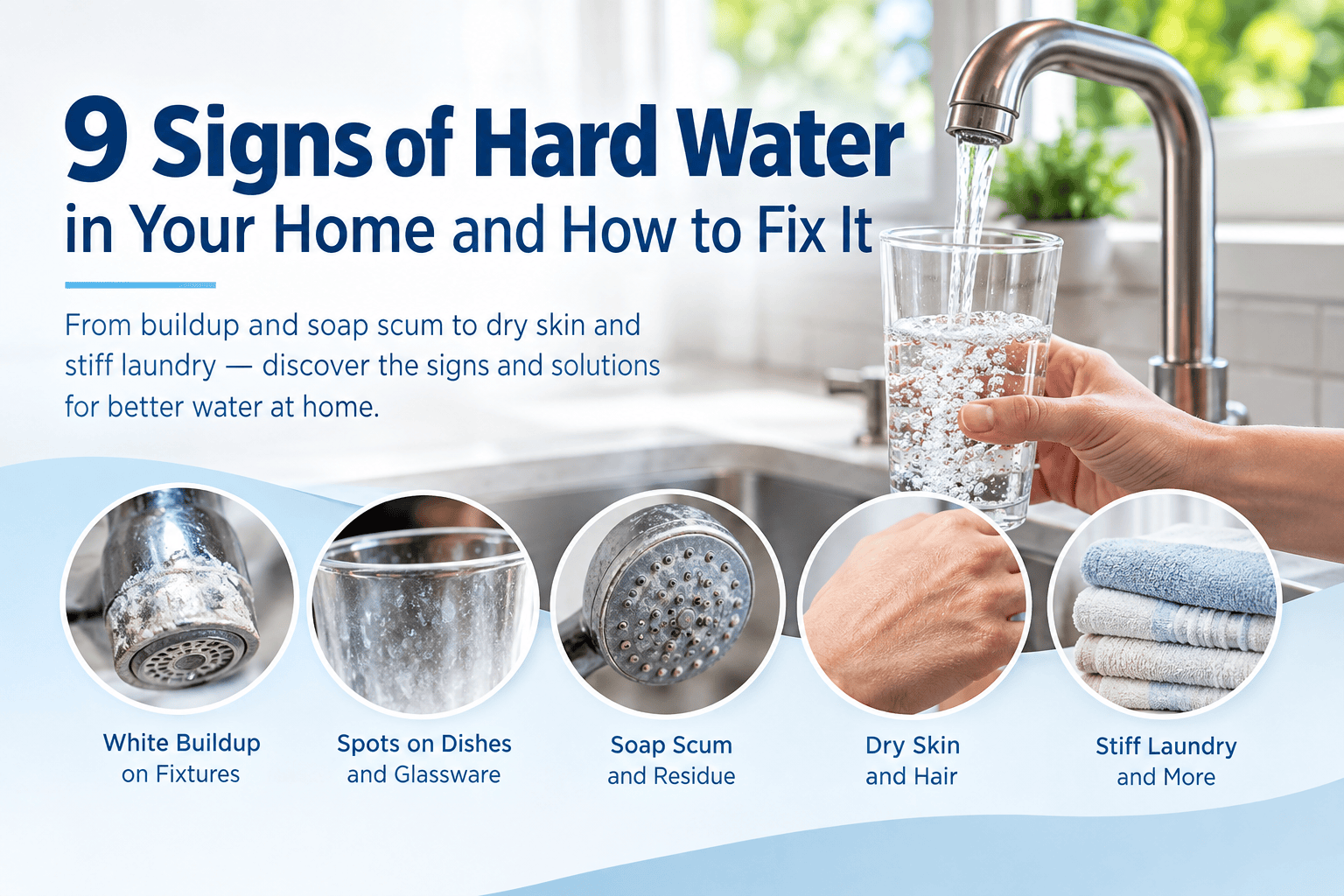
9 Common Signs of Hard Water
1. White Buildup Around Faucets and Showerheads
One of the most recognizable signs of hard water is white or chalky buildup around plumbing fixtures.
Take a close look at your kitchen faucet, bathroom faucets, showerhead, sink, tub, and toilet fixtures.
When mineral-rich water evaporates, it can leave deposits behind. At first, you may only notice a few spots. Eventually, the buildup can become thick and difficult to remove.
If you clean your fixtures regularly but the white crust keeps coming back, the problem may be coming from your water rather than your cleaning routine.
2. Soap and Shampoo Don't Lather Properly
Does it seem like you need more soap than you used to?
Hard water can make it more difficult for soap and shampoo to create the rich lather you're expecting.
The minerals in hard water can interact with soap, reducing its cleaning performance and leaving residue behind.
You may notice this when washing your hands, taking a shower, washing your hair, or cleaning dishes.
As a result, you might use more soap, shampoo, or detergent just to get the same results.
3. Soap Scum Builds Up Quickly
Another common indication of hard water is persistent soap scum.
You may clean your bathtub or shower today and notice a dull film returning shortly afterward.
Hard water minerals can combine with soap and create residue that sticks to bathroom surfaces. This can make shower walls, tubs, sinks, and glass doors look cloudy or dirty even when you've recently cleaned them.
If soap scum seems unusually difficult to remove, your water hardness may be contributing to the problem.
4. Glasses and Dishes Have White Spots
Take a freshly washed glass out of your dishwasher and hold it up to the light.
If you see cloudy spots, white marks, or a mineral film, hard water could be responsible.
As water dries on dishes and glassware, dissolved minerals can remain behind. The result is glassware that looks spotted or cloudy instead of clean and clear.
You may also notice a similar film on plates, silverware, pots, pans, and kitchen sinks.
A rinse aid may help reduce spotting, but it won't address the underlying hardness of the water.
5. Your Skin Feels Dry After Showering
Your bathroom isn't the only place where hard water can make itself noticeable.
Some people find that their skin feels dry, tight, or uncomfortable after bathing in hard water.
Mineral deposits and soap residue can remain on the skin instead of rinsing away easily.
You might notice:
- Dryness after showering
- Tight-feeling skin
- Itching
- A film-like feeling after washing
Hard water isn't necessarily the only explanation for skin problems, but if these symptoms occur alongside other signs of mineral buildup, testing your water may be worthwhile.
6. Your Hair Feels Dull or Coated
Your hair can also provide clues about your water quality.
Hard water minerals may leave residue on your hair, making it feel less clean even after shampooing.
Some homeowners notice that their hair becomes dull, dry, heavy, or difficult to manage.
If you've changed shampoos and conditioners repeatedly without getting the results you want, your water could be another factor worth investigating.
7. Laundry Comes Out Stiff or Dull
Your washing machine uses a significant amount of water, which means your laundry is repeatedly exposed to whatever is in that water.
Hard water can interfere with detergent performance and leave mineral residue on fabrics.
You may notice that freshly washed towels feel rough, clothes feel stiff, bedding isn't as soft, or colors don't look as vibrant.
If you're constantly increasing the amount of detergent you're using but your laundry still doesn't feel right, your water hardness could be worth investigating.
8. Appliances Develop Mineral Scale
Hard water doesn't only affect surfaces you can see.
It can also affect appliances that use water every day.
Over time, mineral deposits can accumulate inside equipment such as water heaters, dishwashers, washing machines, coffee makers, ice makers, and humidifiers.
The more frequently an appliance comes into contact with hard water, the more opportunity there is for mineral buildup.
You may notice white scale around appliance connections or inside equipment that requires regular descaling.
If you're repeatedly cleaning mineral deposits from your appliances, the source of the buildup deserves attention.
9. Water Flow or Plumbing Performance Changes
Hard water can eventually become a plumbing concern.
Mineral scale can accumulate inside pipes, valves, faucet aerators, and showerheads. As deposits build up, they can restrict water flow through certain components.
You may notice:
- A weaker shower
- Reduced faucet flow
- A partially blocked showerhead
- Mineral deposits around plumbing connections
- More frequent fixture maintenance
Not every water-pressure problem is caused by hard water, so don't automatically assume hardness is responsible. However, when reduced flow occurs together with significant mineral buildup, water testing can help identify the cause.
How Hard Water Affects Your Home
Hard water can affect much more than the appearance of your faucets.
Effects on Plumbing
Mineral deposits can gradually accumulate inside plumbing components and fixtures.
Over time, this buildup may contribute to restricted flow and additional maintenance.
Effects on Appliances
Water heaters and other water-using appliances can accumulate mineral scale.
Regular exposure to hard water can make cleaning and maintenance more demanding.
Effects on Cleaning
Hard water can make soaps and detergents less effective, meaning homeowners may use more cleaning products than they otherwise would.
Effects on Laundry
Mineral-rich water can contribute to residue on fabrics and may leave clothing and towels feeling less soft.
How Can You Tell if Your Water Is Hard?
The symptoms above can give you a reason to investigate, but they don't provide an exact measurement.
Test Your Water
The most reliable way to determine whether your water is hard is to have it tested.
A basic home test can provide an initial indication of hardness, while professional testing can provide a broader picture of your water chemistry.
Look Beyond Hardness
If you have private well water, it's important not to focus exclusively on hardness.
Your water may have several characteristics that need attention.
Common Water Quality Factors
Testing may help identify concerns involving:
- Hardness
- Iron
- Manganese
- pH
- Sediment
- Odor
- Other water-quality characteristics
Why Complete Testing Matters
Different water problems can produce similar symptoms.
For example, a stain or unusual odor isn't automatically proof that hard water is responsible.
Make Treatment Decisions From Test Results
Once you know what's actually in your water, you can choose a treatment system based on the specific conditions of your home instead of guessing.
How to Treat Hard Water
Once testing confirms elevated hardness, you can consider different treatment options.
Install a Water Softener
A traditional water softener is designed to reduce hardness minerals such as calcium and magnesium.
The appropriate system size depends on factors such as your water hardness, household size, and daily water consumption.
Consider Whole-House Water Treatment
If hardness isn't your only water-quality concern, a broader whole-house treatment approach may be more appropriate.
For example, some private wells may have hardness along with iron, manganese, sediment, or other concerns.
Get Professional Water Treatment Advice
Choosing a treatment system based only on one symptom can result in an unsuitable solution.
A water professional can evaluate your water test results and household requirements before recommending an appropriate system.
How Spring Rain, Inc. Can Help
If you're experiencing hard water problems, Spring Rain, Inc. can help you understand your water quality and explore treatment options suited to your home.
Instead of treating every property the same way, the right approach begins with understanding what's actually in the water.
Whether you're dealing with white scale around faucets, cloudy dishes, stiff laundry, or mineral buildup inside appliances, identifying the underlying issue is the first step toward improving your home's water.
A properly selected water softener or whole-house water treatment system can help reduce the everyday effects associated with hard water.
Final Thoughts
Hard water usually doesn't create one obvious problem overnight.
Instead, the signs tend to appear gradually.
You may first notice spots on your glasses. Then your faucet develops white buildup. Your showerhead becomes harder to clean, your laundry feels rough, and your appliances need more frequent maintenance.
When several of these signs appear together, it's worth taking a closer look at your water.
The best place to start is simple: test your water, understand the results, and choose a treatment solution based on your home's actual water conditions.
For Pennsylvania homeowners, Spring Rain, Inc. can help you take the next step toward cleaner, more manageable water throughout your home.
Frequently Asked Questions About Hard Water
What are the most common signs of hard water?
White scale, soap scum, cloudy glassware, poor soap lather, stiff laundry, appliance buildup, and changes in water flow are common signs associated with hard water.
How can I test my water for hardness?
You can use a home water-testing kit for an initial indication or arrange professional testing for a more detailed analysis.
Is hard water safe to drink?
Hardness itself is generally considered a water-quality concern rather than a direct health hazard. However, private-well water can contain other contaminants, so regular water testing is important.
Does hard water damage appliances?
Hard water can contribute to mineral scale inside water-using appliances. Over time, this can increase cleaning and maintenance requirements.
What is the best solution for hard water?
The appropriate solution depends on your water chemistry, household water usage, and other water-quality concerns. A properly sized water softener is one common approach for treating hardness.
Can hard water cause low water pressure?
Mineral buildup can restrict flow through certain plumbing components, faucets, and showerheads. However, low water pressure can have many causes, so testing and inspection are important.
Do all Pennsylvania homes have hard water?
No. Water quality varies between locations and water sources. Private wells can have significantly different water characteristics even between nearby properties.