Feeling sick or uncomfortable after drinking water can be frustrating. Nausea after drinking water is more common than many people think, and the reasons can range from poor water quality to digestive sensitivity and dehydration habits.
Many homeowners across the United States experience nausea, bloating, stomach discomfort, or a strange feeling after drinking tap water. In some cases, the issue may be linked to contaminants, hard water minerals, or untreated household water systems.
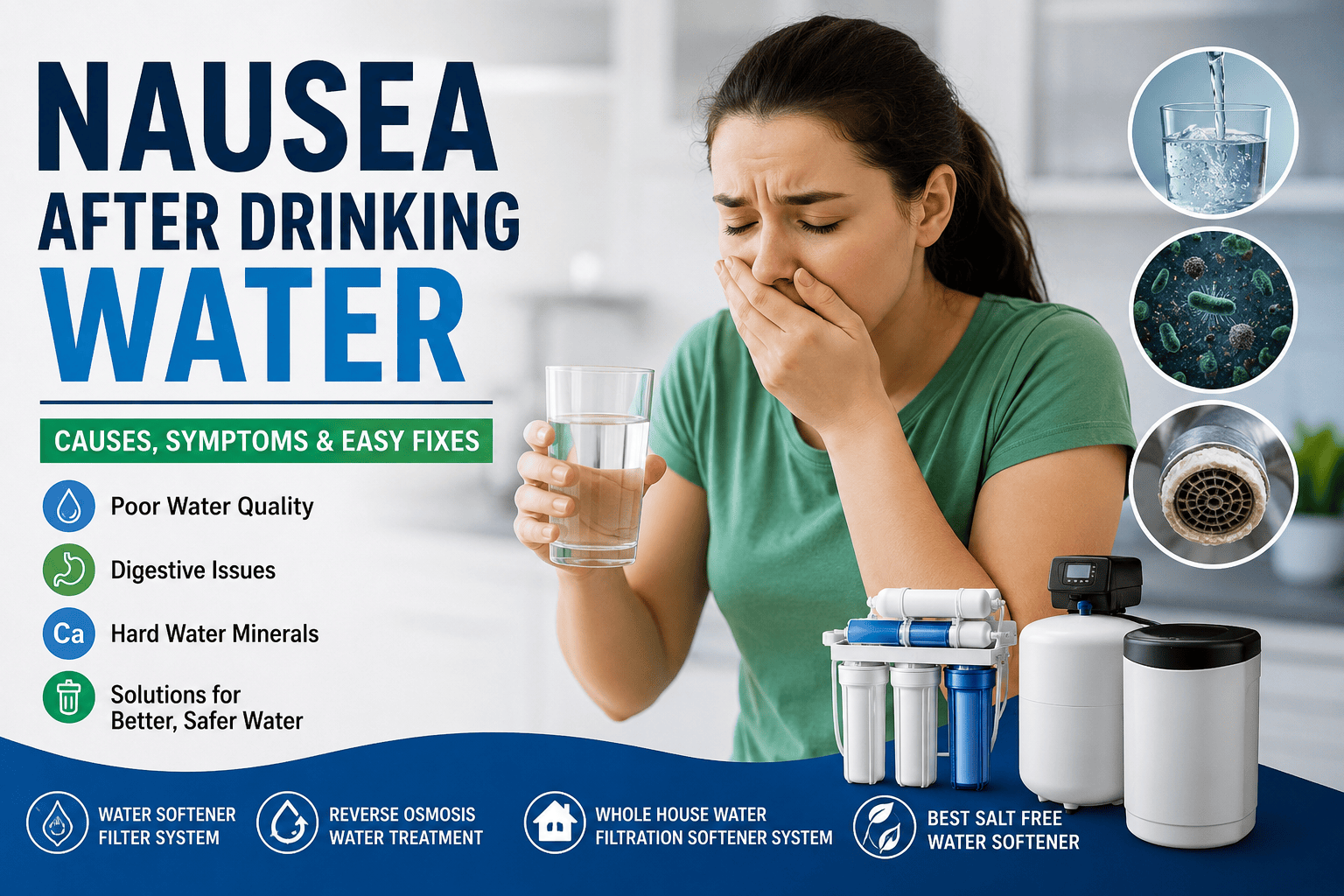
What Causes Nausea After Drinking Water?
There are several possible reasons why people experience nausea after drinking water. Some causes are temporary, while others may point to a water quality issue inside the home.
Drinking Water Too Quickly
Drinking large amounts of water rapidly can upset the stomach and create pressure in the digestive system. This is especially common on an empty stomach.
Symptoms may include:
- Mild nausea
- Stomach bloating
- Burping
- Feeling overly full
- Temporary dizziness
Sipping water slowly instead of gulping can often help.
Poor Water Quality and Nausea After Drinking Water
One major reason for nausea after drinking water is poor water quality. Many homes in the United States deal with hard water, chlorine, sulfur odors, sediment, or contaminants that affect drinking water safety and taste.
Common Water Problems That May Cause Nausea
- Excess chlorine in tap water
- Hard water minerals
- Metallic taste
- Sulfur smell
- Bacteria in well water
- Old plumbing contamination
If your tap water tastes strange or causes discomfort, installing a whole house water filtration softener system may improve your overall water quality.
Hard Water Can Upset the Stomach
Hard water contains high levels of calcium and magnesium minerals. While not always dangerous, some people report digestive discomfort and nausea after drinking water with untreated hard water.
Signs of Hard Water
- White scale buildup on faucets
- Water spots on dishes
- Soap not lathering properly
- Dry skin and hair
- Strange-tasting water
A high-quality water softener filter system can help reduce excess minerals and improve water quality throughout the home.
Reverse Osmosis Water Treatment for Cleaner Drinking Water
If contaminants are causing nausea after drinking water, a reverse osmosis water treatment system can help remove unwanted particles and improve taste.
Reverse osmosis systems are designed to reduce:
- Chlorine
- Heavy metals
- Sediment
- Harmful contaminants
- Unpleasant odors and tastes
Many homeowners choose reverse osmosis systems because they provide cleaner and safer drinking water for daily use.
Best Salt Free Water Softener for Modern Homes
More homeowners are now searching for the best salt free water softener to improve water quality without using traditional salt-based systems.
Benefits of Salt-Free Water Softeners
- Lower maintenance
- No added sodium
- Environmentally friendly
- Helps reduce scale buildup
- Better tasting water
Salt-free systems are ideal for households looking for a simple and efficient water treatment solution.
Other Reasons for Nausea After Drinking Water
Besides water quality, other health-related factors may contribute to nausea.
Possible Causes Include
- Acid reflux
- Gastritis
- Anxiety
- Dehydration
- Drinking ice-cold water too fast
- Sensitive stomach conditions
If symptoms happen regularly, it may be helpful to consult a healthcare professional and test your home water supply.
Tips to Prevent Nausea After Drinking Water
Drink Water Slowly
Avoid drinking large amounts at once.
Use Filtered Water
Cleaner water may reduce stomach irritation.
Avoid Extremely Cold Water
Room-temperature water is often easier to digest.
Test Your Home Water
Especially important for well water users.
Upgrade Your Water System
Installing a whole house water filtration softener system can improve both water quality and comfort.
Final Thoughts on Nausea After Drinking Water
Experiencing nausea after drinking water can be unpleasant, but the cause is often manageable. Poor water quality, hard water minerals, contaminants, and unhealthy hydration habits are some of the most common reasons.
Using a reliable water softener filter system, reverse osmosis water treatment, or the best salt free water softener can significantly improve your household water quality and overall drinking experience.
Clean, healthy water should leave you feeling refreshed - not uncomfortable.