Few things are more frustrating than stepping into the shower expecting a strong, refreshing spray and getting little more than a weak trickle. If you've been searching for how to increase water pressure in your shower, the good news is that the problem is often easier to fix than it seems.
Low shower pressure can come from something as simple as mineral buildup inside the showerhead. In other cases, the problem may be related to household water pressure, a partially closed valve, clogged plumbing, a pressure regulator, or a well water system that isn't maintaining adequate pressure.
The key is to figure out where the pressure is being lost before spending money on a new showerhead or expensive plumbing work.
This guide explains the most common causes of low shower pressure and the practical steps you can take to improve it.
What Causes Low Water Pressure in a Shower?
Before trying to increase your shower pressure, it helps to understand why the pressure is low in the first place.
A showerhead cannot create unlimited water pressure. If the plumbing system is supplying water at low pressure, replacing the showerhead alone may not solve the problem.
Common causes include:
- A clogged or scaled showerhead
- A partially closed water supply valve
- Low pressure throughout the house
- A faulty pressure-reducing valve
- Clogged pipes
- A failing well pressure tank or pump
- Multiple fixtures using water at the same time
- Plumbing leaks
- An older or restrictive showerhead
- Problems with the shower valve
Some problems are easy to identify, while others require a professional inspection.
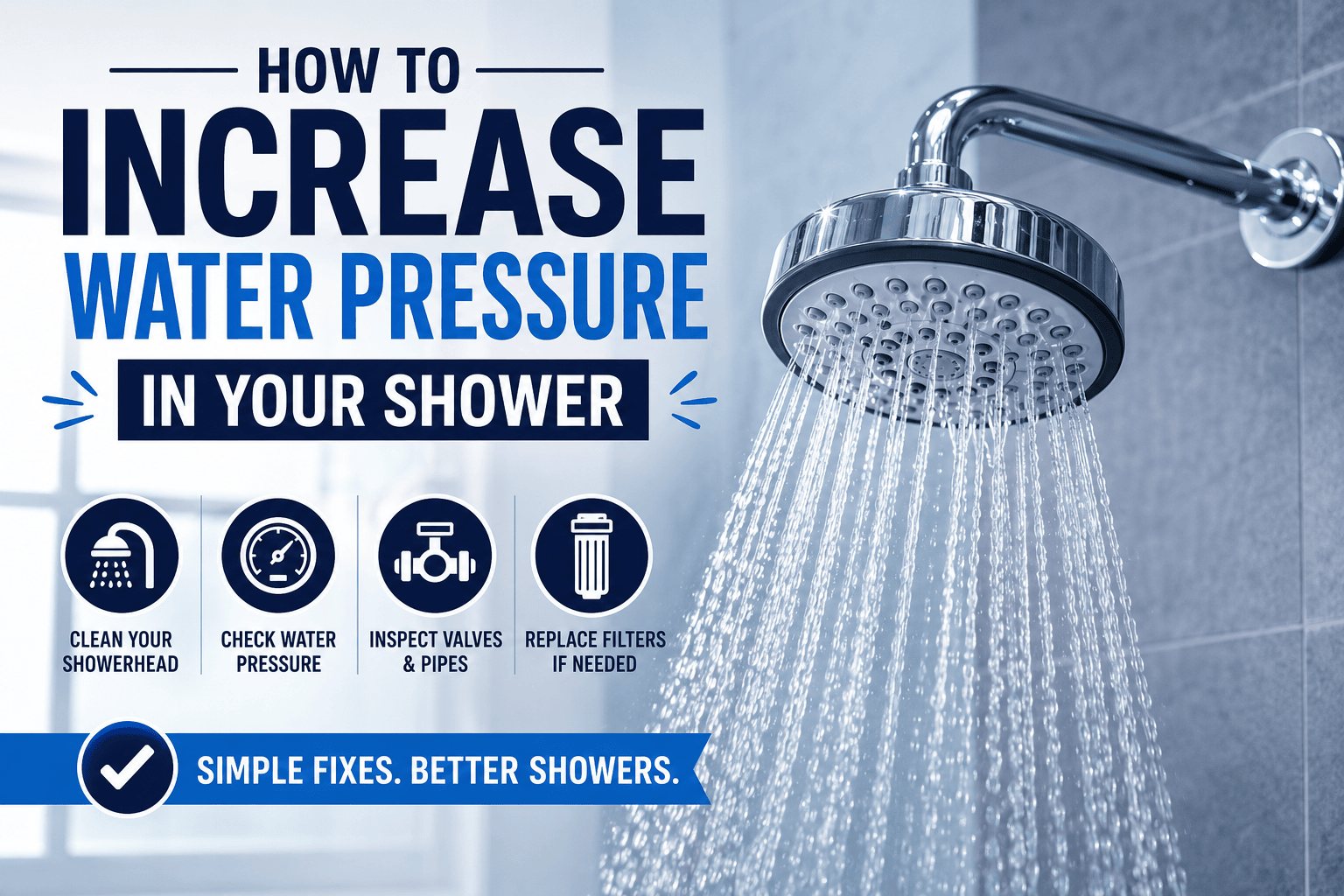
How to Increase Water Pressure in Your Shower
The best solution depends on the cause. Start with the easiest checks before moving toward more complicated plumbing issues.
Clean the Showerhead
One of the first things to check is the showerhead itself.
Over time, minerals such as calcium and magnesium can build up around the small spray openings. This buildup can restrict water flow and make the shower feel weak.
EPA WaterSense recommends periodically inspecting showerheads for scale buildup and using an appropriate cleaning product or white vinegar to remove mineral deposits.
To clean a showerhead:
- Remove the showerhead if possible.
- Place it in white vinegar or a suitable descaling solution.
- Allow the buildup to soften.
- Rinse the showerhead thoroughly.
- Clean the spray openings gently.
- Reinstall the showerhead and check the water flow.
If the showerhead is heavily damaged or clogged, replacing it may be more practical than trying to restore it.
Check the Showerhead for Flow Restrictions
Modern showerheads are designed to use water efficiently, so a newer model may produce a different spray sensation than an older, high-flow showerhead.
That does not necessarily mean the newer showerhead is performing poorly.
EPA WaterSense-labeled showerheads are required to use no more than 2.0 gallons per minute while meeting performance requirements for spray force and coverage.
Instead of simply choosing the highest-flow showerhead available, look for a model that is designed to maintain a satisfying spray across a range of household pressures.
Make Sure the Water Supply Valve Is Fully Open
A partially closed shutoff valve can restrict the amount of water reaching your shower.
Check the main water shutoff valve and any accessible valve serving the bathroom. A valve that has been accidentally moved or was never opened completely can reduce water flow.
Do not force an old or corroded valve. If it appears damaged, stuck, or difficult to operate, a plumber should inspect it.
Check Your Home's Water Pressure
If the shower pressure is weak, check whether the problem affects other fixtures.
Turn on a bathroom faucet, kitchen faucet, or another shower.
If several fixtures have weak flow, the problem probably isn't limited to the showerhead.
Your home's incoming service pressure may be too low.
EPA WaterSense recommends incoming service pressure between approximately 45 and 60 psi for proper operation of household water-using fixtures and systems.
You can check household pressure with a water pressure gauge connected to a hose bibb.
For a basic test:
- Turn off faucets and water-using appliances.
- Connect the pressure gauge to an outdoor hose connection.
- Open the hose bibb fully.
- Read the pressure on the gauge.
If the pressure is significantly below the normal range, further investigation may be necessary.
Inspect the Pressure-Reducing Valve
Homes connected to municipal water supplies may have a pressure-reducing valve, also called a PRV or pressure regulator.
The purpose of this valve is to control excessive incoming water pressure before it enters the home's plumbing system.
If the valve is incorrectly adjusted or has developed a problem, it can contribute to low water pressure.
EPA guidance notes that excessive household water pressure can damage plumbing fixtures and appliances, while recommended service pressure is generally in the 45-to-60-psi range.
Adjusting a pressure regulator isn't something you should do blindly. Increasing pressure too much can create other plumbing problems.
If you suspect the PRV is malfunctioning, have a qualified plumber test and adjust it.
Look for a Plumbing Leak
A hidden plumbing leak can affect water pressure and waste a significant amount of water.
Look for signs such as:
- Unexpected increases in your water bill
- Damp areas around walls or floors
- Water stains
- Constantly running toilets
- Sounds of water when every fixture is turned off
- Wet spots around plumbing connections
- A noticeable pressure drop when water is being used
If you suspect a hidden leak, it is better to investigate the problem rather than simply trying to increase pressure.
Check for Clogged Pipes
Older plumbing systems can develop restrictions inside the pipes.
Mineral deposits, corrosion, sediment, or deteriorating pipe materials can reduce the internal diameter of a pipe and restrict flow.
This can be especially noticeable in older homes.
If the shower has always had poor pressure, the plumbing configuration itself may be contributing to the problem. If the pressure has gradually become worse over time, buildup or a plumbing component that is deteriorating may be more likely.
A plumber can inspect the system and determine whether restricted piping is contributing to the problem.
How to Increase Shower Pressure in a Home With Well Water
Well water systems require a slightly different approach.
If your home uses a private well, the shower pressure can be affected by the:
- Well pump
- Pressure tank
- Pressure switch
- Water treatment equipment
- Sediment filters
- Plumbing
- Pressure settings
A clogged sediment filter, for example, can restrict water flow before it ever reaches the shower.
A problem with the well pump or pressure tank can also cause pressure fluctuations throughout the house.
EPA WaterSense technical guidance notes that single-family homes supplied by groundwater wells commonly use pressure tanks and recommends a 60-psi pressure-tank setting for optimal home performance, while actual system settings should be evaluated according to the equipment and installation.
If your shower pressure changes dramatically while the well pump is running or after several minutes of water use, the well system deserves attention.
Check Your Whole-House Water Filter
Water treatment equipment can also affect shower flow when it becomes clogged or improperly sized.
If your home has:
- A sediment filter
- Whole-house water filter
- Iron filter
- Water softener
- Other water treatment equipment
check whether the pressure changes before and after the equipment.
A filter loaded with sediment can create a pressure drop.
This is especially important for homes using private wells because sediment and other naturally occurring substances can accumulate in filtration equipment.
Regular filter maintenance helps the system continue operating properly.
Check the Shower Valve
If the showerhead is clean and the rest of the house has normal pressure, the problem may be inside the shower valve.
The shower valve controls the mixture of hot and cold water before it reaches the showerhead.
A worn cartridge, blocked valve, or internal restriction can reduce flow.
This can be more difficult to diagnose without removing components, so professional help may be appropriate if the problem appears to be isolated to one shower.
Does a New Showerhead Increase Water Pressure?
A new showerhead can improve the feel of the shower, but it cannot fix low household water pressure.
This distinction is important.
A well-designed showerhead can produce a more concentrated or better-distributed spray, making the shower feel stronger without necessarily increasing the home's actual water pressure.
EPA WaterSense showerheads are specifically tested for spray force, spray coverage, and pressure compensation to provide a satisfactory shower across varying household pressure conditions.
If your home's pressure is genuinely low, address the underlying plumbing issue first.
Why Your Shower Pressure Drops When Other Fixtures Are Running
Have you noticed that your shower gets weaker when someone flushes a toilet, runs the washing machine, or turns on a faucet?
That can happen because multiple fixtures are competing for available water flow.
If the household supply has limited pressure or flow capacity, using several fixtures simultaneously can make the shower noticeably weaker.
This may be more noticeable in:
- Older homes
- Homes with small-diameter piping
- Homes with low incoming pressure
- Well water systems
- Homes with restrictive plumbing components
If pressure remains acceptable when only the shower is running but drops significantly when another fixture operates, the overall plumbing capacity should be evaluated.
Can a Water Softener Cause Low Shower Pressure?
A water softener should not normally make your shower pressure dramatically weaker when properly sized and maintained.
However, a problem with the system can create a noticeable pressure drop.
Possible causes include:
- A clogged control valve
- Incorrectly sized equipment
- Blocked resin bed
- Sediment entering the system
- Improper installation
- A bypass or valve problem
If the pressure is normal before the softener but weak after it, the treatment equipment may need inspection.
The same principle applies to whole-house filtration systems.
How to Increase Water Pressure Without Wasting More Water
It may seem logical to solve a weak shower by simply increasing water flow.
That's not always the best approach.
A properly designed showerhead can provide good spray performance without using excessive amounts of water.
EPA WaterSense states that WaterSense-labeled showerheads use no more than 2.0 gallons per minute while meeting performance requirements.
Instead of removing flow controls or drilling additional holes into a showerhead, focus on fixing the actual cause of poor performance.
EPA guidance specifically warns against manually altering showerheads because doing so can create performance problems and increase water consumption.
When Should You Call a Plumber?
Some shower pressure problems are simple DIY maintenance issues. Others are signs of a larger plumbing problem.
Consider professional help if:
- Water pressure is low throughout the house.
- Pressure suddenly dropped without explanation.
- You suspect a hidden leak.
- The pressure regulator appears damaged.
- The well pump isn't maintaining pressure.
- The pressure tank is malfunctioning.
- Pipes may be clogged or corroded.
- Water treatment equipment is restricting flow.
- The shower valve needs to be opened or replaced.
- Pressure is extremely high as well as low.
Trying to solve a plumbing pressure problem by randomly adjusting valves can sometimes make the situation worse.
What Is a Good Water Pressure for a Shower?
There isn't one single pressure number that guarantees the perfect shower because the actual experience also depends on the showerhead, valve, pipe size, and flow rate.
For overall household service pressure, EPA WaterSense recommends approximately 45 to 60 psi.
EPA technical guidance for showerhead operation also discusses testing across a broader pressure range, demonstrating that showerhead performance depends on both the fixture and the pressure available to it.
The goal shouldn't be to push household pressure as high as possible.
The goal is to maintain adequate, stable pressure without putting unnecessary stress on plumbing and fixtures.
Common Mistakes People Make When Trying to Increase Shower Pressure
Removing the Flow Restrictor
Removing a flow restrictor may increase water consumption without solving an underlying pressure problem.
It can also affect shower performance and water efficiency.
Turning the Pressure Up Too High
More pressure isn't always better.
Excessive pressure can stress pipes, fixtures, appliances, and connections. EPA WaterSense notes that high service pressure can increase the risk of leaks and premature equipment failure.
Replacing the Showerhead Without Testing Pressure
A new showerhead may improve spray performance, but if the home's actual water pressure is low, the improvement may be limited.
Ignoring the Rest of the House
If the kitchen faucet, bathroom sink, and other fixtures also have low pressure, the showerhead probably isn't the real problem.
Ignoring Water Treatment Equipment
Filters, softeners, and other treatment systems should be checked when the pressure loss occurs after the equipment.
A Simple Troubleshooting Checklist
If you're wondering how to increase water pressure in your shower, work through this checklist:
Step 1: Clean the showerhead.
Step 2: Check whether other fixtures have low pressure.
Step 3: Make sure accessible water valves are fully open.
Step 4: Test household water pressure with a pressure gauge.
Step 5: Check for leaks.
Step 6: Inspect filters and water treatment equipment.
Step 7: If you have well water, check the pump and pressure system.
Step 8: Have the pressure regulator and plumbing inspected if necessary.
Step 9: Replace the showerhead if it is damaged, clogged, or performing poorly.
Step 10: Call a professional if the problem involves the plumbing, well system, pressure regulator, or other equipment.
Final Thoughts
Learning how to increase water pressure in your shower starts with finding the actual cause rather than immediately replacing equipment.
A dirty showerhead may only need cleaning. A partially closed valve may need to be opened. A clogged filter may need replacement. But if pressure is low throughout the house, the issue could involve the main supply, pressure regulator, plumbing, well pump, pressure tank, or water treatment equipment.
The safest approach is to test the pressure, identify where the restriction occurs, and then address that specific problem.
For homeowners who need help evaluating water pressure, filtration, softening, or other water-quality and water-treatment concerns, Spring Rain, Inc. can help determine what is happening with your home's water system and identify an appropriate solution.
Frequently Asked Questions
How can I increase water pressure in my shower quickly?
Start by cleaning the showerhead and checking that the water supply valves are fully open. If the entire house has low pressure, test the household pressure before replacing the showerhead.
Why is my shower pressure suddenly low?
A sudden pressure drop can be caused by a clogged showerhead, partially closed valve, plumbing leak, clogged filter, pressure regulator problem, or an issue with a well pump or pressure system.
Will a new showerhead increase water pressure?
A new showerhead can improve spray performance and make the shower feel stronger, but it cannot increase the actual pressure supplied by your home's plumbing system.
What PSI should my house water pressure be?
EPA WaterSense recommends incoming household service pressure in the range of approximately 45 to 60 psi for efficient operation of water-using fixtures and systems.
Why is my shower pressure low but the sink pressure is fine?
If only the shower has weak pressure, the showerhead, shower valve, cartridge, or local plumbing restriction may be responsible. Cleaning or replacing the showerhead is a good first step.
Can a clogged water filter reduce shower pressure?
Yes. A heavily loaded filter can create a pressure drop, particularly when water is being used at a higher flow rate.
Can a water softener affect shower pressure?
A properly sized and maintained softener should not normally cause a major pressure loss. However, a clogged or malfunctioning system can restrict flow and should be inspected if pressure drops after the softener.
How do I increase shower pressure in a well-water system?
Start by checking the pressure at the home and observing how it changes while water is being used. The well pump, pressure tank, pressure switch, filters, treatment equipment, and plumbing may all affect shower performance.
Is higher water pressure always better?
No. Excessively high pressure can place additional stress on plumbing, fixtures, and appliances. The objective is adequate and stable pressure, not maximum pressure.
Should I remove the flow restrictor from my showerhead?
It is generally better not to modify the showerhead. A properly designed, high-performing showerhead can provide a satisfying spray while using water efficiently. EPA WaterSense recommends choosing certified showerheads rather than altering fixtures.