Choosing a water filter isn't as simple as picking the first system you see online. Every home has different water conditions, different plumbing, and different water quality concerns. The best water filter for one family may not be the right solution for another.
Some homeowners simply want better-tasting drinking water, while others are concerned about chlorine, hard water, sediment, heavy metals, or contaminants that may affect their family's health. Fortunately, today's water treatment systems offer solutions for virtually every type of water quality issue.
This guide explains how to choose a water filter by understanding your water, comparing filtration technologies, and selecting a system that fits your home, lifestyle, and budget.
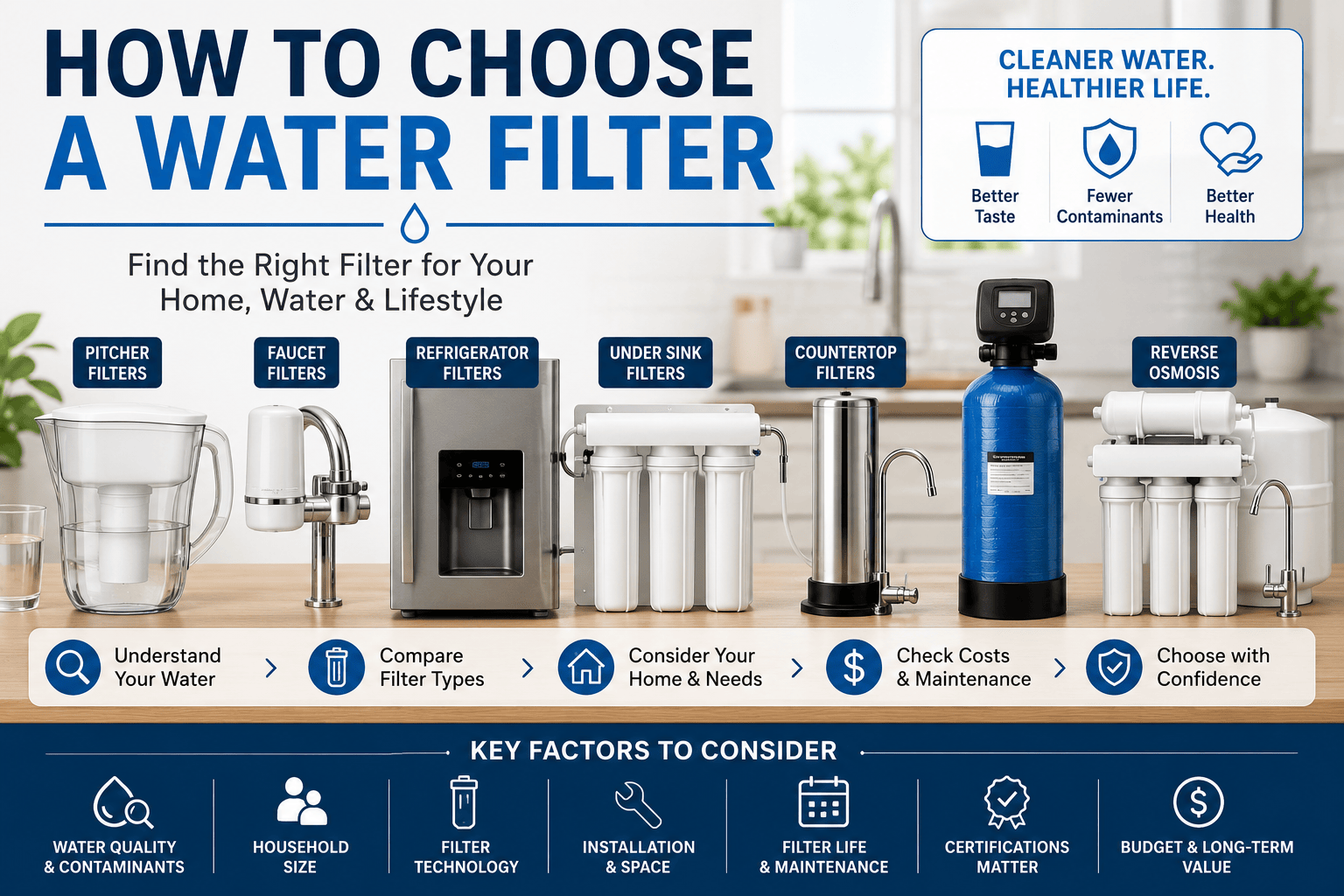
Why Choosing the Right Water Filter Matters
Water is used for much more than drinking.
Every day, your household relies on water for:
- Cooking
- Making coffee and tea
- Washing fruits and vegetables
- Bathing
- Laundry
- Dishwashing
- Cleaning
- Ice makers
- Water-using appliances
Because water affects nearly every aspect of your daily routine, selecting the right filtration system can improve comfort, convenience, and overall water quality throughout your home.
Step 1: Understand What's in Your Water
Before buying any filtration system, it's important to identify the issues affecting your water.
Common water quality concerns include:
- Chlorine taste and odor
- Sediment
- Rust
- Hard water minerals
- Lead
- Iron
- Sulfur odor
- Nitrates
- Fluoride
- Bacteria
- High total dissolved solids (TDS)
Municipal water and private well water often have completely different treatment needs.
If possible, review your local water quality report or have your water professionally tested. Knowing what's in your water helps you avoid buying a system that removes contaminants you don't have while missing the ones you do.
Step 2: Decide What You Want to Improve
Different homeowners have different priorities.
Ask yourself these questions:
- Do I want cleaner drinking water?
- Am I trying to improve water taste?
- Does my water smell unpleasant?
- Do I have hard water?
- Do I want to protect my plumbing?
- Is cleaner shower water important?
- Do I need filtration for the entire home?
Your answers will help narrow your options.
Step 3: Learn the Different Types of Water Filters
There is no universal water filter that solves every water problem. Each type is designed for specific purposes.
Water Filter Pitchers
Water filter pitchers are one of the simplest filtration options.
Best For
- Apartments
- Students
- Small households
- Occasional use
Advantages
- Affordable
- Portable
- Easy to use
- No installation required
Limitations
- Limited filtration capacity
- Frequent refilling
- Slower filtration
- Only filters drinking water
Faucet Water Filters
Faucet-mounted systems connect directly to your kitchen faucet.
Best For
- Renters
- Small kitchens
- Budget-conscious homeowners
Advantages
- Easy installation
- Instant filtered water
- Minimal space required
Limitations
- May reduce water flow
- Not compatible with every faucet
- Filters only one faucet
Refrigerator Water Filters
Many refrigerators include built-in filtration.
Advantages
- Convenient
- Improves drinking water and ice
- Hidden inside the appliance
Limitations
- Limited contaminant reduction
- Replacement cartridges can be expensive
- Only filters refrigerator water
Under Sink Water Filters
Under sink filtration systems are among the most popular options for homeowners.
Best For
- Families
- Everyday drinking water
- Cooking
Advantages
- Hidden installation
- Continuous filtered water
- Larger filter capacity
- Excellent contaminant reduction
Limitations
- Requires installation
- Higher initial investment
Countertop Water Filters
Countertop systems provide effective filtration without modifying plumbing.
Best For
- Renters
- Vacation homes
- Temporary installations
Advantages
- Easy setup
- Portable
- Higher filtration capacity than pitchers
Limitations
- Occupies counter space
- Visible appliance in the kitchen
Whole House Water Filtration Systems
Whole house systems filter water where it enters your home.
Every faucet benefits from cleaner water.
Best For
- Homeowners
- Large households
- Well water
- Homes with hard water
- Comprehensive water treatment
Advantages
- Filters water throughout the house
- Protects plumbing
- Improves bathing water
- Supports appliance performance
Limitations
- Professional installation may be required
- Higher upfront cost
Reverse Osmosis Systems
Reverse osmosis (RO) uses a semi-permeable membrane to remove a broad range of dissolved contaminants.
Best For
- Drinking water
- Cooking
- Homes with high TDS
- Families seeking advanced purification
Advantages
- Exceptional contaminant reduction
- Excellent water quality
- Great tasting water
Limitations
- Higher cost
- Filter maintenance required
- Some systems produce wastewater
Step 4: Understand Common Filtration Technologies
Many modern systems combine multiple filtration methods.
Sediment Filtration
Captures sand, rust, dirt, and suspended particles.
Activated Carbon
Helps reduce:
- Chlorine
- Taste
- Odor
- Many organic compounds
Catalytic Carbon
Designed to reduce chloramine and improve overall water quality.
Water Softening
Reduces calcium and magnesium that cause hard water.
Reverse Osmosis
Removes many dissolved contaminants through membrane filtration.
UV Purification
Uses ultraviolet light to disinfect water by reducing bacteria and other microorganisms.
Step 5: Consider Installation Requirements
Some systems install in minutes.
Others require professional installation.
Ask yourself:
- Do I own or rent my home?
- Can I modify plumbing?
- Do I have enough installation space?
- Will I need professional assistance?
Choosing a system that matches your home's setup helps avoid unnecessary installation costs.
Step 6: Think About Long-Term Maintenance
Every filtration system requires maintenance.
Common maintenance includes:
- Replacing cartridges
- Changing UV lamps
- Sanitizing components
- Inspecting connections
Before purchasing, compare:
- Replacement costs
- Filter lifespan
- Ease of maintenance
- Manufacturer support
Sometimes a slightly more expensive system has significantly lower maintenance costs over its lifetime.
Step 7: Look for Third-Party Certifications
Independent testing helps verify filtration performance.
Look for systems tested against recognized standards whenever possible.
Certification helps confirm that a system has been evaluated for specific contaminant reduction rather than relying solely on manufacturer claims.
Questions to Ask Before Buying a Water Filter
Before making your decision, consider the following:
- What contaminants am I trying to reduce?
- How much water does my family use?
- Do I want whole-home or drinking-water filtration?
- What's my budget?
- How much maintenance am I comfortable performing?
- Will I move in the near future?
- Do I need professional installation?
Answering these questions can make choosing a water filter much easier.
Which Water Filter Is Right for You?
There isn't a one-size-fits-all solution.
Here's a quick guide:
| Your Need | Recommended Option |
|---|---|
| Better tasting water | Activated carbon filter |
| Apartment living | Pitcher or countertop filter |
| Kitchen drinking water | Under sink filter |
| Whole-home protection | Whole house filtration system |
| Hard water | Water softener |
| Maximum purification | Reverse osmosis |
| Well water | Multi-stage filtration with UV (if appropriate) |
Frequently Asked Questions
How do I know which water filter I need?
Start by testing your water or reviewing your local water quality report. Once you know the contaminants present, you can select a filtration system designed to address those specific concerns.
Is reverse osmosis better than carbon filtration?
They serve different purposes. Reverse osmosis provides more comprehensive purification, while activated carbon excels at improving taste and reducing chlorine and certain organic compounds.
Do whole house water filters improve drinking water?
Yes. Whole house systems filter water before it enters your home's plumbing, providing treated water to every faucet.
How often should water filters be replaced?
Replacement schedules vary depending on the filtration system, water quality, and household water usage. Always follow the manufacturer's recommended maintenance schedule.
Conclusion
Learning how to choose a water filter begins with understanding your home's unique water quality and selecting a solution that matches your specific needs. Whether you're looking for cleaner drinking water, protection from hard water, improved taste, or whole-home filtration, choosing the right system is an investment in your family's comfort and your home's long-term performance.
At Spring Rain, Inc., we help homeowners find customized water treatment solutions based on their water source, household needs, and filtration goals. From whole house water filtration and water softeners to reverse osmosis systems and advanced drinking water solutions, our team is committed to helping you enjoy cleaner, better-tasting water every day.