Water is essential for everyday life, but not all drinking water is the same. Many homeowners across the United States are now paying closer attention to water quality and asking an important question: Filtered vs. distilled vs. purified water - what is the difference?
Each type of water goes through a different treatment process, and each offers unique benefits depending on your household needs. Understanding these differences can help you make better decisions about drinking water, cooking, appliance protection, and overall home water quality.
Why Water Quality Matters More Than Ever
Most people assume all tap water is completely clean, but water can still contain minerals, chlorine, sediment, and other impurities that affect both taste and safety.
Common household water concerns include:
- Hard water minerals
- Chlorine taste and odor
- Sediment buildup
- Rust particles
- Cloudy water
- Plumbing scale buildup
Because of these issues, many families are exploring advanced water treatment options for cleaner and healthier water.
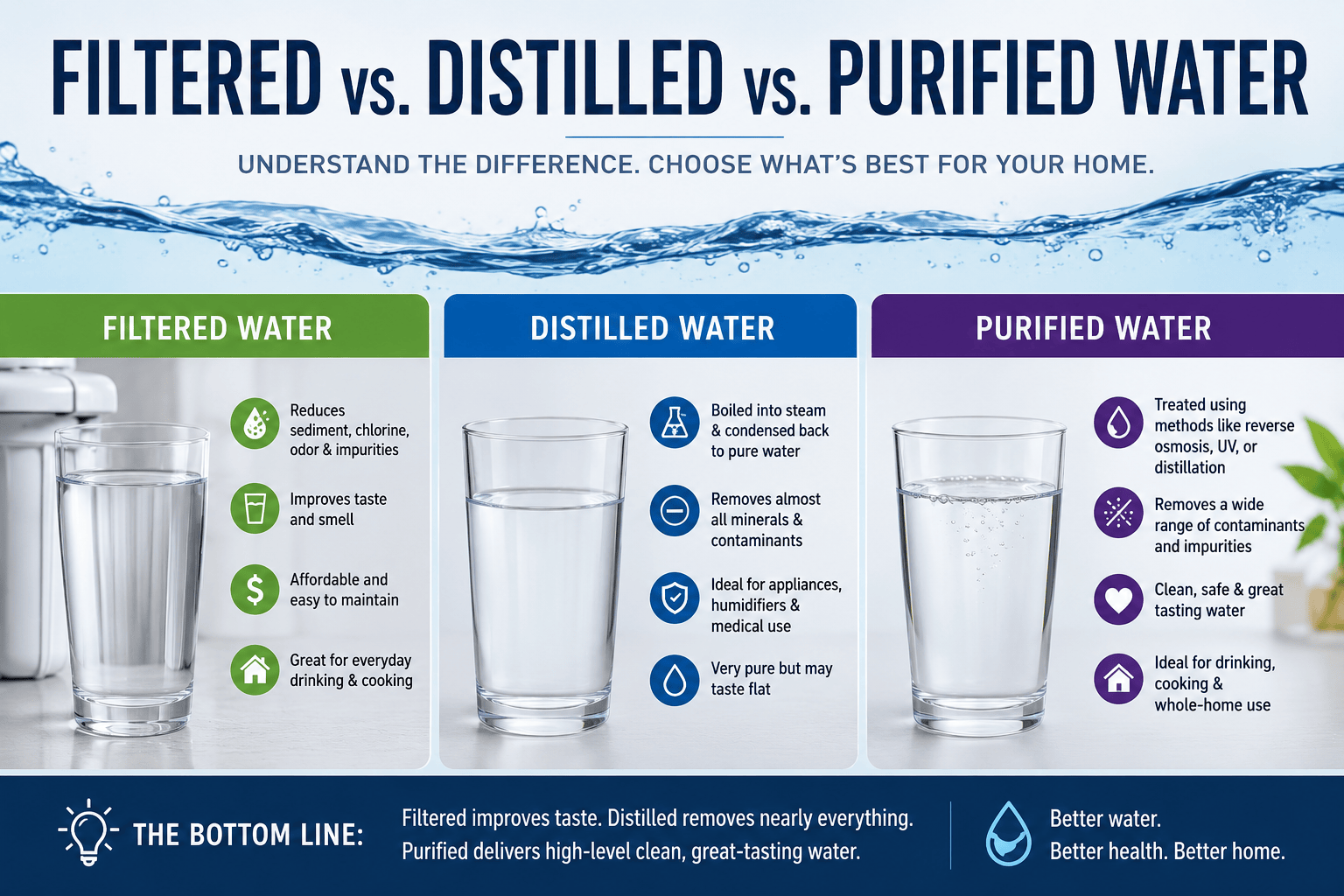
What Is Filtered Water?
Filtered water is regular water that passes through a filtration system designed to remove certain contaminants and impurities.
Different filtration systems target different problems. Some remove sediment and chlorine, while others reduce heavy metals or odors.
Common Types of Water Filtration
- Carbon filters
- Sediment filters
- Reverse osmosis systems
- Whole house filtration systems
Filtered water is one of the most common and affordable options for improving household water quality.
Benefits of Filtered Water
Many homeowners prefer filtered water because it improves both taste and everyday usability.
Advantages of Filtered Water
- Better tasting water
- Reduced chlorine odor
- Cleaner cooking water
- Improved water clarity
- Lower sediment levels
Filtered water is often used for drinking, cooking, coffee machines, and refrigerators.
What Is Distilled Water?
Distilled water is created through a boiling and condensation process called distillation.
During this process:
- Water is boiled into steam
- Minerals and contaminants are left behind
- Steam is cooled back into purified liquid water
This removes many impurities, minerals, and contaminants from the water.
Benefits of Distilled Water
Distilled water is highly purified and commonly used in medical, laboratory, and appliance applications.
Advantages of Distilled Water
- Very low mineral content
- Removes many contaminants
- Reduces scale buildup in appliances
- Commonly used in humidifiers and CPAP machines
Because distilled water removes nearly everything, some people feel it tastes flat compared to filtered water.
What Is Purified Water?
Purified water refers to water that has been treated to remove contaminants and impurities to a high standard.
Purified water may be produced using:
- Reverse osmosis
- Distillation
- Carbon filtration
- Deionization
- UV treatment
The goal is to create cleaner and safer water for drinking and household use.
Reverse Osmosis and Purified Water
One of the most popular methods for creating purified water is a reverse osmosis water purification system.
Reverse osmosis systems help reduce:
- Chlorine
- Heavy metals
- Sediment
- Harmful contaminants
- Unpleasant tastes and odors
Many homeowners choose reverse osmosis systems because they provide cleaner, better tasting drinking water.
Filtered vs. Distilled vs. Purified Water: Key Differences
Understanding the difference between filtered, distilled, and purified water can help you decide which option works best for your household.
| Water Type | Main Purpose | Removes Minerals? | Taste |
|---|---|---|---|
| Filtered Water | Improve taste & reduce impurities | Sometimes | Natural taste |
| Distilled Water | Remove nearly all substances | Yes | Flat or neutral |
| Purified Water | High-level contaminant removal | Usually | Clean & crisp |
Each option serves different needs depending on water quality concerns and household preferences.
Which Type of Water Is Best for Drinking?
The best choice depends on your water source and personal preference.
Filtered Water
Great for everyday household use and improving tap water taste.
Distilled Water
Ideal for appliances, medical devices, and situations requiring minimal minerals.
Purified Water
Often preferred for drinking because of its high contaminant removal capabilities.
Many homeowners choose purified water systems for long-term drinking water improvement.
Hard Water and Household Water Quality
Even if your water is filtered or purified, hard water minerals may still affect plumbing and appliances throughout the home.
Signs of Hard Water
- White scale buildup
- Water spots on dishes
- Dry skin after showers
- Soap scum buildup
- Reduced appliance efficiency
Installing a water softener filter system can help reduce hard water problems while improving overall household water quality.
Whole House Water Treatment Solutions
Many homeowners now install complete water treatment systems to improve water quality across the entire home.
A whole-house water filtration softener system can help provide:
- Cleaner drinking water
- Reduced hard water buildup
- Better shower water quality
- Improved appliance protection
- Cleaner laundry and dishes
Whole house systems treat water before it reaches faucets, showers, and appliances.
How to Choose the Right Water Treatment Option
Before selecting a water system, homeowners should consider:
- Local water quality
- Hard water severity
- Household water usage
- Water taste and odor concerns
- Plumbing condition
Professional water testing is often the best first step for identifying the right water treatment solution.
Final Thoughts on Filtered vs. Distilled vs. Purified Water
When comparing filtered vs. distilled vs. purified water, there is no single perfect option for every home. Each type of water offers different benefits depending on your needs and water quality concerns.
Filtered water improves everyday taste and usability, distilled water removes nearly all substances, and purified water provides advanced contaminant reduction for cleaner drinking water.
For many homeowners, combining filtration, purification, and water softening systems creates the best long-term solution for healthier and better-quality household water.